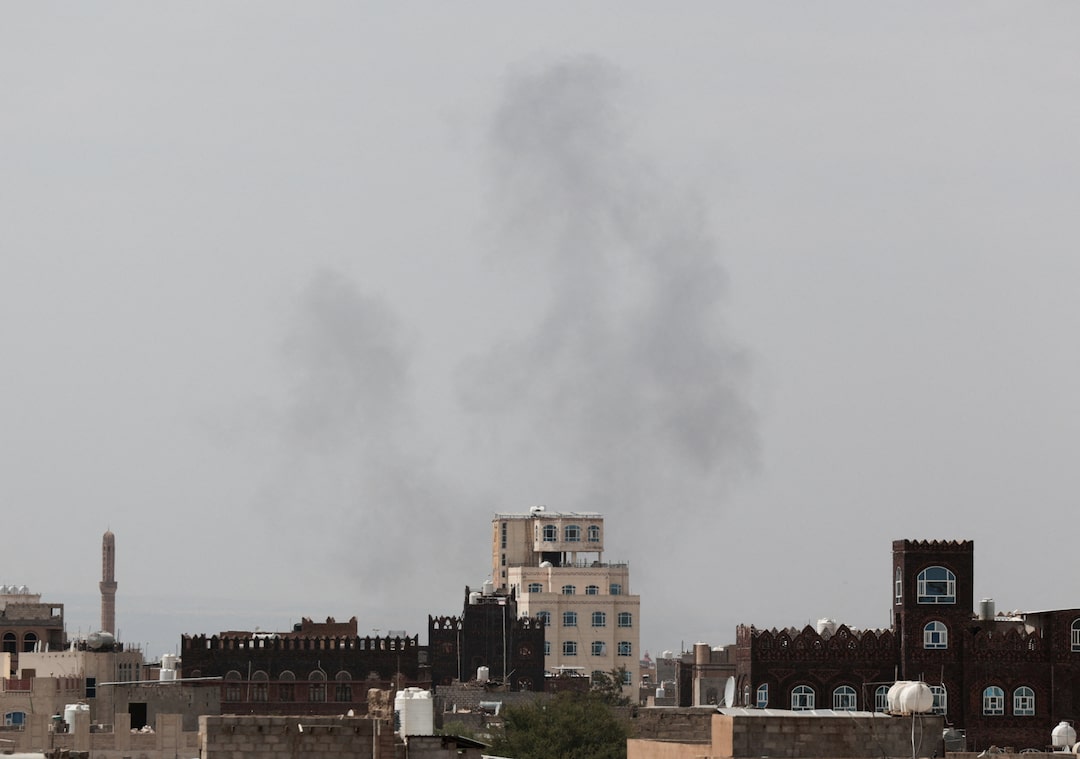
According to the latest news, Yemen's Houthi forces have officially resumed missile attacks on Saudi Arabia, completely breaking the nearly four-year informal ceasefire between the two sides. The trigger for this round of conflict was a Saudi-led coalition airstrike on Sanaa International Airport in Yemen. In response, the Houthis ended the de-escalation and launched missiles to precisely strike Saudi Arabia's Abha International Airport in the south. This is the first air raid on Saudi soil since the Houthis attacked Saudi energy facilities, marking a full restart of the Yemen front.
The renewed fighting in Yemen that broke the four-year ceasefire was directly triggered by the Saudi-led coalition's airstrike on Sanaa airport. But looking deeper, the years-long civil war in Yemen has never really seen true reconciliation; the parties involved still have opposing factions, conflicting interests, and disputes over sovereignty that haven’t been resolved. On top of that, the overall geopolitical tension in the Middle East remains high, with US-Iran confrontations escalating and unrest in the Gulf. Iran’s support for the Houthi forces continues, and the indirect power plays between Saudi Arabia and Iran’s proxies don’t seem likely to stop completely. Meanwhile, the rise of southern separatist forces in Yemen has torn apart the Saudi-led anti-Houthi coalition, loosening the regional balance and further weakening the ceasefire, making it easy for local friction to explode into full-blown conflict.
The ceasefire in Yemen has broken down and fighting has flared up again, which will create a two-front instability pattern in the Middle East, with the U.S.-Iran Gulf as the main battlefield and Yemen's southern front as a secondary one. Saudi Arabia's southern border will keep facing pressure, regional military conflicts will increase significantly, and geopolitical instability will worsen. On top of that, the renewed conflict means the Red Sea energy trade route is at risk of attacks again, and combined with the Strait of Hormuz crisis, the global energy supply chain will be doubly stressed, pushing oil price swings and global inflation risks higher. At the same time, the restart of the conflict will worsen the humanitarian crisis, hinder aid operations by humanitarian agencies, and further aggravate difficulties for local people.
To curb the ongoing escalation of the conflict in Yemen and stabilize the situation in the Middle East and the global energy order, all parties need to take coordinated measures. Both sides of the Yemen conflict should immediately stop cross-border military attacks, end airstrikes on airports and retaliatory missile strikes, and restart humanitarian negotiation mechanisms like prisoner exchanges. The Saudi-led coalition needs to exercise restraint in military actions to reduce proactive friction and manage disagreements over Yemen's airspace and shipping lanes through dialogue to prevent regional confrontation from escalating further. The international community should strengthen neutral mediation by building communication platforms to encourage both sides to restart ceasefire talks and ensure humanitarian aid can get through to ease the crisis for Yemeni civilians. Countries and companies involved in energy trade should anticipate risks to Red Sea shipping in advance, adjust shipping routes accordingly, and hedge against supply chain disruptions caused by attacks on shipping lanes.
In short, the Houthis resuming military strikes against Saudi Arabia is a landmark event showing the ongoing spread of geopolitical conflict in the Middle East. It marks the complete end of Yemen's already fragile peace and establishes a complex pattern of turmoil involving both the Gulf and Yemen. On the surface, this round of conflict looks like retaliatory attacks triggered by airport airstrikes, but deep down, it's a concentrated outbreak of Yemen's internal factional clashes, Shia-Sunni proxy struggles, regional alliance divisions, and failed ceasefire mechanisms. Looking ahead, the Yemen conflict is likely to settle into a pattern of regular skirmishes and localized confrontations. Any chance of partial calm in the Middle East is gone, and geopolitical competition in the region is entering a high-intensity phase across multiple fronts. This puts regional stability and global energy security under long-term serious pressure.

On July 13th local time, during the Asian trading session, the international gold price plunged sharply.

On July 13th local time, during the Asian trading session, …
According to the latest news, Yemen's Houthi forces have of…

According to the report by the Independent Institute, recen…

On July 13th, the US Treasury's auction of $38 billion in 1…
In July 2026, India and Indonesia signed a historic defense…

On July 13th local time, the Republican governor of South C…
© Copyright 2026, All Rights Reserved