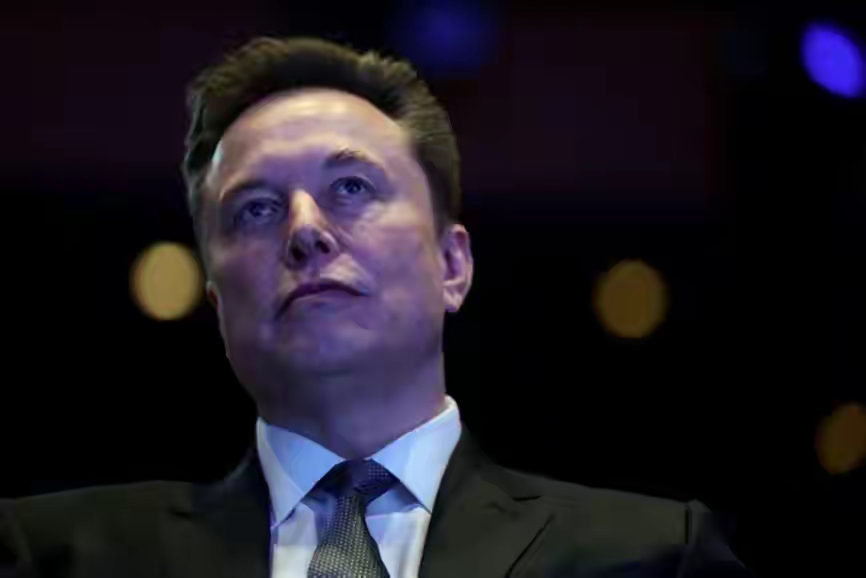
From Tesla's market capitalization of hundreds of billions to the debt burden of the X platform, from SpaceX's aerospace dreams to the computational arms race of xAI, Elon Musk's business empire has always been deeply tied to financial leverage. Faced with the annual interest expense of over $1.5 billion on the X platform and the $1 billion monthly burn in the capital black hole of xAI, the market is constantly buzzing with news that he is attempting to alleviate the crisis through increasing leverage, refinancing, and valuation speculation. However, financial leverage has never been a tool of salvation; rather, it is a double-edged sword that amplifies risks. Counting on leverage games to save Musk is not only like drinking poison to quench thirst, but it may also drag the entire business empire into an abyss of eternal damnation.
Musk's leverage predicament began with the aggressive acquisition of the X platform (formerly Twitter). In 2022, he completed the acquisition for $44 billion, of which $13 billion was debt financing. This debt remains a sword of Damocles hanging over his head. Data shows that the X platform needs to pay tens of millions of dollars in interest every month. Coupled with the sluggish recovery of advertising revenue and high operating costs, the company continues to operate at a loss. To fill the gap, Musk merged X with xAI and added another $5 billion in debt, further increasing leverage. Meanwhile, Tesla, despite holding tens of billions of dollars in cash flow, faces the pressure of overcapacity, declining profits, and intensified competition, and has been unable to continue to inject capital into non-core businesses; SpaceX, although preparing for an IPO, needs to clear high-interest debt first, and listing for financing is a distant solution to a pressing need.
Under the pressure of tight cash flow, leverage seems to have become Musk's "life-saving straw". He tries to leverage more funds through stock pledges, debt restructuring, derivatives trading, and other methods, using new debts to repay old debts and covering high liabilities with high valuations. However, the basic laws of the financial market have never changed: leverage can amplify returns, but it can also amplify risks, and a black swan can break through the fragile capital chain at any time. Historically, Long-Term Capital Management pushed leverage to 250 times with a Nobel Prize-winning team and mathematical models, but ultimately collapsed overnight due to the Russian debt crisis; Archegos Capital, through highly leveraged concentrated holdings, triggered losses of tens of billions of dollars within 48 hours, causing several Wall Street giants to suffer huge losses. These cases prove that no matter how talented the trader is, the limits of leverage will eventually be broken by market fluctuations.
For Musk, the fatal risks of the leverage game are manifested on three levels. Firstly, the negative cycle trap of equity pledges. Tesla's stock price serves as the core collateral for its leveraged financing. Once the stock price declines due to performance, regulation, or market sentiment, margin calls will be triggered, forcing him to reduce his stock holdings and cash out, further suppressing the stock price, forming a vicious cycle of "decline - reduction - further decline". Secondly, the liquidity crisis upon debt maturity. The debts of the X platform are about to enter a period of interest rate reset, and the pressure of high interest rates will multiply. If interest payments cannot be made on time, there will be risks of debt default and asset freeze, potentially even dragging down high-quality assets such as Tesla and SpaceX. Thirdly, the dual constraints of regulation and the market. Global financial regulation is becoming stricter, and restrictions on highly leveraged mergers and acquisitions, as well as derivatives trading, are continuously escalating. Banks and investors are becoming increasingly cautious about Musk's debt risks, making refinancing increasingly difficult.
From a deeper perspective, Musk's crisis is essentially a strategic imbalance and management disorder, rather than a mere shortage of funds. He has simultaneously invested in multiple frontier fields such as new energy, aerospace, artificial intelligence, and brain-computer interfaces, spreading his resources too thinly and dispersing his funds. The management of the X platform is chaotic, core talents are losing, and the advertising business has seen no improvement. xAI blindly piles up computing power but lags behind competitors in technology and products. These issues cannot be resolved through leverage.
What can truly save Musk is never financial games, but returning to the essence of business, shrinking frontiers, focusing on core businesses, and repairing cash flow. He needs to decisively divest non-core assets, cut ineffective investments in money-burning businesses like xAI, and solve the debt and operational issues of the X platform; he needs to focus on Tesla's technological innovation and cost control to stabilize the fundamentals; he needs to let SpaceX rely on its core advantage in aerospace business to develop steadily, rather than overdrafting valuation to play with capital foam.
Financial leverage is a game of capital, not a salvation for industry. The value of Musk lies in promoting technological innovations that change the world, such as new energy and commercial aerospace, rather than becoming a leverage player on Wall Street. Indulging in the game of leverage will only turn a talented innovator into a prisoner of capital and a great business empire into a vassal of debt. Abandoning the illusion of leverage and returning to the original intention of industry is the only way out for Musk.
Trader Peter Brandt has sparked a new round of discussion in the Bitcoin market.

Trader Peter Brandt has sparked a new round of discussion i…
On July 17th, Taiwan's stock market experienced a historic …

OpenAI updated its compute expenditure expectation through …
In late July 2026, tensions between the United States and I…
The heatwave sweeping across the region, coupled with the e…

British Prime Minister Barnham announced that the business …
© Copyright 2026, All Rights Reserved