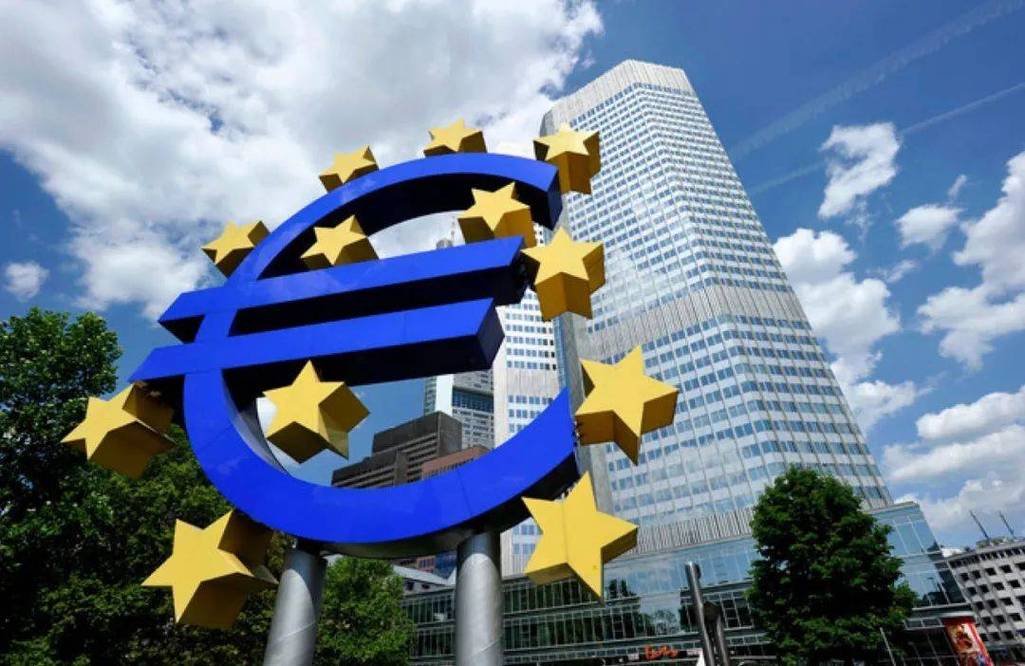
On February 4, 2026, European financial markets exhibited a complex landscape characterized by slight index fluctuations, rising bond markets, and policy stalemate. While the STOXX 600 Index closed at a record high, deep internal divergences remained evident. The broad rise in Eurozone government bond yields reflected mounting inflation concerns, while the European Central Bank’s (ECB) policy resolve and progress in EU-U.S. critical minerals cooperation injected multiple variables into the market. The European economy continues to navigate a crossroads between recovery and risks.
European equities displayed a pattern of overall stability with internal divergence on February 4. The STOXX 600 Index edged up 0.10% to 617.93 points, logging a three-day winning streak and hitting an all-time closing high. It rose a cumulative 1.78% over the three trading sessions, marking the strongest three-day gain since January 6, 2026. However, the region’s three major benchmark indices softened: Germany’s DAX slipped 0.07% to 24,781.38 points, France’s CAC 40 dipped 0.02% to 8,179.5 points, and the UK’s FTSE 100 fell 0.26% to 10,314.59 points.
This divergence stemmed from a tug-of-war between tech stock pullbacks and cyclical sector support. Lackluster performances by technology stocks including Publicis Groupe weighed on indices, while energy and mining-related sectors rallied against the trend amid rising commodity prices. Structurally, the STOXX 600’s record high was underpinned by periodic gains in nearly 70% of constituent stocks. Year-to-date, the index has advanced 4.35% and rebounded more than 31% from its 52-week low, signaling sustained market confidence in the long-term European economic recovery. In the near term, however, a widening growth divergence between Germany and France amplified market volatility. Germany’s composite PMI climbed to 52.5, indicating strengthening recovery momentum, whereas France’s gauge retreated to 48.6, slipping back into contraction territory. This cross-country divergence triggered frequent capital rotations across national markets.
Eurozone government bond yields rose across the board on February 4, reflecting investor anxiety over sticky inflation. Germany’s 10-year Bund yield climbed 2.2 basis points to 2.888%, France’s 10-year yield rose 1.7 bps to 3.645%, and the UK 10-year Gilt yield edged up 1.1 bps to 4.516%. Sovereign bond yields in Southern European economies including Italy and Spain also rose by 1.7–2.3 bps in tandem.
The modest steepening of the yield curve followed adjustments to market expectations after the release of the final Eurozone services PMI for January. Although the overall data impact was limited, the services selling price index hit its highest level since April 2024, sparking fears of a rebound in core inflation. This trend aligned with the ECB’s policy stance. The central bank kept its deposit rate unchanged at 2% for the fifth consecutive meeting, emphasizing that while inflation has cooled, continued monitoring is necessary, and declined to provide a fixed rate path. Markets had previously priced in three to four rate cuts in 2026, but sticky services inflation has put those expectations under pressure. Some analysts even warned that a sustained deterioration in inflation readings could potentially prompt the ECB to resume rate hikes. Amid such policy uncertainty, Eurozone bond markets traded within a narrow range, with investors favoring short-dated bonds to mitigate long-term risks.
The ECB currently faces a dilemma between sustaining growth and curbing inflation. The Eurozone’s 2026 growth forecast stands at 1.4%, firmly within a recovery range, yet manufacturing has contracted for three consecutive months. Services remain the sole growth engine but face upward price pressures driven by labor costs. The final Eurozone services PMI for January, while still in expansion territory, eased to a four-month low of 51.9, pointing to softening growth momentum. Against this backdrop, the ECB adheres to a data-dependent approach, reluctant to cut rates prematurely and reignite inflation, yet wary that prolonged high rates could stifle the recovery.
On external cooperation, Europe is actively advancing a critical minerals partnership with the United States, with plans to sign a memorandum of understanding and finalize a strategic roadmap within three months. The two sides aim to reduce reliance on Chinese lithium, nickel, rare earths and other critical minerals through joint development projects, price support mechanisms and secure supply chain frameworks. This collaboration will not only ease raw material supply pressures for European manufacturers but also deliver long-term benefits to enterprises in related industrial chains.
Sharp volatility in international commodity markets exerted indirect impacts on European markets on February 4. COMEX gold futures surged 6.83% to $4,970.50 per ounce, while silver futures jumped 10.27% to $84.92 per ounce, driven by escalating geopolitical risks and bargain-hunting after a sharp pullback. London base metals also strengthened: LME tin rose 7.95% and copper gained 4.02%, providing support for European resource-related equities.
In the foreign exchange market, the euro rose 0.25% against the U.S. dollar to 1.1819, while the U.S. Dollar Index fell 0.22% to 97.39. A stronger euro helps ease imported inflationary pressures but poses headwinds for European export-oriented enterprises.
Looking ahead, the final Eurozone CPI data for January, due for release in mid-February, will be a key focal point. Core services inflation figures will directly shape the ECB’s policy decisions. Persistent inflationary pressures could further dampen rate-cut expectations, leaving equity markets in a volatile, divergent pattern. Meanwhile, the implementation progress of the EU-U.S. critical minerals partnership and the strength of manufacturing recovery will serve as important pillars underpinning the long-term stability of European financial markets.

Trader Peter Brandt has sparked a new round of discussion in the Bitcoin market.

Trader Peter Brandt has sparked a new round of discussion i…

On July 17th, Taiwan's stock market experienced a historic …

OpenAI updated its compute expenditure expectation through …

In late July 2026, tensions between the United States and I…

The heatwave sweeping across the region, coupled with the e…

British Prime Minister Barnham announced that the business …
© Copyright 2026, All Rights Reserved