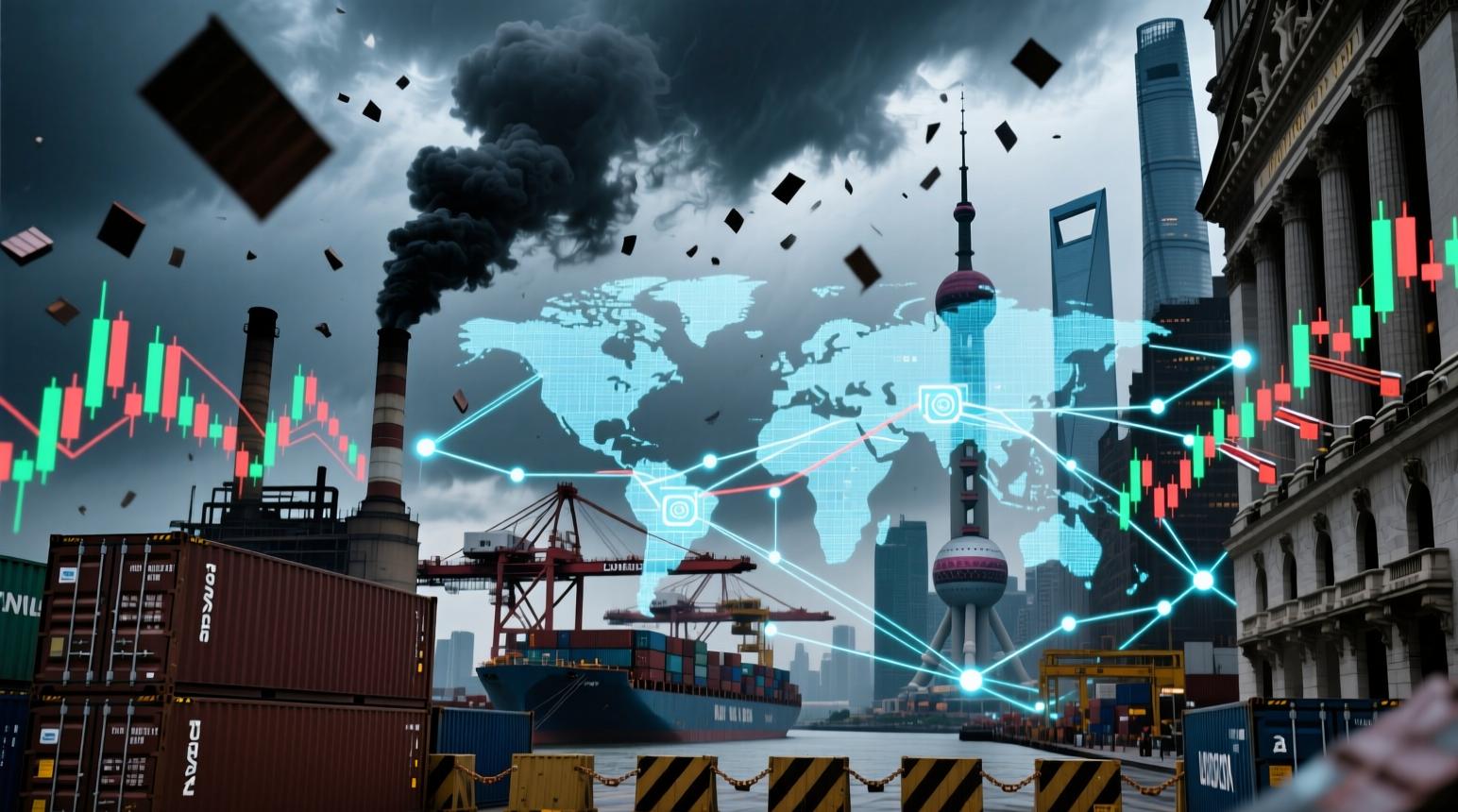
In today's era of deep global economic integration, even the slightest shift in trade policy can trigger a chain reaction in financial markets. The recent erratic shifts in U.S. tariff policy have not only disrupted the international trade order but have also dropped a bombshell on the financial sector, sparking deep-seated concerns about the future economic trajectory. This article will delve into the logic behind the U.S. tariff policy adjustments from a financial perspective and analyze their potential impact on global financial markets.
Starting February 24th, the U.S. government announced the suspension of tariffs imposed under the International Emergency Economic Powers Act, a move that superficially seemed to offer the market a brief respite. However, this "de-escalation" was short-lived. The Trump administration immediately followed up by announcing a 15% global tariff on all imported goods, a policy that took effect on the very day it was announced. This abrupt policy "reversal" not only caught international trading partners off guard but also sent towering waves through the financial markets.
Looking at the direct reaction from financial markets, the erratic U.S. tariff policy first led to severe volatility in the forex market. As the world's primary reserve currency, the stability of the U.S. dollar is crucial for global financial markets. Yet, the sudden adjustment in U.S. tariff policy shook investor confidence in the dollar, reversing the direction of capital flows. Emerging market currencies came under depreciation pressure, while safe-haven currencies like the Japanese yen and Swiss franc were sought after. This sharp exchange rate volatility not only increases operational costs for multinational corporations but could also trigger global capital flow disorders, threatening financial market stability.
Further analysis shows that the adjustment in U.S. tariff policy has also had a profound impact on global stock markets. As barometers of the economy, stock market fluctuations often reflect market expectations for future economic performance. The erratic U.S. tariff policy has clouded expectations for future economic growth, dampened investor confidence, and intensified stock market volatility. For listed companies, particularly those reliant on international trade, increased tariffs directly compress profit margins, leading to stock price declines. Falling stock prices could then trigger a chain reaction, impacting the stability of the banking system and potentially even precipitating systemic financial risks.
In the bond market, the impact of U.S. tariff adjustments is equally significant. Increased tariffs could lead to higher prices for imported goods, thereby pushing up inflation rates. To combat inflation, central banks might adopt tightening monetary policies, such as raising interest rates. This would directly lead to rising bond yields and falling bond prices. For investors holding large amounts of bonds, this undoubtedly means substantial capital losses. Concurrently, bond market volatility could affect corporate financing costs, subsequently influencing their investment decisions and the potential for economic growth.
More profoundly, the erratic shifts in U.S. tariff policy could have structural implications for the global trade and financial systems. For a long time, the global trading system has been built upon a foundation of relatively stable and predictable rules. However, the frequent adjustments to U.S. tariff policy have shattered this stability, making the international trade environment highly uncertain. This uncertainty not only affects companies' long-term investment decisions but may also prompt nations to reassess their trade and financial strategies, potentially even fueling a rise in trade protectionism and a restructuring of the global trading system.
In summary, the erratic shifts in U.S. tariff policy have had deep and complex impacts on global financial markets. From sharp fluctuations in the forex market to turmoil in stock markets, from potential risks in the bond market to structural changes in the global trade and financial systems, all underscore the immense disruptive power of U.S. tariff policy adjustments on the financial sector. In an increasingly interconnected global economy, any country's trade policy adjustment is no longer an isolated event but one capable of triggering a worldwide chain reaction. Therefore, when formulating trade policies, nations must fully consider their potential impact on global financial markets, uphold principles of openness, cooperation, and mutual benefit, and work together to maintain the stability and development of the global financial system.
Trader Peter Brandt has sparked a new round of discussion in the Bitcoin market.

Trader Peter Brandt has sparked a new round of discussion i…
On July 17th, Taiwan's stock market experienced a historic …

OpenAI updated its compute expenditure expectation through …
In late July 2026, tensions between the United States and I…

The heatwave sweeping across the region, coupled with the e…

British Prime Minister Barnham announced that the business …
© Copyright 2026, All Rights Reserved