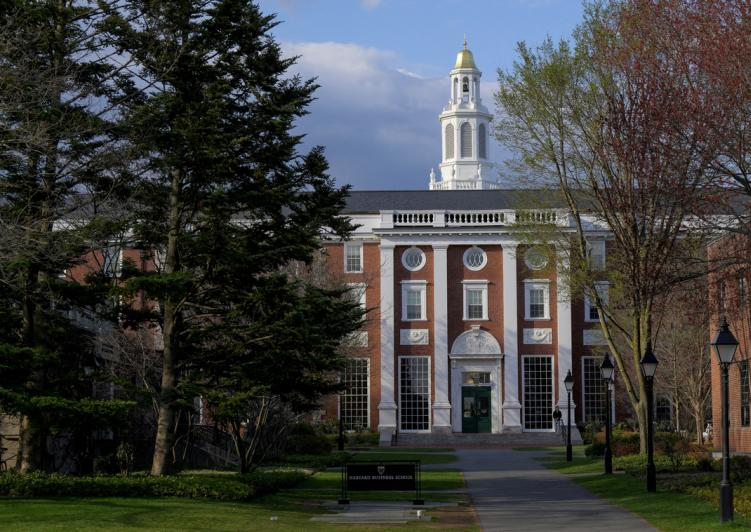
(New York Bloomberg News) The sluggish job market for college graduates in the United States has prompted many students to start their own businesses before completing their studies.
Shajikumar (18 years old) founded an AI consulting platform while still in his first semester at Carnegie Mellon University. Within a month, he raised 2 million US dollars. Eventually, he chose to temporarily suspend his studies and fully devote himself to the project.
In colleges and universities across the United States, undergraduate entrepreneurship courses, which were once considered niche, are now fully booked and there are long waiting lists. At Johns Hopkins University, a series of entrepreneurship incubation programs received only 50 applications five years ago, but this academic year they have attracted over 860 applicants.
AI is one of the major reasons driving the entrepreneurial boom. It significantly lowers the entry barriers for entrepreneurship, speeds up the process of concept validation and prototype development. At the same time, the sluggish primary job market and the reduction in internship and entry opportunities have also prompted students to turn to entrepreneurship.
The career advisor pointed out that even if a business venture fails, it can still enhance one's resume and increase one's competitiveness in the job market.
Venture capitalists began to sense business opportunities on college campuses. They actively reached out to undergraduate students through campus visits and direct messages on LinkedIn.
However, early-stage financing is often disadvantageous for students. Smith, who founded a software startup at Carnegie Mellon University, said: "They want to enter at a very low valuation because you're just a college student and you don't really understand what valuation means. They'll take away a lot of equity early on."
Like Shajikumar, Smith also chose to suspend his studies rather than drop out. Dropping out has added a legendary touch to the careers of well-known entrepreneurs such as Apple co-founder Jobs and Microsoft co-founder Gates. However, this step is too extreme. Taking a semester or two off school is a more rational hedging strategy to ensure that one can return to campus if the entrepreneurial venture fails. Universities like MIT are re-evaluating their suspension policies and developing programs to support students' short-term suspensions.
Jude, the executive director of the Liu Institute for Innovation and Entrepreneurship at Rice University, said that many students now view taking a leave of absence in the same way that traditional students view overseas exchanges. Instead of studying, traveling and attending parties abroad, an increasing number of Rice University's student entrepreneurs choose to take a semester off to focus on their startups.

Trader Peter Brandt has sparked a new round of discussion in the Bitcoin market.

Trader Peter Brandt has sparked a new round of discussion i…

On July 17th, Taiwan's stock market experienced a historic …

OpenAI updated its compute expenditure expectation through …

In late July 2026, tensions between the United States and I…

The heatwave sweeping across the region, coupled with the e…

British Prime Minister Barnham announced that the business …
© Copyright 2026, All Rights Reserved