In the tech world at the end of 2025, an unprecedented financing feast is unfolding. OpenAI announced the launch of a new round of funding targeting a staggering $100 billion. If fully completed, the company’s valuation will surge to $830 billion, a 66% jump from its previous $500 billion valuation. This figure not only sets a new record for global tech startup financing but also drops a "capital depth charge" that has shaken the industry amid renewed talk of an AI bubble.
The lineup of investors in this financing round is nothing short of stellar. SoftBank Group has committed a $30 billion strategic investment; to raise funds, Masayoshi Son recently liquidated $5.8 billion worth of NVIDIA shares and even plans to pledge Arm shares for margin loans, with a bet as bold as his investment in Alibaba back in the day. Among industrial capital, Disney has injected $1 billion and signed a content licensing agreement with OpenAI to form business synergy. In the sovereign wealth fund camp, UAE’s MGX has confirmed its participation, while Saudi Arabia’s Public Investment Fund is in negotiations—Middle Eastern capital aims to leverage this to drive local digital economic transformation. Additionally, OpenAI is in talks with Amazon for at least a $10 billion investment, as the latter seeks to push OpenAI to adopt its own Trainium3 chips and AWS cloud services. The funding is scheduled to close by the end of Q1 2026 at the earliest, though transaction terms remain subject to change.
Behind the $830 billion valuation lies OpenAI’s dual narrative of "technology + business". In terms of technological barriers, GPT-5 adopts a dual-track model design, reducing computing power waste by 40% and cutting B-end API call costs in half, with Codex code model usage surging 10-fold in two months. More promising is the research and development of "recursive self-improvement" technology—once implemented, GPT-6’s training efficiency will increase 10-fold, though it requires a $43 billion computing power reserve, which forms one of the core uses of this financing. On the commercialization front, performance is equally impressive: projected 2025 revenue stands at $12.7 billion, a 243% year-on-year increase from $3.7 billion in 2024. C-end paying users contribute nearly $8 billion in revenue, B-end enterprise clients number 1 million, and ecosystem commission businesses are expected to generate $110 billion over the next five years.
Yet beneath the glossy data lies staggering capital consumption. OpenAI is trapped in a dilemma of "the more it grows, the more it loses": in H1 2025, it recorded $4.3 billion in revenue alongside a whopping $13.5 billion loss, burning $128 million per day. Massive expenditures are concentrated in three key areas: computing infrastructure, with plans to invest $1.4 trillion in GPU procurement and data center construction—GPT-6 training alone requires 125,000 H200 GPUs, with hardware costs hitting $5 billion; technological R&D, where data acquisition for the Sora 3 video model costs at least $8 billion; and talent competition, with $20 billion set aside for stock compensation to fend off poaching by Google, and signing bonuses for core engineers reaching up to $10 million. By estimates, cumulative losses between 2023 and 2028 could reach $44 billion, with profitability not expected until 2030.
This hundred-billion-dollar financing also faces multiple challenges. In the market, fears of an AI bubble are mounting: associated companies like Oracle and CoreWeave have seen their market values decline, and investors are growing more cautious about capital expenditure in the AI sector. On the competition front, Google continues to pressure OpenAI with strong cash flow, forcing OpenAI to activate "red alerts" multiple times to respond—most recently launching the GPT-5.2-Codex model as an emergency countermeasure. The rationality of the valuation has also sparked controversy: based on projected 2025 revenue, its price-to-sales ratio stands at an astonishing 65x, far exceeding the 10-15x range for mature SaaS companies. Even under optimistic forecasts of $100 billion in revenue by 2029, the current valuation still requires an 8.3x price-to-sales ratio to hold.
Despite the risks, this financing round marks a critical turning point for the AI industry. If funds are secured, OpenAI will accelerate the construction of a full-stack "computing power - model - ecosystem" barrier, further widening the gap with followers; if financing falls short of expectations, it may be forced to scale back its strategy, potentially rewriting the global AI competitive landscape. For investors, this is not just a bet on a single company, but a prediction about the era of AGI (Artificial General Intelligence)—once technological breakthroughs are achieved, OpenAI’s valuation anchor will shift from a software company to the total compensation of the global labor market, making it the definer of "digital labor".
Behind this $100 billion fundraising drive is OpenAI’s high-stakes gamble to trade capital for time and build barriers through burning cash. The outcome of this battle for AI hegemony will not only determine the fate of one company but also reshape the power structure of the global tech industry over the next decade.
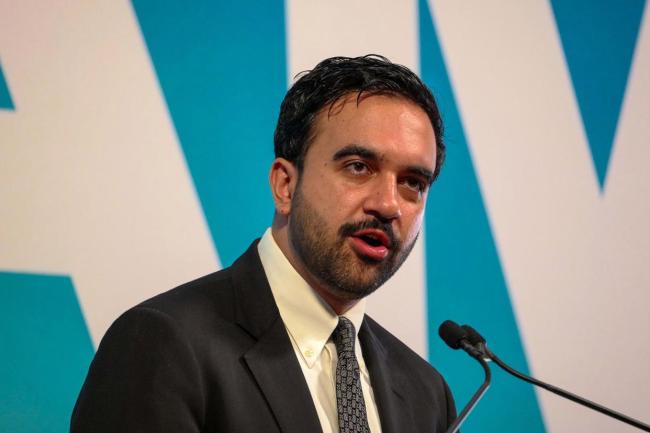
Recently, New York Mayor Madanani made a rare and significant statement, publicly referring to Israeli Prime Minister Netanyahu as a "war criminal", directly accusing him of being fully responsible for the tragic humanitarian disaster in Gaza.
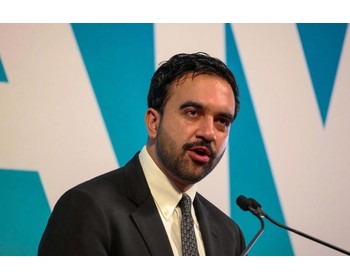
Recently, New York Mayor Madanani made a rare and significa…
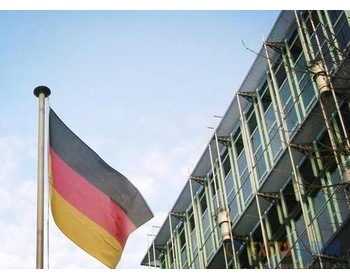
The latest July survey data released by the ZEW – Leibniz C…
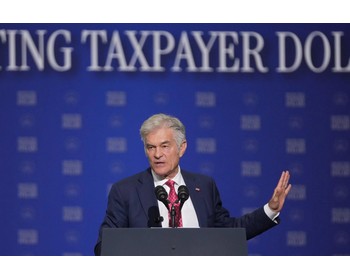
The Trump administration announced on Tuesday that it would…
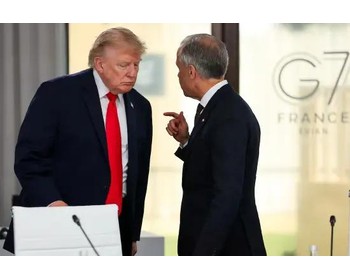
On July 21st local time, Canadian Prime Minister Mark Carne…

According to the Associated Press, the latest data from the…

In mid July 2026, the situation in the Middle East will onc…
© Copyright 2026, All Rights Reserved