
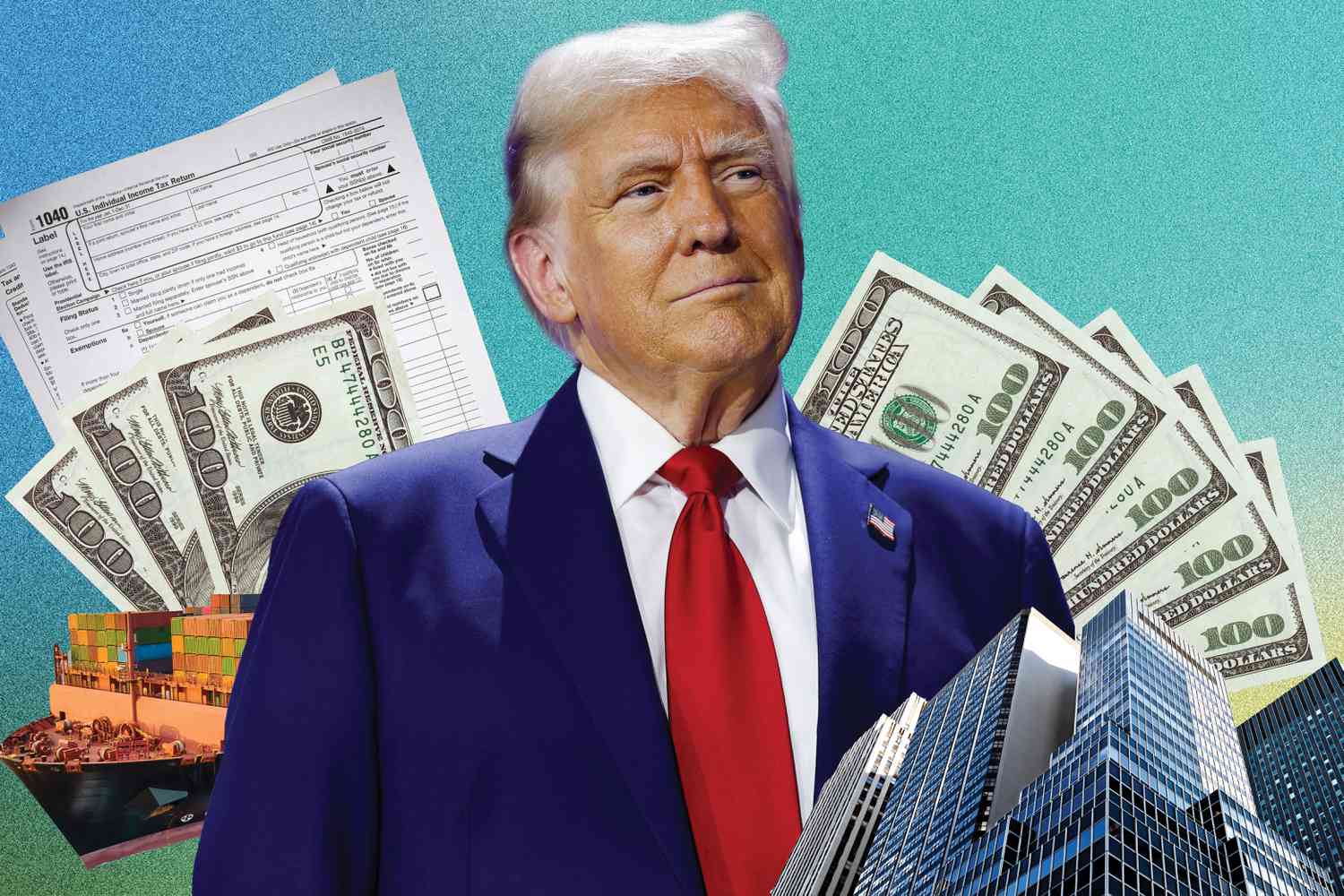
Donald Trump's proposal to directly distribute $2,000 cash subsidies to American citizens using tariff revenue instead of government borrowing immediately sparked widespread attention and discussion. While the plan superficially resembles the stimulus checks issued during the COVID-19 pandemic, it differs significantly in its funding source and underlying context, thus generating more complex controversies at both the economic and policy levels.
According to Trump's plan, the subsidy would be distributed to eligible American taxpayers, excluding high-income earners. The subsidy amount would be $2,000 per person, subject to adjustments based on income and family circumstances. Unlike the pandemic-era stimulus, which was financed through budget deficits, this subsidy would be primarily funded by import tariffs levied on goods from China, Europe, and other trading partners. The Trump campaign aims to convey a clear political message: it's not the US government borrowing money to give subsidies to its citizens, but rather "other countries paying for Americans through tariffs."
In the short term, this policy is indeed quite appealing. Direct cash payments are simple and easy for ordinary citizens to understand, and the benefits are immediately felt. For low- and middle-income families struggling with rising costs of rent, food, and energy, $2,000 could be used to pay off credit card debt, supplement daily expenses, or increase savings, potentially boosting consumer spending. Politically, such tangible welfare measures often quickly bridge the gap between the government and voters.
However, the biggest problem with this plan lies in the soundness of its economic foundation. The stimulus policies during the pandemic were implemented to address a sudden economic collapse, while the current US economy remains relatively resilient, and unemployment, although rising, is still at a low level. In this context, the necessity of another large-scale stimulus measure is itself debatable.
More importantly, tariffs are not "free money." The article analyzes three serious consequences that this plan might bring. First, tariffs inevitably drive up prices. The tariffs paid by importers will ultimately be passed on to consumers, leading to price increases for electronics, clothing, daily necessities, and other goods. For many families, the higher cost of living over the long term may quickly offset the one-time $2,000 payment, or even result in a net loss.
Secondly, the combination of tariffs and cash subsidies will exacerbate inflationary pressure. Tariffs trigger supply-side inflation, while direct cash payments stimulate demand. The combined effect could weaken the Federal Reserve's efforts to curb inflation through interest rate hikes. This would not only push up prices but also potentially force further monetary tightening, increasing the risk of an economic slowdown or even recession.
Furthermore, tariffs disrupt trade and supply chains, hindering economic growth. The uncertainty of trade policies will cause businesses to postpone investment, affecting employment and wage growth. At the same time, U.S. trading partners are likely to retaliate with tariffs, harming U.S. export industries, especially agriculture, manufacturing, and services, ultimately leading to a situation where both imports and exports suffer.
In summary, while this $2,000 stimulus check may provide some psychological and real relief in the short term, it is unlikely to compensate for the long-term negative impacts of tariff policies on prices, inflation, and economic growth. Behind the seemingly simple and direct cash subsidy lies a complex and costly economic price, and its actual effect remains highly uncertain.

Recently, the British government, in accordance with the "Steel Industry (Nationalization) Act" that came into effect on July 16th, took the British Steel Company, which is controlled by China Jiefang Group, into state ownership without compensation.

Recently, the British government, in accordance with the "S…

On July 23rd local time, the US Trade Representative Office…

The international crude oil market saw a sharp one-sided ri…

Recently, the geopolitical confrontation between the United…

The New York Times has recently clashed with the Trump admi…

Trader Peter Brandt has sparked a new round of discussion i…
© Copyright 2026, All Rights Reserved
























