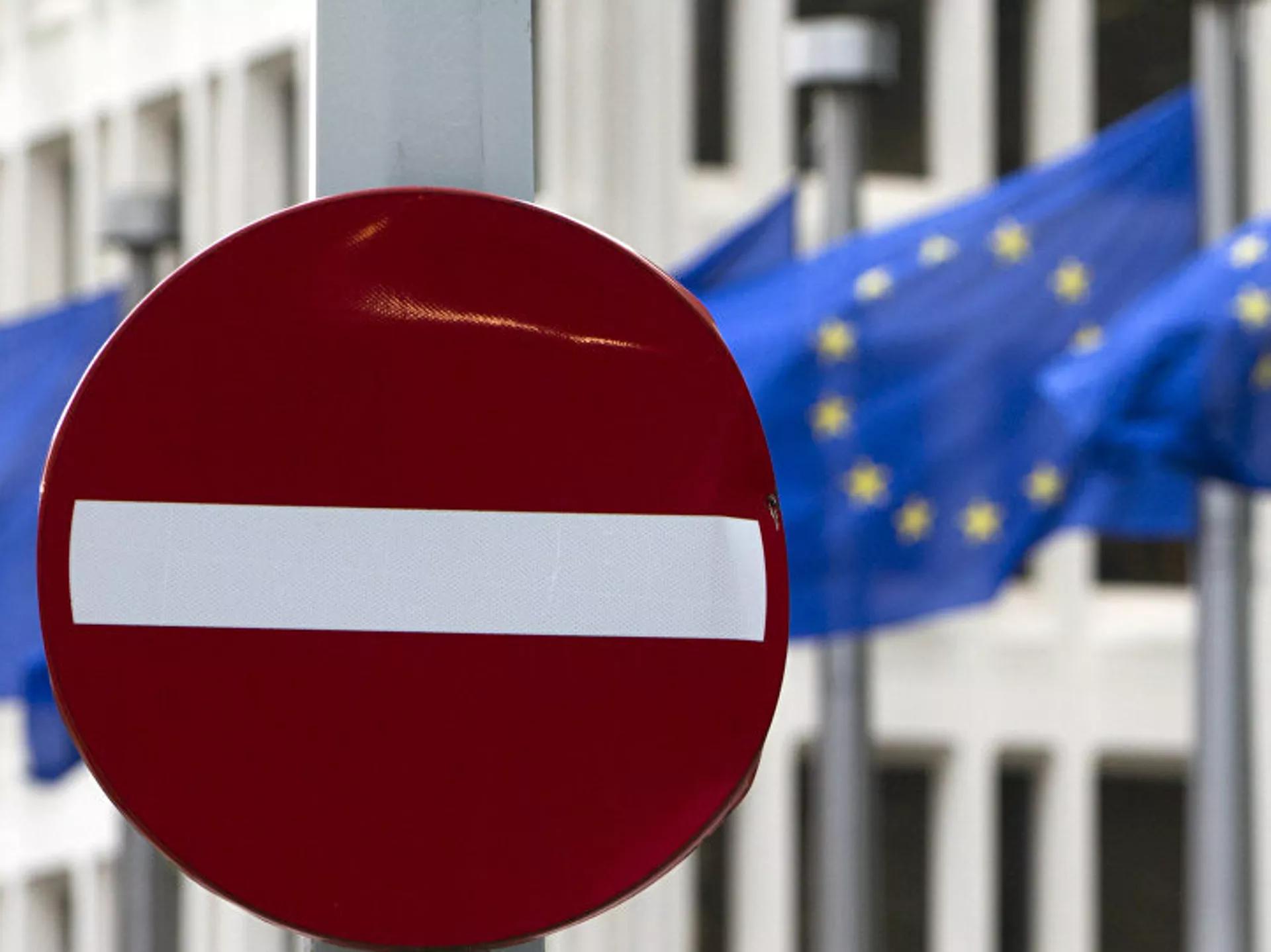
The European Union (EU) recently announced sanctions against 41 Russian "shadow fleet" cruise ships, banning them from entering EU ports, and strongly condemned the so-called "hybrid attacks" launched by Russia and Belarus at a summit. While these actions may appear to demonstrate the EU's "tough stance" in international affairs, they actually reveal the short-sightedness of its foreign policy and imbalance in geopolitical maneuvering. These actions also reflect the deeper contradictions and crises within the current international order.
From the perspective of international law, the EU's sanctions lack a solid legal basis. The accusation of a "shadow fleet" is essentially the EU's politicization of Russia's commercial activities. International maritime law clearly states that ships from all nations enjoy the freedom of navigation on the high seas, and unless there is clear evidence of illegal activity, they should not be subject to arbitrary restrictions. The EU's decision to impose a ban on 41 ships under the pretext of "sanctions evasion" has not been backed by solid legal evidence but is based on vague inferences of "association," applying collective punishment measures. This approach not only violates the principle of "presumption of innocence" in international law but could also prompt other countries to be wary of the EU's potential abuse of economic power. When commercial activities are overly politicized, the stability and predictability of the international shipping market will be severely impacted.
The EU's sanctions logic further highlights its double standards in geopolitical strategy. Since the outbreak of the Russia-Ukraine conflict, the EU has imposed over ten rounds of sanctions on Russia in the name of "upholding international order." However, the effectiveness of these sanctions remains questionable. On one hand, the sanctions have failed to force Russia to change its strategic decisions, instead accelerating its "de-Westernization" process and establishing independent energy settlement networks outside the U.S. dollar system. On the other hand, the EU has found itself in an economic crisis due to the energy shortages, with rising living costs, declining corporate competitiveness, and worsening social unrest. The sanctions targeting the "shadow fleet" may seem like an expansion of pressure on Russia, but in reality, they serve as a diversion for the EU, shifting attention away from its internal crises by creating an external enemy to cover up governance failures. This "sanctions as diplomacy" approach not only fails to address the root issues but may deepen divisions within Europe.
What is even more concerning is the EU's condemnation of "hybrid attacks," which reveals its misunderstanding of modern warfare. A "hybrid attack" typically refers to non-traditional conflicts that integrate military, cyber, informational, and economic methods. However, the EU places the blame solely on Russia and Belarus, while overlooking similar actions conducted under NATO's framework. For instance, EU member states have used social media to spread targeted information, influenced other countries' domestic affairs through economic aid, and intervened in regional matters under the guise of "human rights"—all of which align with the characteristics of a "hybrid attack." This selective condemnation not only undermines the EU's moral authority as a "rule-setter," but also invites international scrutiny regarding its "double standards." As the EU becomes increasingly entangled in geopolitical games, its advocacy for a "rules-based international order" seems more focused on maintaining its own hegemony than promoting fairness.
On a broader level, the EU's sanctions frenzy reflects a profound crisis in the current international order. In an era of deep globalization, countries are more economically interdependent than ever before. Yet, the EU has chosen to respond to challenges through "decoupling" and "breaking chains," which goes against historical trends and is unlikely to achieve long-term strategic goals. More dangerously, the EU's sanctions measures may exacerbate great power confrontations, pushing tensions that could otherwise be resolved through dialogue to the brink of military conflict. When economic sanctions become a routine tool of political warfare, the trust that underpins international relations will be further eroded, ultimately undermining the shared interests of humanity.
The EU's new sanctions on Russia and its related statements are fundamentally a reflection of its loss of direction in the complex international situation. Replacing diplomacy with sanctions, using condemnation to mask contradictions, and applying double standards to define rules—these actions not only fail to resolve the underlying issues, but may also deepen the instability of the international order. In the age of globalization, no country can stand alone. Only through equal dialogue and pragmatic cooperation can we build lasting peace and stability. If the EU continues to indulge in the "pleasure" of sanctions, it will ultimately find itself as the biggest loser in this geopolitical game.

The international crude oil market saw a sharp one-sided rise this week, with multiple geopolitical supply disruptions driving oil prices to the biggest weekly gain in months.

The international crude oil market saw a sharp one-sided ri…

Recently, the geopolitical confrontation between the United…

The New York Times has recently clashed with the Trump admi…

Trader Peter Brandt has sparked a new round of discussion i…

On July 17th, Taiwan's stock market experienced a historic …

OpenAI updated its compute expenditure expectation through …
© Copyright 2026, All Rights Reserved