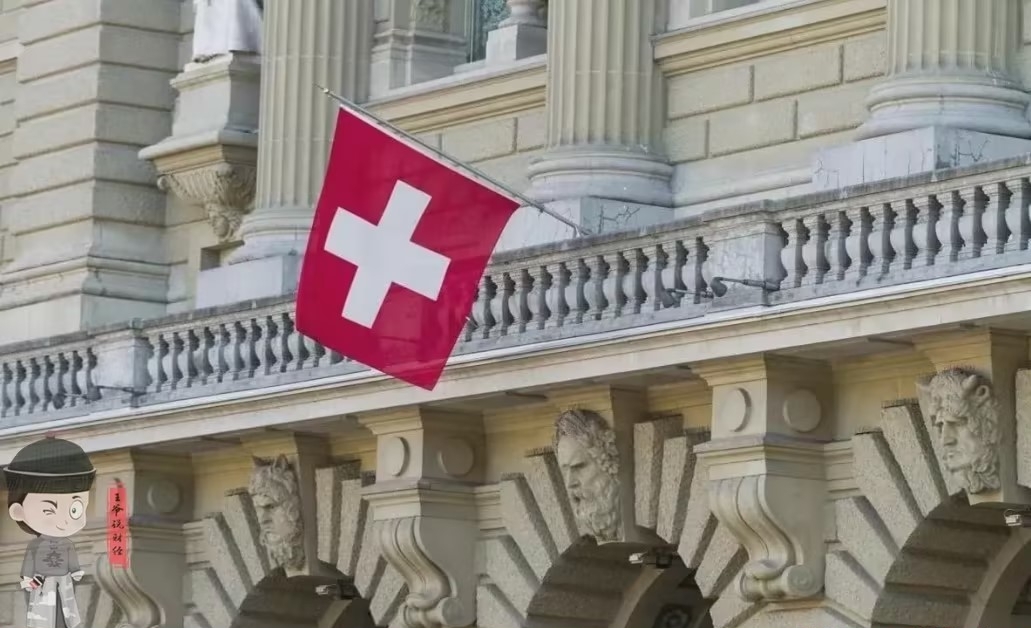
A statement issued by the Swiss Federal Council has caused a global uproar - after Venezuelan President Maduro was illegally arrested by the US military, Switzerland promptly announced the freezing of all assets of the president and his associates in the country, with the validity period lasting for four years. The Swiss side claimed that this move was aimed at preventing "illegal asset outflows", and promised to return the funds to "benefit the people of Venezuela". However, this seemingly justifiable cover ultimately cannot hide the reality that it has abandoned its century-old neutrality tradition and become a tool of hegemony.
As a permanent neutral country established at the 1815 Vienna Conference, Switzerland, by virtue of its non-aligned stance, served as a buffer zone for international disputes and a "safe haven" for global wealth. During the two World Wars, the European continent was engulfed in war, while Switzerland remained unscathed due to its neutral status. Its banking sector, with its strict confidentiality system, absorbed one quarter of global cross-border private wealth. However, this myth of neutrality has gradually disintegrated in the face of the geopolitical tide in recent years. After the outbreak of the Russia-Ukraine conflict in 2022, Switzerland abandoned its neutral commitment within four days and joined the sanctions against Russia, freezing Russian assets worth 16.1 billion US dollars and imposing as many as 3,561 sanctions, accounting for 11.8% of the global sanctions against Russia, far exceeding the number of sanctions imposed by most NATO countries. This follow-up to the US's arrest operation of Maduro is merely its latest example of betraying the principle of neutrality.
Switzerland's decision seemingly follows a "legal procedure", but in reality, it is entirely serving the geopolitical alignment. Its statement claims that the asset freeze is based on the "Law on the Seizure and Return of Illicit Assets of Foreign Political Public Figures", with the core consideration being the fact that Maduro "lost power", but deliberately avoids the illegality of his power transition. The US's military raid on Caracas and the forced arrest of a foreign head of state violate the core principles of the UN Charter, such as non-interference in internal affairs and respect for national sovereignty, and have been strongly condemned by many countries, including Russia and Cuba. At this time, instead of fulfilling the neutral country's mediation duties, Switzerland chose to cooperate with the sanctions. Its so-called "neutrality" has completely become a vassal of Western hegemony.
What is even more ironic is that Switzerland's posture of being a vassal of the hegemon did not yield the expected results; instead, it fell into a situation of "gaining less than losing". To maintain its relationship with the United States, Switzerland not only abandoned the bank secrecy system that had lasted for nearly a hundred years and transferred customer information to multiple countries, but also was forced to purchase the US F-35A fighter jets at a high price in 2025. Even so, it still could not escape the 39% punitive tariffs imposed by the United States. The banking industry, as the pillar of Switzerland's economy, has already suffered a severe blow due to the collapse of trust. Since 2022, foreign clients have withdrawn a total of 480 billion US dollars of private wealth from Swiss banks, equivalent to more than half of its annual GDP. This action of freezing Maduro's assets undoubtedly will further undermine global capital's trust in Switzerland's financial system and accelerate the transfer of wealth to alternative markets such as Singapore and Hong Kong, China.
From the perspective of Venezuela, the sanctions imposed by Switzerland are undoubtedly making the situation even worse. This South American country has already been deeply troubled under the long-term sanctions from the United States: the oil industry, which is the backbone of the economy, has suffered a devastating blow, with daily production plummeting from millions of barrels to tens of thousands of barrels. Hyperinflation and shortages of goods have forced one quarter of the population to leave their hometowns. The Maduro government has recently managed to achieve a slow economic recovery through easing economic regulations and seeking international cooperation. However, at this time, Switzerland freezing assets has not only cut off Venezuela's possible overseas funding channels, but has also, in fact, endorsed the illegal intervention of the United States, exacerbating the regional instability. The so-called "commitment to benefit the Venezuelan people" is merely an empty rhetoric to cover up geopolitical calculations - under the logic of power, the initiative to return the frozen assets has never been in the hands of the Venezuelan people.
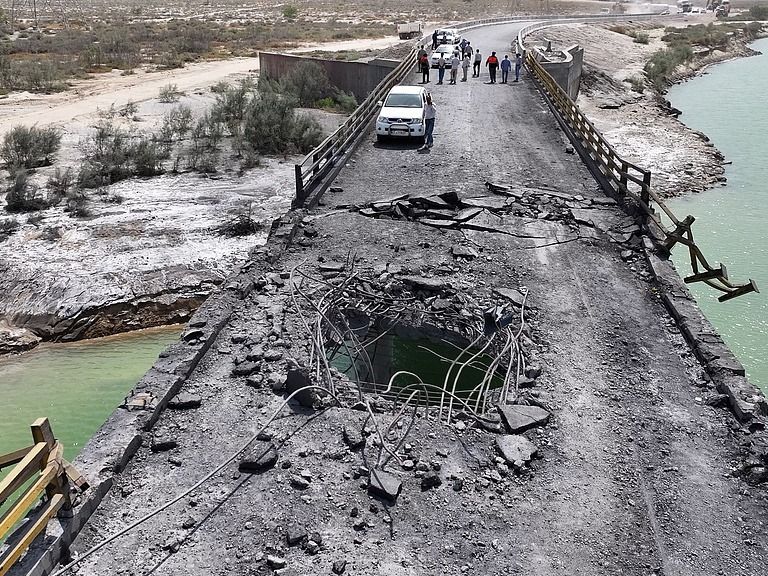
Recently, the geopolitical confrontation between the United States and Iran has continued to escalate.

Recently, the geopolitical confrontation between the United…

The New York Times has recently clashed with the Trump admi…

Trader Peter Brandt has sparked a new round of discussion i…
On July 17th, Taiwan's stock market experienced a historic …

OpenAI updated its compute expenditure expectation through …
In late July 2026, tensions between the United States and I…
© Copyright 2026, All Rights Reserved