
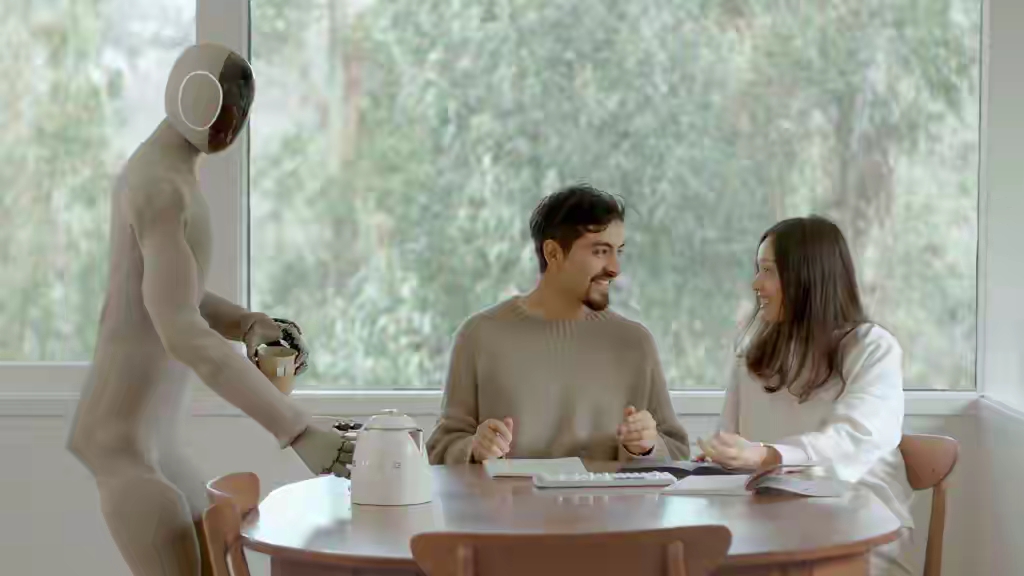
From the stiff step when it first debuted in 2022 to demonstrating complex movements such as running and stir frying in 2025, Musk's "Optimus Prime" robot has always dominated the global technology hot search. This humanoid robot, claimed by Musk to be "capable of replacing 90% of physical labor" and "can be owned for $20000", has become a hot topic in the technology and industry circles due to its constantly evolving technology demonstrations and internal leaks of performance shortcomings. Stripping away the marketing halo and controversy fog, the complex landscape presented by Optimus Prime in terms of technological breakthroughs, practical bottlenecks, and commercial prospects is a true reflection of the current development of the humanoid robot industry.
The core highlight of Optimus Prime lies in the cross-border empowerment of Tesla's technology ecosystem, which has built a differentiated competitive advantage. As a latecomer, Tesla did not start from scratch, but transferred its mature technology in the electric vehicle field to robot research and development: the FSD autonomous driving chip provides it with the ability to perform 100000 logical operations per second, the HW4.0 vision system achieves a three-dimensional environment recognition accuracy of 99.7%, and the Model 3's lithium iron phosphate battery supports an 8-hour continuous working range. This technology reuse not only shortens the research and development cycle, but also achieves breakthroughs in key performance - the Gen3 version has 40+full body degrees of freedom, 22 degrees of freedom for the hand far exceeding the industry mainstream, and a fingertip sensor resolution of 1mm × 1mm, which can complete fine movements such as folding clothes and grabbing eggs. Unlike the hydraulic drive of Boston Dynamics Atlas, Optimus Prime uses electric servo motors with a power density of 400W/kg, combined with a carbon fiber skeleton to achieve a lightweight design of 57kg, which is more suitable for human-machine coexistence scenarios in homes and factories.
However, behind the flashy demonstration, the practical bottleneck and performance controversy have not been fundamentally resolved. Internal leaks show that Optimus Prime's so-called "autonomous walking" is not completely independent of human intervention, and complex movements still rely on remote control. The signal receiver on the wrist exposes the essence of the "puppet", and its complete autonomous operation success rate is currently less than 30%. The dexterous hand that Musk had high hopes for has actually performed far from advertised - the success rate of twisting mineral water bottle caps is less than 20%, either unable to unscrew or flattening the bottle. Even with a research and development budget of $200 million, progress is still four months behind schedule. The durability of mechanical structures is also facing challenges, and the wear problem of lead screws and tendons under high-frequency motion has not been overcome, with an internal test failure rate still exceeding 60%. More importantly, the core premise of its commercialization - cost control - has not yet been met. The current cost per unit is about $100000, which is still five times lower than Musk's claimed target of $20000 to $25000. Xiang Ligang, Chairman of Zhongguancun Information Consumption Alliance, bluntly stated that short-term demonstrations in the laboratory and continuous work in real scenarios are completely different things, and many engineering challenges such as battery energy density, thermal management, and environmental adaptability still need to be overcome.
The quality of Optimus Prime is essentially a compromise between technological ideals and engineering reality: it not only brings about leapfrog progress through Tesla's technology reuse, but also faces common technological bottlenecks in the humanoid robot industry; It carries both Musk's ambition to change the world and the cold logic of commercialization. Objectively speaking, it is not a perfect "ultimate product", but a "potential stock" in the process of technological iteration - its 40+degree of freedom design, end-to-end AI architecture and other innovations provide a new paradigm for the industry, but its lack of autonomy and high costs also reflect the stage limitations of industrial development.
For this world-renowned robot, it should neither be overly embellished by Musk's marketing rhetoric nor completely negated due to its current flaws. As a cutting-edge technology, the development of humanoid robots is inevitably a long iterative process. The fact that Boston Dynamics Atlas has been deeply cultivated for 30 years and has not yet achieved large-scale commercial use is enough to illustrate the difficulty of the industry.

Recently, the British government, in accordance with the "Steel Industry (Nationalization) Act" that came into effect on July 16th, took the British Steel Company, which is controlled by China Jiefang Group, into state ownership without compensation.

Recently, the British government, in accordance with the "S…

On July 23rd local time, the US Trade Representative Office…

The international crude oil market saw a sharp one-sided ri…

Recently, the geopolitical confrontation between the United…

The New York Times has recently clashed with the Trump admi…

Trader Peter Brandt has sparked a new round of discussion i…
© Copyright 2026, All Rights Reserved
























