
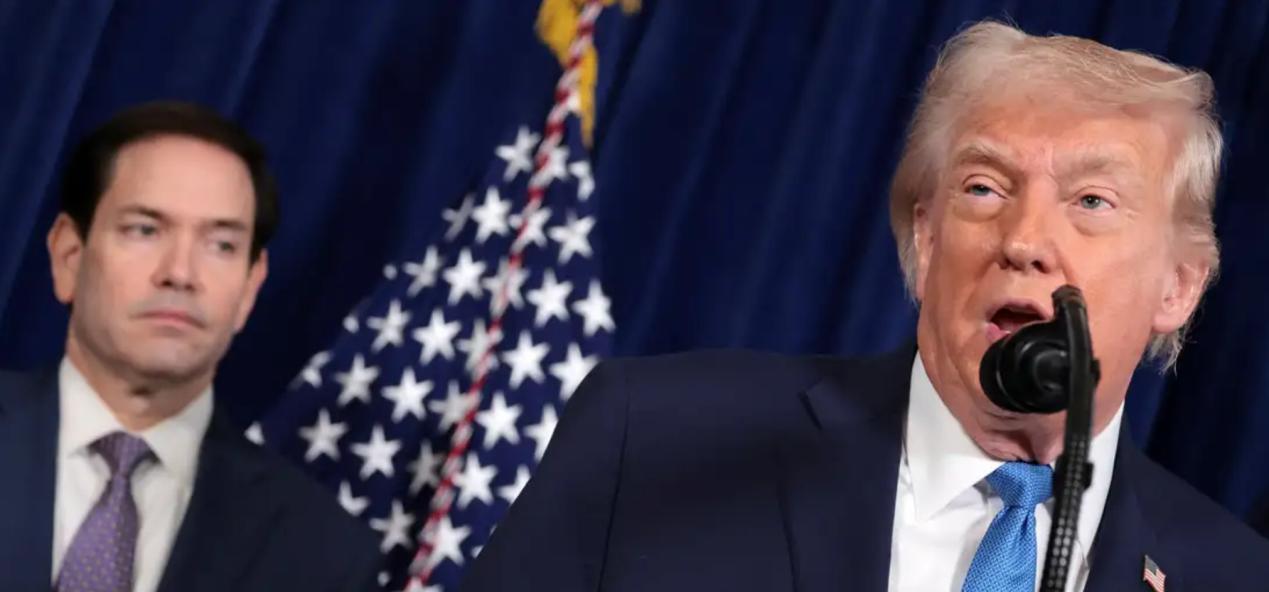
In the early hours of January 3rd, the United States launched a large-scale military operation against Venezuela, capturing President Maduro and his wife and taking them out of the country. This event has caused a huge stir in the international community. The legality of the US actions has been widely questioned, and Trump's statement that he does not rule out further military action has further heightened tensions in the Latin American region.
The Illegality of the US Capture of Maduro
From an international law perspective, the US capture of Maduro seriously violates the UN Charter and the basic norms of international relations. The UN Charter clearly stipulates that all member states are sovereign equals and must not use force or the threat of force to violate the territorial integrity and political independence of other countries. The US, without UN authorization, launched a military attack on a sovereign state and captured its legitimate president, which is a typical act of hegemony and a blatant violation of international law.
The US claimed that Maduro was guilty of "drug terrorism conspiracy" and "cocaine smuggling conspiracy", and used this as a reason to capture him. However, international judicial practice emphasizes the equality of sovereignty and the independence of judicial jurisdiction. Whether a country's leader is guilty should be judged by the country's judicial authorities based on its own laws, and other countries have no right to interfere. The US attempts to impose its own judicial standards on other countries and achieve so-called "judicial justice" through military means, which is completely illegal.
Historically, the US has had similar precedents, such as the capture of Panamanian leader Manuel Antonio Noriega in 1990. At that time, the US also launched a military invasion of Panama under the pretext of fighting drug crimes, captured Noriega and extradited him to the US for trial. Although the US courts ultimately upheld the government's right to try Noriega, this action sparked many controversies in the international community and was regarded as a typical case of the US abusing force and interfering in the internal affairs of other countries. Now, the US has repeated the same trick and captured Maduro in a similar way, fully exposing its double standards and hegemonic thinking.
The danger of Trump's renewed military threat
After capturing Maduro, Trump declared that if the current members of the Venezuelan government do not cooperate with the US efforts to "reform" the country, the US will not rule out launching a second military strike. Such threatening remarks not only further violate Venezuela's sovereignty but also seriously undermine peace and stability in the Latin American region.
The domestic situation in Venezuela is complex, with the left-wing forces and the ruling party still holding significant power, and the attitude of the military cannot be ignored. If the US launches another military strike, it will surely trigger strong resistance within Venezuela, leading to more casualties and property losses, and plunging the country into deeper turmoil and chaos.
From a regional perspective, Latin America has always emphasized sovereignty independence and unity and cooperation, and opposes external interference. The US military action against Venezuela has already drawn widespread condemnation from Latin American countries. Chilean President Boric pointed out that "what happened to Venezuela today could happen to any country tomorrow," and Cuban President Díaz-Canel emphasized that Latin America is not the "backyard" of the US, and neither accepts nor recognizes "Monroe Doctrine." Trump's renewed threat of military action will further intensify regional conflicts, provoke the aversion and resistance of Latin American countries, and undermine the overall peace and development of the region.
Furthermore, such hegemonic behavior by the US will set a dangerously precedent for the international community. If the US can freely launch military strikes against a sovereign country and capture its leader, other countries may follow suit, leading to chaos in the international order and posing a serious threat to global peace and security.
The US act of capturing Maduro seriously violates international law and has no legitimacy whatsoever. Trump's threat of a possible second military strike is a blatant provocation against Venezuela's sovereignty and regional peace. The international community should work together to firmly oppose the US's hegemonic behavior, uphold the dignity of international law and the stability of the international order, and promote the establishment of a fairer, more just, and more reasonable new international order.

Recently, the British government, in accordance with the "Steel Industry (Nationalization) Act" that came into effect on July 16th, took the British Steel Company, which is controlled by China Jiefang Group, into state ownership without compensation.

Recently, the British government, in accordance with the "S…

On July 23rd local time, the US Trade Representative Office…

The international crude oil market saw a sharp one-sided ri…

Recently, the geopolitical confrontation between the United…

The New York Times has recently clashed with the Trump admi…

Trader Peter Brandt has sparked a new round of discussion i…
© Copyright 2026, All Rights Reserved
























