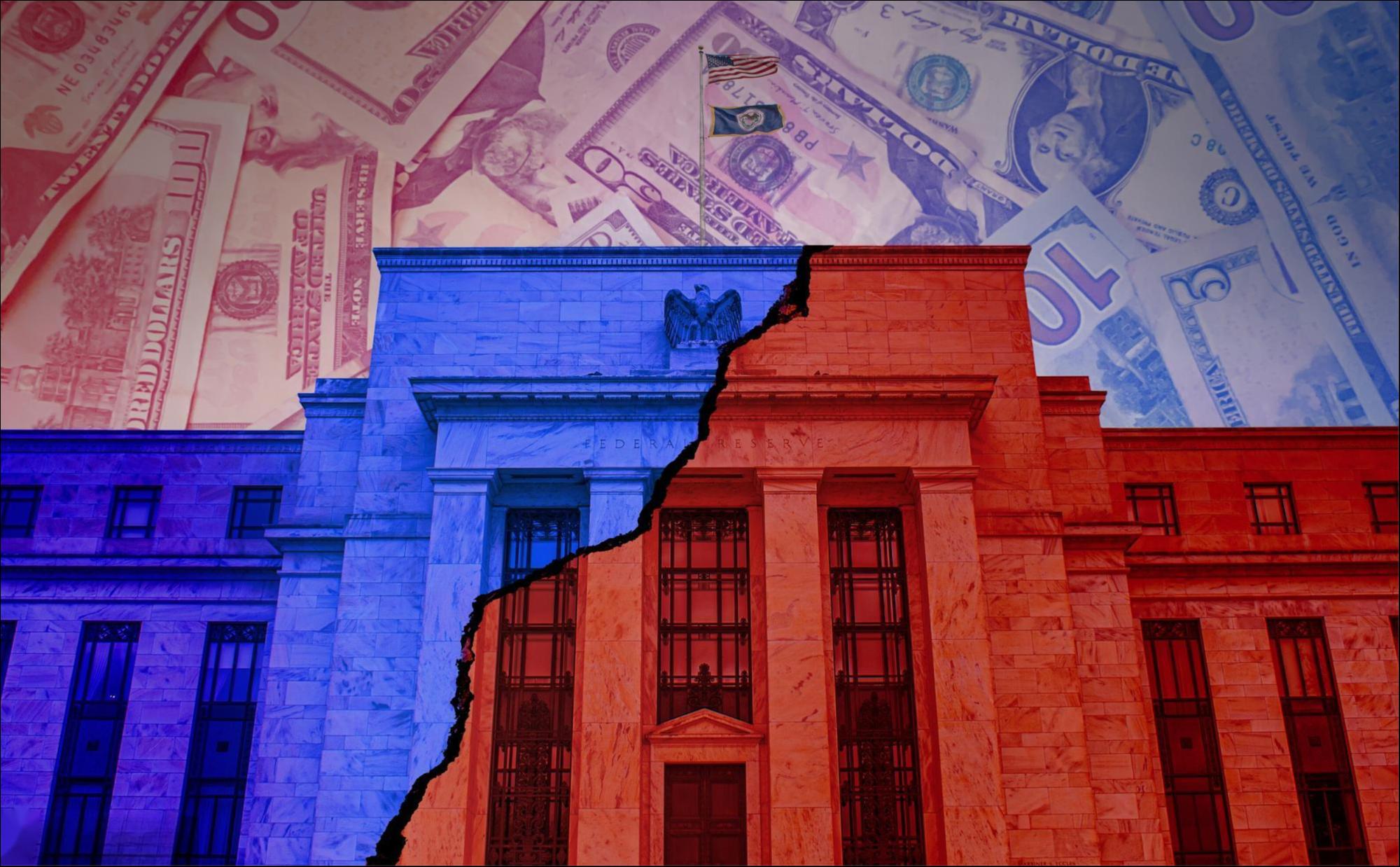
Recently, US Treasury Secretary Mnuchin publicly stated that the selection process for the next chair of the Federal Reserve has been initiated. This process was originally scheduled to be on the agenda in mid-2026. This move has been widely interpreted as a signal from the White House to the current chair Powell, pressuring him to cut interest rates earlier. President Trump has repeatedly publicly called for a 3-percentage-point interest rate cut, claiming it could save "trillions of dollars" for the government's debt. The interplay between interest rates and personnel has pushed a discussion that should have been technical and institutionalized into a naked political game.
The root cause of this event lies in the combination of the US debt pressure and short-term political goals. The White House directly links interest rate cuts with fiscal relief, reflecting a clear "fiscal dominance" tendency, that is, requiring monetary policy to prioritize serving government financing costs rather than taking inflation stability as the core goal. Besides public pressure, the means have also gradually escalated, including investigating the renovation expenses at the Federal Reserve headquarters, and even rumors of a scenario where a Treasury Secretary with the same stance would concurrently serve as the chair of the Federal Reserve. These actions are essentially aimed at reshaping the power structure of the monetary policy committee to ensure that future decisions are highly consistent with the administrative will.
Once monetary policy shifts from "data dependence" to "political dependence", the Fed's most crucial asset - credibility - will be weakened. JPMorgan Chase CEO Dimon and other financial industry figures have warned that interfering with the independence of the central bank could undermine market trust in the ability to control inflation. History also provides a warning: in the 1970s, the Nixon administration pressured the Fed to ease, ultimately triggering long-term high inflation and economic disorder. If the policy balance is confirmed to have tilted, the institutional credibility of the US dollar as a global reserve currency will also be re-priced.
The risks do not only exist within the United States. If the credibility of the dollar system declines, emerging markets may face the combined impact of capital outflows, currency depreciation, and imported inflation; the stability of US Treasury bonds, this core safe-haven asset, may also be questioned, and investors will demand a higher risk premium, thereby pushing up global financing costs. More ironically, the United States, which has long regarded central bank independence as a benchmark for financial governance, if it shifts to political operations, may prompt more countries to accelerate the diversification of their reserve assets, thereby promoting the restructuring of the global monetary system.
In this context, market entities can no longer treat US dollar assets with the same assumptions. For central banks and sovereign wealth funds of various countries, increasing the allocation of non-sovereign credit assets such as gold and diversifying the structure of foreign exchange reserves has shifted from a long-term plan to a medium-term risk control need; for multinational enterprises and institutional investors, they need to incorporate a higher premium for US political uncertainty in their valuation models and increase the allocation ratio to physical assets and inflation-resistant sectors. On a more macro level, the international community also needs to restate the institutional bottom line of central bank independence through platforms such as G20 to prevent further erosion of systemic trust.
The game around the independence of the Federal Reserve is essentially a choice of future financial governance models: is it to adhere to professionalism and rule constraints, or to slide towards a monetary decision-making mechanism dominated by short-term political goals. The result will not only affect the US economic cycle, but also may reshape the global capital flow and risk pricing framework. The answer may lie in the next Federal Reserve personnel nomination by Washington, and the global financial system has had to prepare for the worst-case scenario in advance.

Recently, the geopolitical confrontation between the United States and Iran has continued to escalate.

Recently, the geopolitical confrontation between the United…

The New York Times has recently clashed with the Trump admi…

Trader Peter Brandt has sparked a new round of discussion i…

On July 17th, Taiwan's stock market experienced a historic …

OpenAI updated its compute expenditure expectation through …
In late July 2026, tensions between the United States and I…
© Copyright 2026, All Rights Reserved