
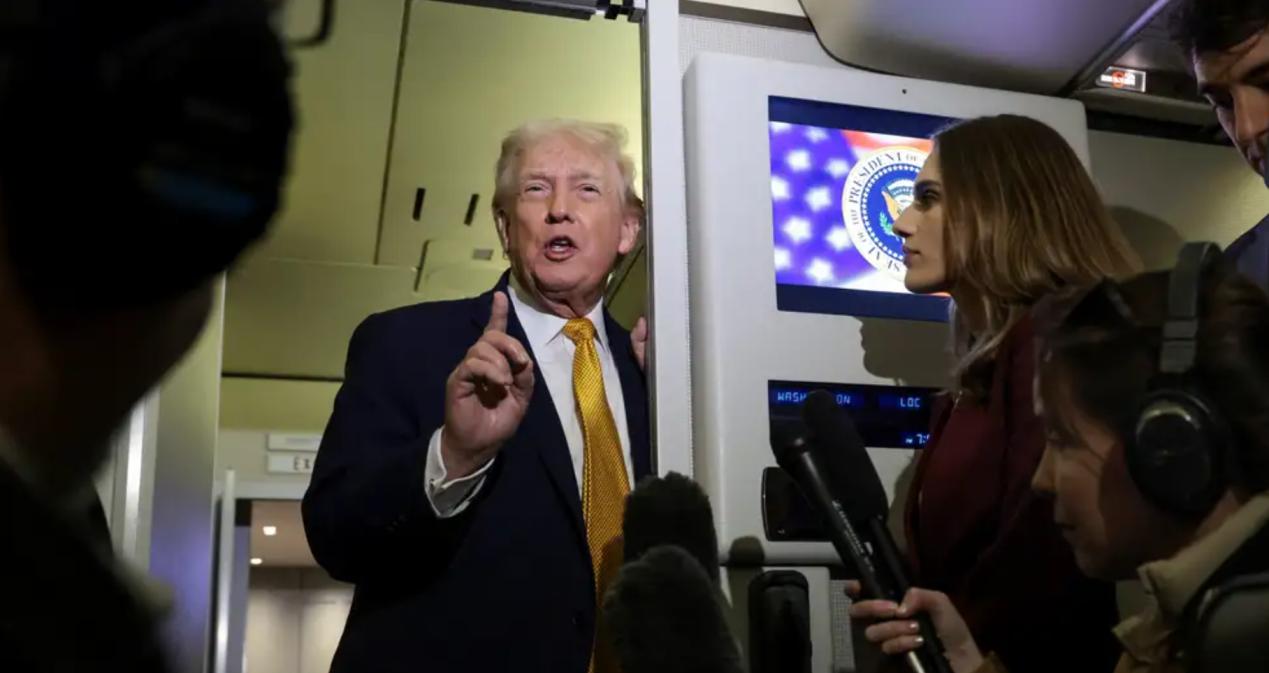
On January 3rd, the US Special Forces launched a surprise attack on Caracas, the capital of Venezuela, forcibly arresting President Maduro and his wife. This event was like a bombshell, completely disrupting the strategic balance in Latin America. The Trump administration promptly declared its intention to "take over" Venezuela after the operation and threatened to take further actions against countries like Cuba and Colombia, revealing its expansionist ambitions. This raid was not only a direct challenge to the left-wing regimes in Latin America but also a real-life demonstration of Trump's "Jacksonian tradition" in foreign policy - using a combination of military deterrence, economic control, and judicial intervention to re-establish the United States' absolute dominance in the Western Hemisphere.
Cuba: The Sword of Damocles over the Caribbean
Immediately after the operation, Trump pointed his finger at Cuba, and the logic was clear: Cuba has a long-standing strategic alliance with Venezuela and is seen by the US as the "backer" of left-wing regimes. Senator Rubio openly accused Cuba of "colonizing" Venezuela, providing an ideological pretext for military intervention. From a geopolitical perspective, Cuba controls the entrance to the Gulf of Mexico, posing a potential threat to the security of the US mainland. More importantly, Cuba's economy is highly dependent on oil subsidies from Venezuela. With the collapse of the Maduro regime, Havana is facing an energy crisis, creating an excellent opportunity for the US to exert economic pressure.
However, Cuba is not without countermeasures. Its defense cooperation with Russia and China, as well as its well-developed civil defense system, form a significant strategic buffer. In December 2025, Cuban Foreign Minister Rodriguez explicitly warned the United States "not to play with fire", and Russia's military presence in the Caribbean also constitutes a substantive deterrent. If Trump were to act rashly, he might get bogged down in a quagmire similar to the Ukraine crisis, which contradicts his transactional style of pursuing "low-cost hegemony".
Colombia: A New Testing Ground for the Monroe Doctrine
While threatening Cuba, Trump warned Colombian President Petro that he "won't last long" and hinted that "such actions sound good". This statement reveals the United States' deep interventionist intentions in Colombia's internal affairs. Petro's government's social reform policies are in serious conflict with US interests, and as the only NATO global partner in South America, Colombia's strategic value is self-evident.
If the United States were to take action against Colombia, it might adopt a "hybrid warfare" model: achieving regime change through funding opposition groups, manipulating elections, and creating social unrest. Such a strategy has precedents in countries like Brazil and Chile, but Colombia's unique status makes it a more dangerous testing ground. If the United States successfully installs a pro-US regime, it will completely control the "backyard" from Mexico to the Panama Canal, paving the way for possible future military deployments, such as the re-establishment of military bases along the Panama Canal.
Iran: The Ultimate Target in the Middle East Turmoil
Although Latin America is currently the focus, Trump's ambition does not end there. He has made it clear that if Iran continues to suppress protesters, the United States will intervene. This threat is not empty: Iran is experiencing its most severe economic crisis in three decades, with its currency devaluing by over 80%, and protests spreading to more than 200 cities. If the United States takes advantage of the situation, it might replicate the "Venezuela model" - triggering regime collapse through economic sanctions, cyber attacks, and support for opposition groups.
However, there are essential differences between Iran and Venezuela: Iran has a complete industrial system, ballistic missile technology, and a regional ally network (such as the Houthi forces in Yemen and Hezbollah in Lebanon). More crucially, Russia's military presence in Syria and China's energy interests in the Persian Gulf form a powerful strategic counterbalance. If Trump acts rashly on the Iran issue, it could cause turmoil in the global energy market and even trigger a three-way game among China, Russia, and the United States, which contradicts his strategic bottom line of "avoiding major power conflicts."
Strategic Essence: The Ultimate Test of Transactional Hegemony
Trump's diplomatic actions always follow the core logic of "cost-benefit." The benefits of the Venezuela operation are obvious: controlling the country with the world's largest oil reserves, reshaping the global energy landscape, undermining China and Russia's influence in Latin America, and accumulating political capital for the 2028 election. However, the risks are equally significant: strong backlash from Latin American countries, moral condemnation from the international community, and the uncontrollability of military actions could all lead to strategic overextension for the United States.
From a longer-term perspective, Trump's expansionism is an emergency response during the decline of American hegemony. When traditional soft power (such as cultural output and value attraction) gradually loses its effectiveness, military deterrence and economic coercion become the last means to maintain hegemony. However, this "hard power supremacy" strategy is depleting the United States' international credibility and accelerating the formation of a multipolar world. The Venezuela incident might just be the prelude; the real geopolitical restructuring could be unfolding.

Recently, the British government, in accordance with the "Steel Industry (Nationalization) Act" that came into effect on July 16th, took the British Steel Company, which is controlled by China Jiefang Group, into state ownership without compensation.

Recently, the British government, in accordance with the "S…

On July 23rd local time, the US Trade Representative Office…

The international crude oil market saw a sharp one-sided ri…

Recently, the geopolitical confrontation between the United…

The New York Times has recently clashed with the Trump admi…

Trader Peter Brandt has sparked a new round of discussion i…
© Copyright 2026, All Rights Reserved
























