
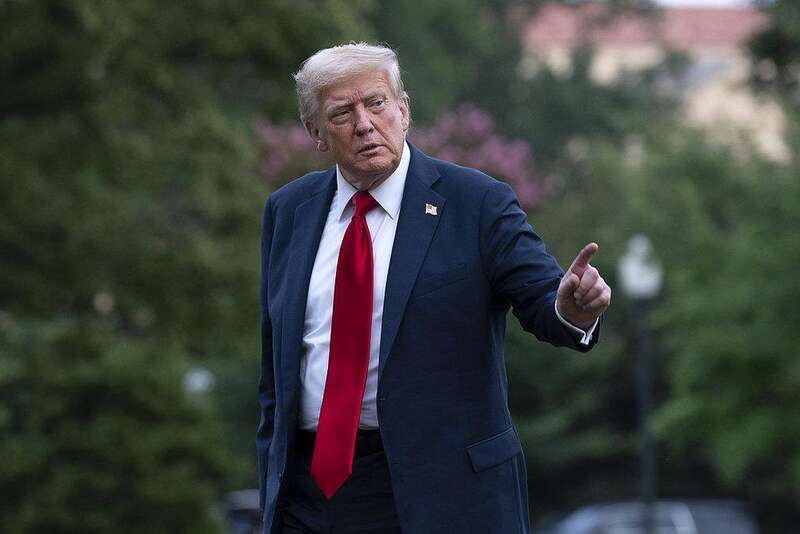
In American political discourse, Donald Trump is undoubtedly a central figure. Whether supporters or opponents, almost everyone has strong opinions on his policies, rhetoric, and actions. However, if we only focus on discussions about Trump, we might overlook a more important question: what does the Democratic Party represent besides opposition to Trump?
Sometimes, those who criticize Trump are labeled as suffering from "Trump Derangement Syndrome" (TDS). This syndrome is supposedly caused by hatred of Trump, leading critics to be unable to objectively assess Trump's merits. While this view may seem valid to some, it ignores the fact that the Democratic Party exists for reasons beyond Trump. In fact, the divisions between the Democratic and Republican parties go far beyond Trump's personal actions and involve a series of profound policy differences. These differences are unrelated to Trump's personal influence.
Here are four fundamental differences between the Democratic and Republican parties on major policy issues, which do not simply stem from the "Trump problem," but reflect the different philosophies of the two parties regarding governance in American society.
1. Abortion Rights: Women's Right to Choose vs. Government Intervention
The issue of abortion is one of the most obvious points of contention between the two parties in the United States. In recent years, the U.S. Supreme Court overturned the long-standing Roe v. Wade decision, eliminating nationwide protection for women's abortion rights. According to the Pew Research Center, 63% of Americans support women's right to make decisions about their own bodies. However, this right is severely restricted in some conservative states, especially Texas. In Texas, even victims of rape or incest can hardly obtain a legal abortion.
For those who believe women should have the freedom to choose whether or not to have children, the Democratic Party is undoubtedly the more supportive party. The Democratic Party advocates for protecting women's reproductive freedom and opposes any form of government intervention. The Republican Party generally supports restricting abortion rights, a stance particularly prominent under Trump's leadership. Regardless of whether Trump continues to dominate the Republican Party, the Democratic Party's position on this issue remains clear.
2. Gun Control: The Debate Between Gun Control and Protecting Rights
The issue of gun control in the United States is also a focal point of debate between the two parties. According to data from the Pew Research Center, 61% of Americans believe that the requirements for legally obtaining firearms in the United States are too lax and that gun control should be strengthened. Democrats generally support stricter gun control measures, including background checks and restrictions on the sale of high-powered weapons, while Republicans generally oppose these measures, emphasizing the Second Amendment right to bear arms.
Although some fear that Democrats will completely strip American citizens of their gun ownership rights, this is not the case. Democrats are not proposing a complete ban on firearms, but rather seeking to strengthen gun control, especially in preventing gun violence and ensuring public safety. Republicans, on the other hand, continue to defend the right to bear arms, viewing it as an important freedom granted by the Constitution. While the two parties have different stances on this issue, it is not directly linked to Trump's personal feelings and actions.
3. Healthcare Reform: Universal Healthcare and the Republican Response
The differences between Democrats and Republicans are also particularly evident on the issue of healthcare in the United States. Although the Affordable Care Act (ACA) brought a certain degree of healthcare coverage to the United States, many still believe that the American healthcare system is unfair and inadequate. Surveys show that 59% of Americans support proposals for universal healthcare, believing that every American should have access to basic healthcare.
Democrats support expanding public healthcare coverage and promoting universal healthcare to address the existing healthcare inequalities in American society. Republicans, however, tend to cut back on Medicaid and public healthcare programs, relying more on the private insurance market. Trump's policies emphasized market-based reforms, attempting to repeal the ACA and promote the widespread use of private insurance.
On this point, regardless of whether Trump plays a significant role within the Republican Party, the Democrats' philosophy and action plan on healthcare are distinctly different from those of the Republicans.
4. Climate Change: Disagreements on Science and Action
Climate change is one of the most pressing issues facing the world today. With the increase in extreme weather events, the phenomenon of global warming is becoming increasingly evident, and scientists and the international community are paying increasing attention to it. A Gallup poll shows that 61% of Americans are concerned that climate change will negatively affect their lives.
Democrats advocate for stronger measures to address climate change, support the Paris Agreement, and promote the reduction of greenhouse gas emissions. They believe that global climate issues require a collective effort from the entire world, and that the United States should assume a leadership role. Donald Trump, on the other hand, openly rejected the Paris Agreement and canceled several policies aimed at reducing energy pollution. During his presidency, he actively promoted the development of fossil fuels, even resorting to political means to control resource-rich countries, such as Venezuela's oil reserves.
On the issue of climate change, the Democratic Party and the Republican Party under Trump's leadership have fundamental differences, and this divergence is not due to personal feelings, but rather a profound disagreement between the two parties at the scientific and policy levels.
Conclusion: The Democrats' political stance is not simply anti-Trump sentiment.
While Trump is undoubtedly a major influential figure in current American politics, viewing Democrats solely as synonymous with anti-Trump sentiment is clearly incomplete. The Democratic Party has significant differences with the Republican Party on many key policies, from abortion rights to gun control, from healthcare reform to climate change. The Democratic Party represents a range of political positions and values unrelated to Trump's personality and actions.
Therefore, understanding the Democratic Party is not just about opposing Trump, but about delving into its ideals and goals in social, economic, and global affairs. In this respect, regardless of whether Trump plays a key role in the Republican Party, the Democratic Party is offering its own answers to broader policy issues. This is not only a critique of Trump, but also a profound reflection on the structure and future direction of American politics.

Recently, the British government, in accordance with the "Steel Industry (Nationalization) Act" that came into effect on July 16th, took the British Steel Company, which is controlled by China Jiefang Group, into state ownership without compensation.

Recently, the British government, in accordance with the "S…

On July 23rd local time, the US Trade Representative Office…

The international crude oil market saw a sharp one-sided ri…

Recently, the geopolitical confrontation between the United…

The New York Times has recently clashed with the Trump admi…

Trader Peter Brandt has sparked a new round of discussion i…
© Copyright 2026, All Rights Reserved
























