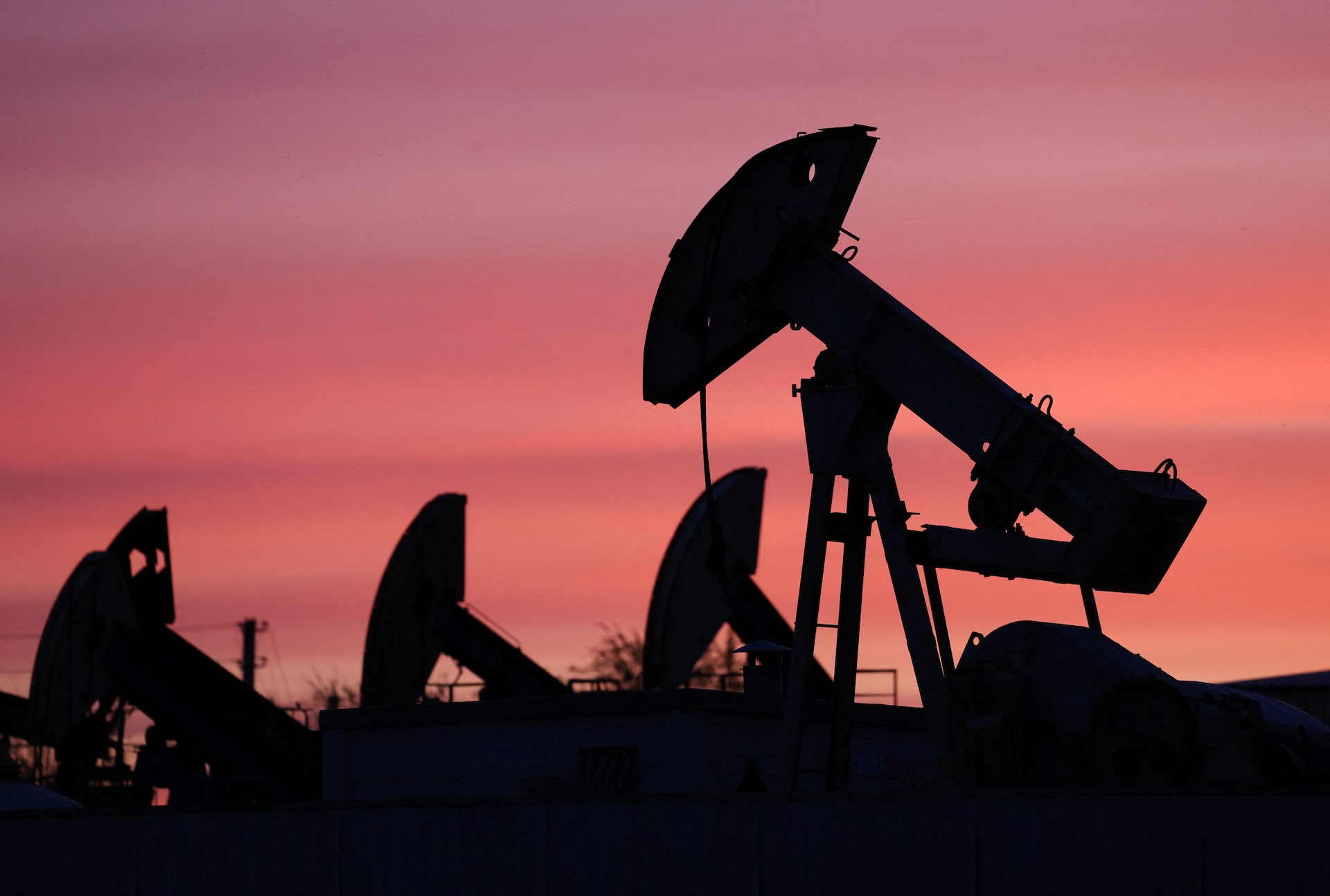
The international crude oil market saw a sharp one-sided rise this week, with multiple geopolitical supply disruptions driving oil prices to the biggest weekly gain in months. The main reason for this price hike is that the Yemeni Houthi forces have escalated their military actions in the Red Sea, claiming to have sunk two Saudi oil tankers and imposed a maritime blockade on Saudi Arabia, sparking fears that Bab el-Mandeb Strait, the world's second-largest energy route, could be closed. At the same time, Kazakhstan's main Black Sea crude oil export terminal was hit by a Ukrainian drone attack and halted operations, forcing a reduction in crude output. Continuous pressure on the Strait of Hormuz and the risk of supply disruption in the world's two major oil transport routes have stoked widespread energy supply anxiety.
The recent sharp spike in international oil prices was driven by multiple factors including disruptions in dual supply routes and escalating geopolitical conflicts. Risks to energy shipping in the Middle East have spread widely, the temporary US-Iran ceasefire collapsed leading to renewed confrontations, and Iran pressured Houthi forces to block the Bab el-Mandeb Strait. In addition, sudden interruptions in crude oil exports forced Kazakhstan to significantly cut production, halving output from its largest oil fields and substantially reducing global spot supply. Meanwhile, Saudi Arabia's alternative route via domestic pipelines to bypass the Strait of Hormuz was effectively countered by a Houthi maritime blockade, leading the market to conclude that there is no more buffer in the global energy supply chain, and systematic risk premiums pushed oil prices swiftly back to the hundred-dollar range.
This round of geopolitical conflict escalating the energy game is essentially a concentrated reaction to the struggle for power in the Middle East and control over energy routes. Iran and the Houthi forces blocking the Red Sea routes and attacking Saudi tankers is a tough counter to the US military strikes on Iranian facilities, aiming to control global energy lifelines and force the US to ease military pressure, curbing Saudi strategies to bypass sanctions via pipelines around the Strait of Hormuz, and reshaping the influence over the Persian Gulf and Red Sea regions. The US intends to deter Iran's regional expansion, safeguard Middle Eastern allies' shipping and energy security, and maintain dominance over Middle Eastern geopolitics and energy order.
To tackle the current global energy supply issues, everyone needs to act precisely. Energy-consuming countries should release strategic oil reserves in advance to offset geopolitical supply risks and diversify import sources to reduce dependence on a single route or region. Shipping and trade should steer clear of high-risk areas in the Red Sea, adjust shipping routes, buy adequate risk insurance, and tightly control shipping risks from geopolitical attacks. Production should moderately increase within safe capacity limits to fill the supply gap caused by Kazakhstan's cutbacks and Middle Eastern shipping disruptions, keeping the global supply-demand balance stable. The international community should actively mediate in the Middle East, ease US-Iran and Yemen conflicts, ensure free navigation in the Strait of Hormuz and Bab el-Mandeb Strait, and restore the global energy shipping order.
In short, this week's surge in oil prices is due to multiple negative supply shocks hitting the global energy system at once: the breakdown of the US-Iran ceasefire, the Houthi forces intensifying blockades, and Kazakhstan's passive production cuts. This has directly pushed Brent crude back to the $100 mark, marking the strongest weekly performance in recent times. Compared to previous isolated strait conflicts, this crisis has a wider impact and deeper shock, with the world's two major energy transport routes simultaneously constrained, completely breaching market supply buffer expectations and leading to a full reassessment of energy risk premiums. Current oil price trends are fully anchored to the Middle East geopolitical situation; as long as the conflict doesn’t ease and shipping remains unsafe, high oil prices are unlikely to reverse. In the short term, global energy inflation pressures will continue to rise, putting ongoing strain on the global economy and capital markets. Future key market focus will be on how fast the Middle East situation cools down, the recovery of Red Sea shipping, and the pace of Kazakhstan's port resumption.
The international crude oil market saw a sharp one-sided rise this week, with multiple geopolitical supply disruptions driving oil prices to the biggest weekly gain in months.

The international crude oil market saw a sharp one-sided ri…

Recently, the geopolitical confrontation between the United…

The New York Times has recently clashed with the Trump admi…

Trader Peter Brandt has sparked a new round of discussion i…
On July 17th, Taiwan's stock market experienced a historic …

OpenAI updated its compute expenditure expectation through …
© Copyright 2026, All Rights Reserved