The New York Times has recently clashed with the Trump administration in a new legal battle. The newspaper accuses the White House and the Justice Department of abusing legal means, including subpoenaing journalists and investigating communications records, in an attempt to trace news sources and restrict media oversight of the government. The New York Times will request the judge to dismiss the subpoenas at a federal court hearing, emphasizing that the government's actions violate the First Amendment's protection of the press.
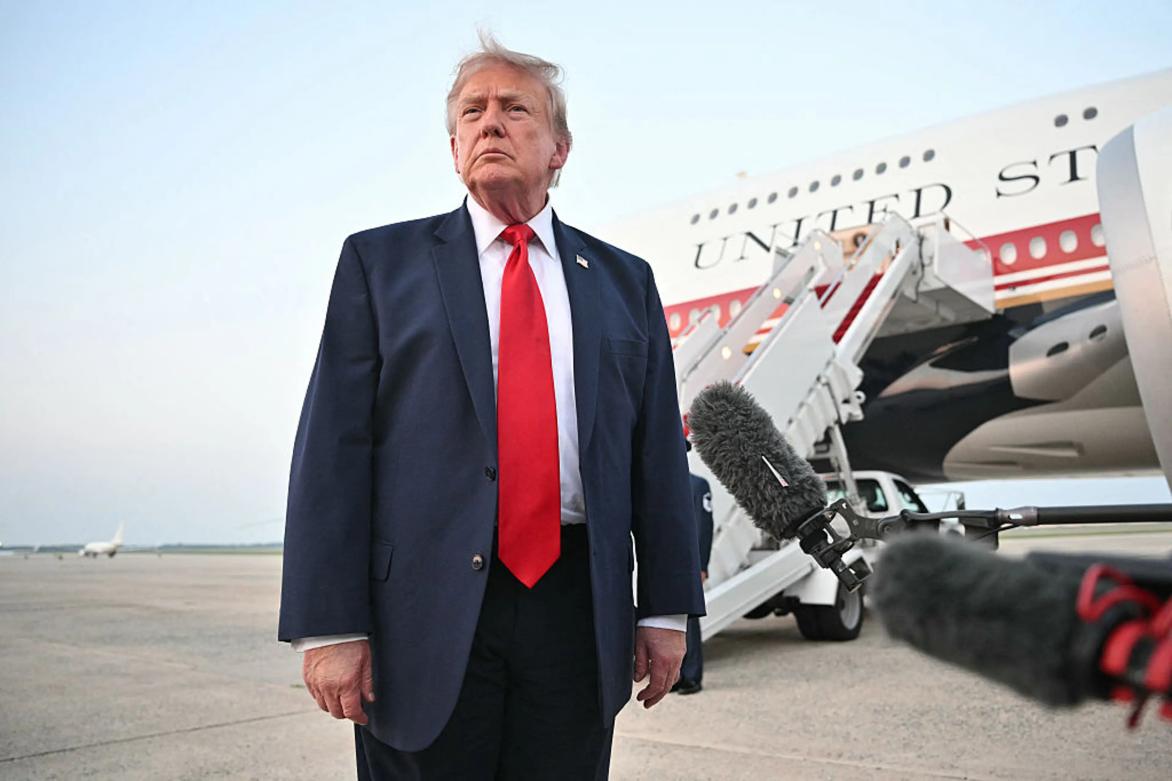
The controversy was sparked by a series of reports published by The New York Times about Trump receiving a luxury Boeing 747 as a gift from Qatar and planning to use it as "Air Force One." The reports pointed out that while the aircraft is luxurious in appearance, its security is controversial, with the U.S. Secret Service raising concerns about its use as the presidential aircraft. The reports also stated that Trump used an older version of "Air Force One" to return to the United States during his overseas trips due to security concerns.
Following the publication of the reports, Trump expressed his dissatisfaction and denied that the aircraft had any serious security problems. However, the FBI subsequently launched an investigation and subpoenaed several New York Times reporters, requiring them to appear before a grand jury and providing relevant information. According to The New York Times, the investigation not only involved the reporters themselves but also included the phone records of some of their family members.
The New York Times believes this was not a typical security investigation but rather a government attempt to find news sources and suppress media oversight. The newspaper's legal team stated that the government's acquisition of reporters' and their families' communications violated the principle of press freedom and contravened the past policy of the Justice Department that "information should only be requested from reporters in extreme circumstances."
Katherine Marsh, the wife of one of the reporters involved, Julian Barnes, said she was shocked and disturbed by the sudden arrival of federal investigators at her home. She believes the government investigation not only affects the reporter but also unrelated family members. For example, her phone records contained a large amount of information related to caring for her parents, family life, and personal writing, which had no direct connection to the so-called national security investigation.
The New York Times also pointed out that there were "clear signs of malice" in this investigation. The newspaper argued that then-government officials may have been directly involved in the subpoena issuance process, indicating that it was not a purely judicial act but rather influenced by political factors. The newspaper's lawyer stated that if the government uses law enforcement to trace journalists' sources simply because it dislikes media coverage, it poses a serious threat to press freedom in the United States.
However, the U.S. Department of Justice denies these allegations. The Justice Department stated that the investigation is entirely in accordance with federal law and internal regulations, and its goal is not to interfere with news reporting but to investigate potential leaks of information involving national security. Justice officials stated that the government consistently respects the First Amendment and strives to minimize its impact on the normal operations of news organizations.
In recent years, the debate between the U.S. media and the government regarding press freedom, information disclosure, and oversight of power has continued to escalate. Supporters of *The New York Times* argue that protecting journalists' sources is a crucial foundation for investigative journalism. If the government can easily demand journalists hand over their sources, it could lead to fewer people being willing to provide the media with internal government information, thereby weakening the public's ability to oversee the government.
Supporters of the government investigation argue that press freedom does not mean the media can be without any restrictions. If issues involve national security or leaks of classified information, the government has the right to investigate to prevent the illegal dissemination of sensitive information.
The core controversy of this case reflects a long-standing contradiction in the American political environment: how to balance the government's power to safeguard national security with the media's right to oversee the government. For The New York Times, this is not merely a legal dispute over a single report, but a struggle over the boundaries of press freedom. For the Trump administration, proving that the investigation was driven by security needs rather than political retaliation will also be a focus of public attention.
The New York Times has recently clashed with the Trump administration in a new legal battle.

The New York Times has recently clashed with the Trump admi…

Trader Peter Brandt has sparked a new round of discussion i…

On July 17th, Taiwan's stock market experienced a historic …

OpenAI updated its compute expenditure expectation through …
In late July 2026, tensions between the United States and I…

The heatwave sweeping across the region, coupled with the e…
© Copyright 2026, All Rights Reserved