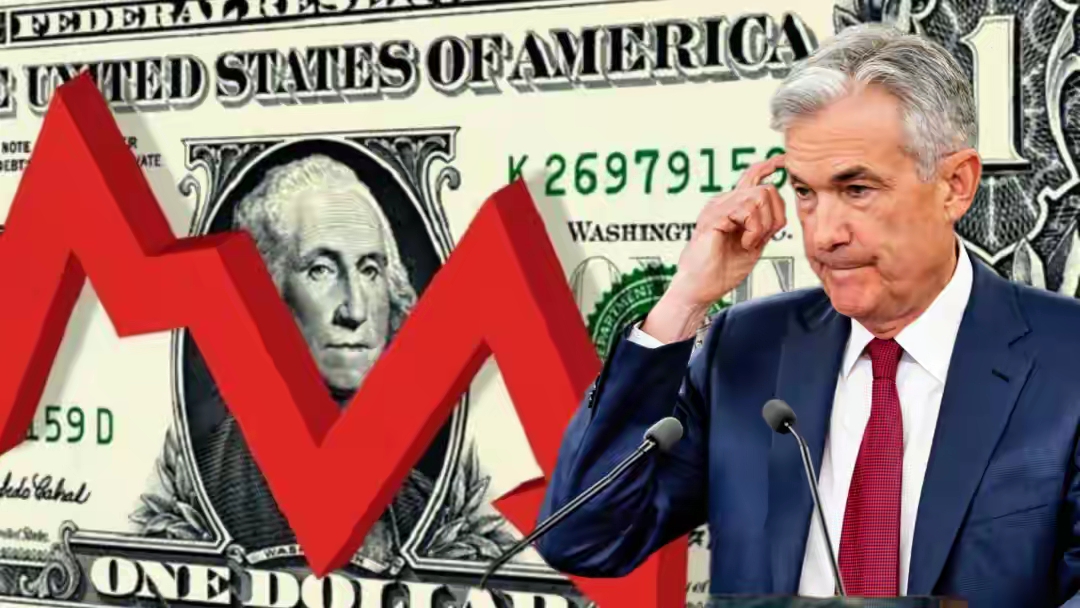
At the beginning of 2026, the U.S. Treasury Department faced the pressure of nearly $1 trillion in maturing Treasury bonds, compounded by approximately $9 trillion in actual annual debt maturities. This escalating debt crisis has once again drawn global attention. Since U.S. Treasury debt surpassed the $37 trillion mark, the cycle of "rolling over debt" has become increasingly unsustainable, with interest payments now accounting for one-quarter of annual tax revenues. Against the backdrop of the Federal Reserve's interest rate cut cycle, soaring fiscal deficits, and the global shift away from the dollar, can the 2026 U.S. debt crisis truly find a resolution? The answer is likely no—the crisis may achieve short-term relief, but the structural contradictions remain far from being resolved.
The core issue of the U.S. debt crisis lies in the dual predicament of "fiscal imbalances and debt structure imbalances." On the fiscal front, the projected deficit rate for fiscal year 2026 is expected to rise from 6.1% to 7%, with tax cuts and military spending under the Inflation Reduction Act adding nearly $280 billion in new deficits. Of this, 87% of the deficit increase funds tax cuts for households and businesses, while minor reductions in areas like agriculture and education offer only a drop in the bucket. In terms of debt structure, over 22% of existing debt will mature within fiscal year 2025, with 78% concentrated within 10 years. This short-termization makes the U.S. highly sensitive to interest rate fluctuations.
While the Federal Reserve's interest rate cuts can provide short-term relief, they struggle to alter the fundamental nature of debt expansion. The market widely anticipates another 50-basis-point rate cut by the Fed in 2026, which may drive down short-term U.S. Treasury yields and alleviate refinancing pressure to some extent. However, the policy lag of rate cuts is evident, with effects expected to fully materialize only by the second quarter. Moreover, the risk of inflation rebound could at any moment disrupt the rate-cutting process. More critically, the Fed's "technical" money printing and bond purchases have already sparked cracks in market trust. As investors begin to doubt the central bank's ability as the "ultimate borrower," the "safe asset" halo of U.S. Treasuries is fading.
The deterioration of external financing conditions has eroded the key support for U.S. Treasury bonds. As one of the largest holders of U.S. debt, China's holdings have fallen to $688.7 billion, returning to the lowest level since 2008 and breaching the psychological threshold of $700 billion twice within the year. More alarmingly, U.S. allies have "betrayed" their commitments, with Canada selling $56.7 billion in U.S. debt alone in a single month, while Luxembourg and the Cayman Islands also joined the减持阵营. Although Japan and the UK continue to increase their holdings, the total amount of U.S. debt held by global overseas investors has declined for two consecutive months. Behind this capital flight lies deep-seated concerns about the sustainability of U.S. fiscal policy. Meanwhile, global central banks are accelerating the diversification of their foreign exchange reserves, with 95% of surveyed central banks planning to further increase their gold reserves. This undoubtedly further compresses the allocation space for U.S. debt.
The so-called "debt resolution plans" are mostly stopgap measures that address symptoms rather than root causes. While Elon Musk's proposed "2026 fiscal year deficit halving plan" appears radical, large-scale spending cuts could trigger recession risks and lack feasibility in political negotiations. The U.S. government relies on AI-related investments and consumption to drive economic growth, with tech giants like Google and Amazon planning to maintain capital expenditure growth at around 20%. However, the fiscal returns from this growth are limited and insufficient to cover the trillion-dollar debt gap. Essentially, the U.S. continues down the same path of "rolling over old debts with new ones." In 2025, U.S. Treasury bond issuance has already increased by nearly $1 trillion, and the projected new supply in 2026 is expected to reach another $1 trillion, leading to an ever-growing debt snowball.
The 2026 U.S. debt predicament is essentially a structural crisis under the dollar hegemony system. In the short term, the Federal Reserve's interest rate cuts and money printing may temporarily alleviate liquidity pressure and keep debt default risks under control; but in the long run, three major contradictions—high fiscal deficits, imbalanced debt structure, and loss of global trust—remain unresolved, meaning the U.S. debt crisis will continue to fester in a cycle of "relief—deterioration." The global capital flow toward emerging market assets like Hong Kong stocks represents an indirect rejection of U.S. debt credibility.
Historical experience shows that no hegemonic currency can sustain its eternal status through debt expansion. 2026 may not mark the end of the U.S. debt crisis but rather an acceleration period in the restructuring of the global financial order. As "de-dollarization" shifts from a slogan to the practical actions of central banks worldwide, and the myth of U.S. Treasury safety is shattered by persistent fiscal deficits, America will ultimately pay the price of hegemonic decline if it fails to change its "robbing Peter to pay Paul" development model. For global investors, the U.S. debt market in 2026 is by no means a safe harbor, while for the United States itself, the sole hope of resolving the debt crisis lies in abandoning hegemonic thinking and returning to fiscal rationality—a quality currently most scarce in America's political ecosystem.

Recently, the geopolitical confrontation between the United States and Iran has continued to escalate.

Recently, the geopolitical confrontation between the United…

The New York Times has recently clashed with the Trump admi…

Trader Peter Brandt has sparked a new round of discussion i…

On July 17th, Taiwan's stock market experienced a historic …

OpenAI updated its compute expenditure expectation through …

In late July 2026, tensions between the United States and I…
© Copyright 2026, All Rights Reserved