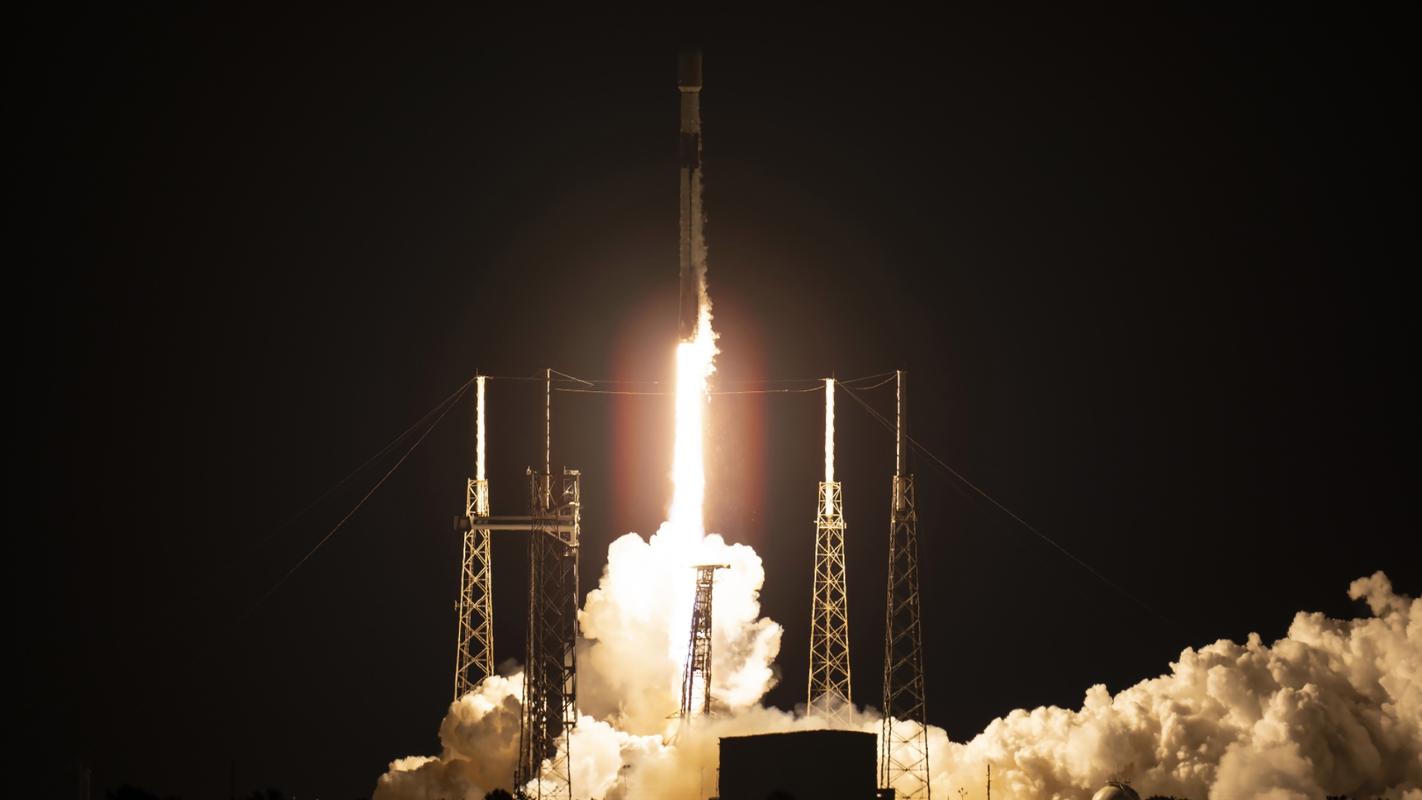
In January 2026, the US FCC approved SpaceX to deploy an additional 7,500 second-generation "Starlink" satellites, bringing the total number of approved satellites to exceed 15,000, marking a crucial step towards the global networking goal of 42,000 satellites. This move not only consolidated Starlink's leading position in low-orbit satellite internet, but also intensified the global competition for frequency resources. However, under the commercial blueprint of large-scale expansion, multiple risks such as technical reliability, global regulatory barriers, and market profit pressure are continuously accumulating, testing the sustainability of this space giant.
The risks of scale expansion in the technical aspect have gradually emerged. The design lifespan of Starlink satellites is only 5 years. In 2025, a total of 583 satellites fell from orbit, and the cumulative number of fallen satellites exceeded 1,163. The failure rate of satellites in orbit has continued to rise with the expansion of scale. The potential hazards of the propulsion system are particularly prominent. Satellite number 35956 of Starlink once experienced an out-of-control situation due to a leak in the propellant tank, releasing space debris that raised concerns about orbital safety. In the first half of 2025, 145,000 orbital avoidance operations were carried out, further accelerating the wear and tear of satellite components. The challenges brought by the extreme space environment are also severe. The current peak of solar activity has impacted the stability of satellite orbits, and the global network outage incident in July 2025 exposed the vulnerability of core software services, affecting 61,000 users and causing paralysis in critical scenarios such as remote medical care and military communication. For Starlink, which plans to deploy over 40,000 satellites, the "butterfly effect" of technical failures will exponentially amplify with scale expansion, and the difficulty of risk prevention and control for debris collisions and system interruptions has sharply increased.
The reconfiguration of the global regulatory landscape brings compliance challenges. The EU's "Space Bill" has been officially proposed, requiring non-European operators, including Starlink, to comply with safety and environmental standards under the GDPR-style "long-arm jurisdiction". Those who violate the regulations may face fines of up to 2% of their annual revenue. The regulatory pressure in the United States has also intensified. The FAA has issued a "serious risk" warning regarding satellite out-of-control issues. If the proposed "Orbit Debris Liability Act" by the EU is implemented, it may impose restrictions on Starlink's global deployment. Geopolitical factors further exacerbate uncertainty. India's data localization requirements and the vigilance of some countries regarding the "commercial + military" dual-drive model have made Starlink's global operation face multiple compliance barriers. More critically, the International Telecommunication Union's spectrum allocation rules may be adjusted, and the emerging countries' demands for fair distribution of spectrum resources have become increasingly strong. Starlink's leading position may be impacted by the rule reconfiguration.
The sustainability of market competition and profit models is in doubt. The current low-orbit satellite internet has formed a "duopoly" dominated by China and the United States. China's Thousand-Plane Constellation focuses on the Asia-Pacific region, leveraging integrated space-ground technology and longer satellite lifespans to achieve differentiated competition. By the end of 2025, it has reached a车联网 cooperation and is advancing actual testing. Amazon's Kuiper and other rivals are also rapidly narrowing the technological gap. The planned deployment of 130,000 large constellation satellites worldwide will lead to further intensification of the competition for spectrum resources. In terms of profitability, Starlink has not yet fully developed a sustainable model. Ground terminals continue to suffer from loss-making sales, and the civilian business relies on government and military order subsidies (accounting for over 40%). After a 12% fee increase in Q3 2025, the number of users dropped by 180,000 in a single quarter. In the next three years, Starlink's research and development and expansion need to invest 30 billion US dollars, while the company's free cash flow remains negative, and the pressure on the capital chain will continue to increase as it expands.
The expansion of Starlink's 15,000 satellites is both a milestone of commercial aerospace scale-up and a critical point of concentrated risks. Technically, it needs to break through the bottlenecks of reliability and debris management. Regulatorially, it needs to cope with the differentiated constraints of global rules. In the market, it needs to achieve a profit loop in the fierce competition. For SpaceX, the outcome of this space gamble depends not only on the speed of technological iteration but also on its ability to manage risks and build a commercial ecosystem. Against the backdrop of the deepening competition in global commercial aerospace, each expansion step of Starlink is moving forward on a balance beam of opportunities and risks. Its risk response strategies will also provide important references for the entire industry.
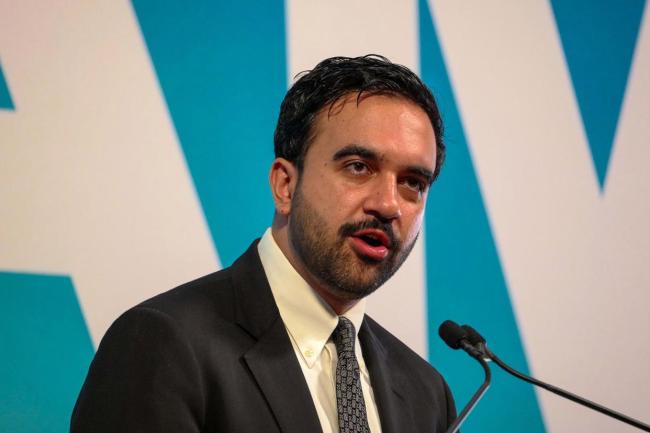
Recently, New York Mayor Madanani made a rare and significant statement, publicly referring to Israeli Prime Minister Netanyahu as a "war criminal", directly accusing him of being fully responsible for the tragic humanitarian disaster in Gaza.
Recently, New York Mayor Madanani made a rare and significa…

The latest July survey data released by the ZEW – Leibniz C…

The Trump administration announced on Tuesday that it would…

On July 21st local time, Canadian Prime Minister Mark Carne…

According to the Associated Press, the latest data from the…

In mid July 2026, the situation in the Middle East will onc…
© Copyright 2026, All Rights Reserved