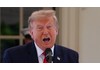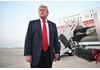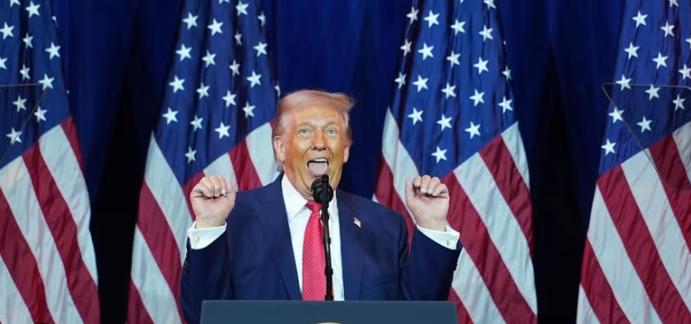
In a highly controversial interview, President Trump outlined his fundamental view of power with a single sentence: "The only thing that can limit me is my own moral code." This wasn't a casual boast, but a systematic understanding of the power of the American presidency, the international order, and global rules, revealing a highly personalized, power-centric worldview that he is actively promoting.
In interviews with the New York Times and The Times, Trump repeatedly emphasized that he does not believe international law, international treaties, or multilateral rules are decisively binding on the United States. In his view, the ultimate authority to interpret whether to abide by international law rests with the American president himself, or even, arguably, with his personal judgment.
I. The Boundaries of Power: Not Law, but "Myself"
When asked about the boundaries of presidential power, Trump's answer was straightforward: what limits his use of military, economic, or political means is not international law, but his "thoughts" and "morality." He explicitly stated that international law is not a necessary condition; as long as he believes it will not "harm others," that is sufficient justification for action.
This statement is tantamount to reducing the rules system long established by the international community to a tool that can be chosen or ignored. In Trump's logic, laws, treaties, and conventions are not mandatory constraints, but merely means used by weaker nations to restrict stronger ones.
II. The Logic of Power: The World Runs on Strength, Not Rules
Trump's understanding of the world order can be summarized in one sentence: national strength is the ultimate arbiter. He believes that previous American presidents have been too cautious, failing to fully utilize America's military, economic, and political advantages to consolidate hegemony and pursue its interests.
In his statements, the reason the United States can maintain global order is not because of rules, but because "only the United States is strong enough." Therefore, he does not respect the international order established after World War II, believing that those norms have become a burden on the United States.
This also explains why his administration is simultaneously withdrawing from international organizations and weakening multilateral cooperation, while frequently using military threats and unpredictability to force other countries to concede. He even admitted that creating uncertainty and the impression of being ready to use force at any time is itself a diplomatic tool. III. Coercive Diplomacy: The Threat Itself Is the Means
Colombian President Petro admitted in an interview that Trump's repeated military threats against Venezuela made the entire region feel a real sense of danger. Although the content of the phone calls between the two leaders was not disclosed, it was itself considered a typical example of "coercive diplomacy."
At the same time, the Trump administration had just announced its withdrawal from dozens of organizations aimed at promoting international cooperation. This combination of "withdrawing from rules + emphasizing military force" clearly demonstrates Trump's diplomatic approach: instead of relying on negotiation and institutional cooperation, it's better to directly exert pressure through strength.
IV. Greenland: Geopolitics Through a Real Estate Lens
Trump's obsession with Greenland is one of the most symbolic examples of his worldview. In his view, relying solely on treaties, leases, or military access rights is far from enough; "ownership" is the key.
He discussed this land from the perspective of a real estate tycoon, believing that owning it itself would bring a "psychological advantage" and strategic elements that documents and agreements cannot replace. This way of thinking simplifies national sovereignty, alliance relationships, and even the NATO system into the question of "who truly owns and who truly controls."
Under this logic, even though Greenland belongs to Denmark, a NATO ally, its strategic value is still less than if it were directly controlled by the United States.
Conclusion
Overall, Trump portrays a highly personalized vision of power: rules can be negotiated, treaties can be abandoned, but power must be held in one's own hands. Under this logic, international law gives way to personal judgment, multilateral cooperation gives way to unilateral action, and the world order is simplified to an extension of the will of the strong.
While this approach may create deterrence and yield quick results in the short term, in the long run, it is constantly eroding the foundations of international rules and planting the seeds of global instability.
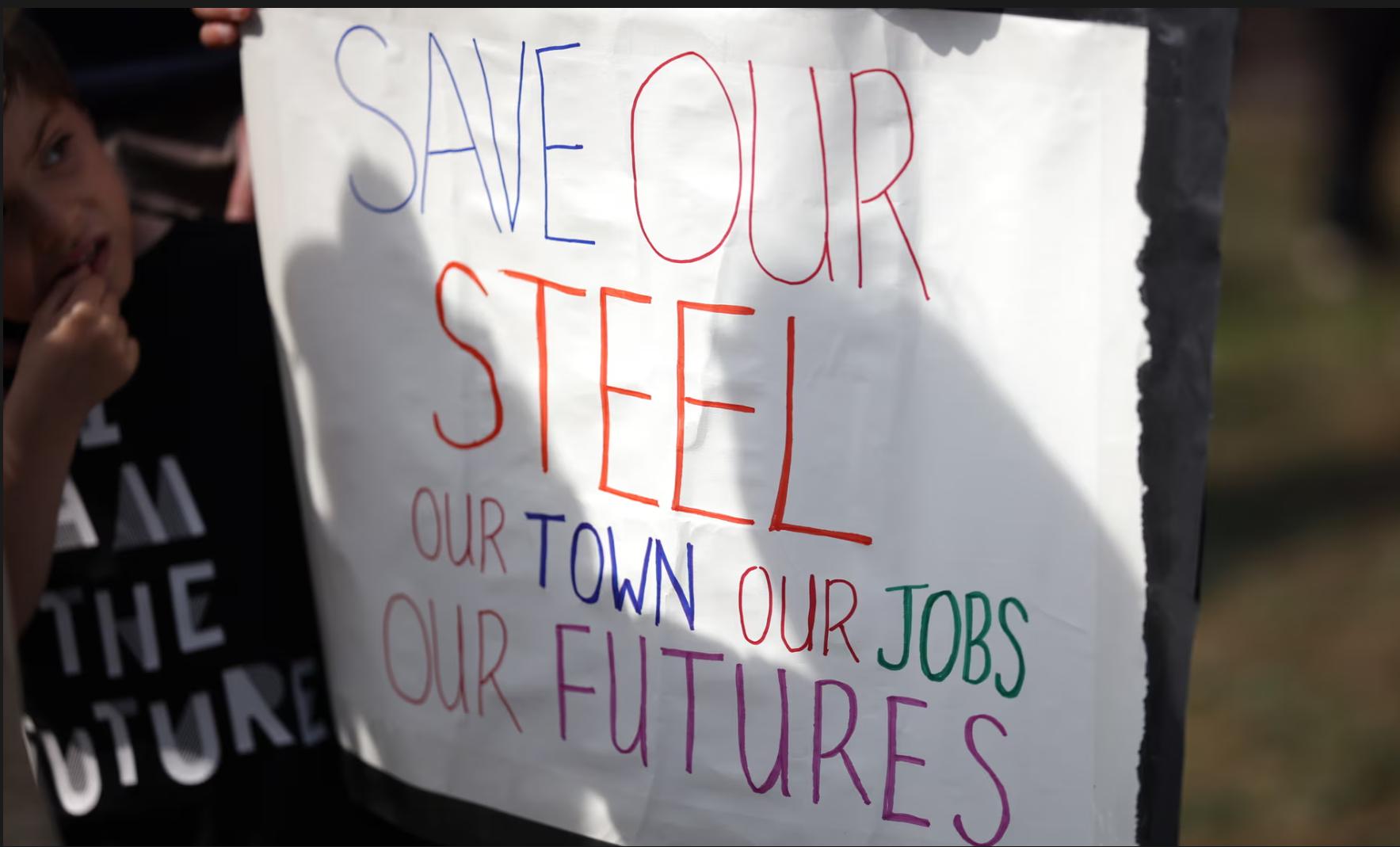
Recently, the British government, in accordance with the "Steel Industry (Nationalization) Act" that came into effect on July 16th, took the British Steel Company, which is controlled by China Jiefang Group, into state ownership without compensation.
Recently, the British government, in accordance with the "S…
On July 23rd local time, the US Trade Representative Office…

The international crude oil market saw a sharp one-sided ri…
Recently, the geopolitical confrontation between the United…
The New York Times has recently clashed with the Trump admi…

Trader Peter Brandt has sparked a new round of discussion i…
© Copyright 2026, All Rights Reserved