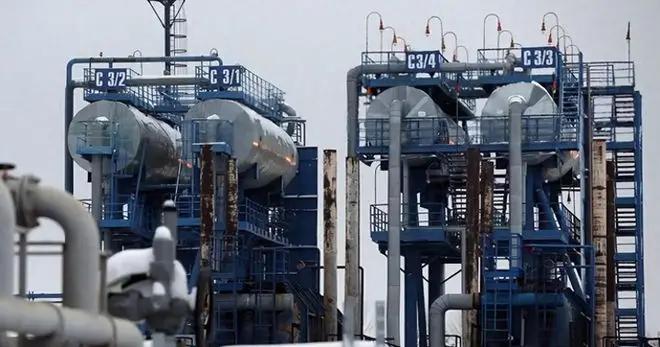
On April 1st local time, Russia officially implemented a 4-month gasoline export ban, which will end on July 31st. It is reported that Russian Deputy Prime Minister Novak previously stated at an energy ministry meeting that in the context of the global energy crisis, the Russian government must take immediate action to prevent rising gasoline prices at gas stations and ensure the stability of the domestic fuel market. As the world's third-largest oil exporter, Russia's move is not a complete suspension of oil exports, but rather a precise restriction on the outflow of gasoline, a key refined oil product. However, the chain reaction it has triggered has swept across Europe and the global energy market, from price fluctuations, supply chain restructuring to geopolitical conflicts, is profoundly reshaping the international energy landscape.
Firstly, the impact on Russia is significant. The core reason for Russia's gasoline export ban is the dual pressure from both within and outside. Internally, Ukraine has frequently attacked Russian oil refineries, and core refineries such as Volgograd and Kirishi have been damaged, resulting in a decline of about 17% in domestic refining capacity and a shortage of gasoline supply and price hikes in many regions. Additionally, Russia enters the spring farming season in April, and the demand for agricultural machinery fuel has soared, making it a top priority to ensure the stability of domestic fuel supply and curb inflation. Externally, the conflict in the Middle East has continued to escalate, and the shipping of the Strait of Hormuz has been blocked, causing significant fluctuations in international oil prices. Russia needs to avoid international high prices being passed on to the domestic market. It is worth noting that the ban is not a "one-size-fits-all" approach. Oil exports remain normal, and exemptions are granted to EAEU member states and Mongolia, which are friendly countries. The essence is a "prioritizing domestic needs and targeted supply" strategy choice, which not only alleviates the pressure on people's livelihoods but also avoids excessive impact on the international market.
Secondly, the impact on European and American countries. For the European Union, the indirect impact of this ban still exists. International gasoline prices rose temporarily, and in addition to the Middle East situation, the transportation and manufacturing costs in Europe rose slightly, possibly delaying the decline in inflation. The United States, as the world's largest gasoline exporter, was hardly directly impacted and instead took the opportunity to expand its refined oil exports to Europe and Latin America, consolidating its energy dominance. However, the United States also faces concerns: the ban has increased the uncertainty in the global energy market. If oil prices remain high, it will exacerbate domestic inflation pressure, restrict the Federal Reserve's rate-cutting space, and affect the stability of the economy before the general election. At the same time, the energy sanctions imposed by Europe and the United States on Russia and Russia's countermeasures have formed a vicious cycle. The European Union previously lowered the Russian oil price ceiling to 47.6 US dollars per barrel, while Russia extended the "no export of oil to countries that comply with the price limit" presidential decree until June 2026. The ongoing game between the two sides has further disrupted the global energy trade order.
Furthermore, the impact on the international market is not to be underestimated. The global energy market shows a clear "two-pole" effect. Countries in Central Asia and Mongolia have suffered direct impacts, with their dependence on Russian gasoline exceeding 95%, while traditional buyers such as Turkey and Egypt have a dependence of 15%-20%. They need to turn to India and the Middle East for supplies, and the increase in transportation costs has pushed up import prices. The global energy trade chain is accelerating restructuring. The trend of Russia's energy exports "moving eastward" has intensified, with 94% of its oil exports flowing to Asia by 2025, while countries relying on Russian gasoline are forced to diversify their purchases, promoting the reorganization of global refined oil trade flows, and significantly adjusting shipping routes and logistics costs. At the same time, the ban and the situation in the Middle East have combined, with Brent crude oil once exceeding 112 US dollars per barrel, increasing global inflation risks, especially for developing countries with high energy import dependence, further intensifying economic pressure.
In conclusion, Russia's gasoline export ban is a microcosm of global energy turmoil. It not only exposes the vulnerability of Russia's domestic energy system but also accelerates the reconfiguration of the international energy supply chain. In the short term, price fluctuations and regional supply shortages are inevitable; in the long term, the process of each country achieving energy independence and conducting diversified cooperation will accelerate comprehensively, and the international energy landscape is evolving in a more complex and balanced direction.

Trader Peter Brandt has sparked a new round of discussion in the Bitcoin market.

Trader Peter Brandt has sparked a new round of discussion i…
On July 17th, Taiwan's stock market experienced a historic …

OpenAI updated its compute expenditure expectation through …
In late July 2026, tensions between the United States and I…

The heatwave sweeping across the region, coupled with the e…

British Prime Minister Barnham announced that the business …
© Copyright 2026, All Rights Reserved