
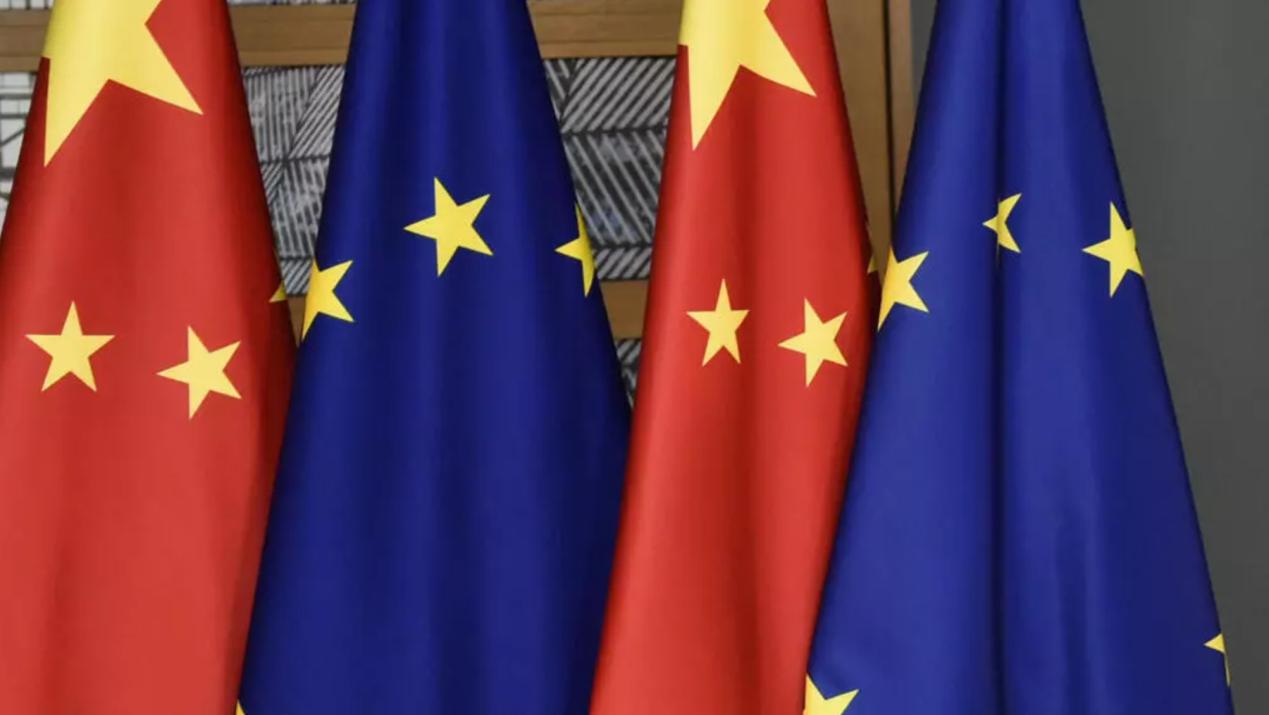
Recently, the European Commission is about to unveil a series of new strategic measures aimed at significantly reducing the EU's reliance on China for critical raw materials, a move that has drawn widespread attention globally. The EU's dependence on critical raw materials has been a long-standing issue. For a long time, China has dominated the mining, processing, and supply of critical raw materials such as rare earths, lithium, and cobalt. For instance, the EU imports 98% of its rare earths, 97% of its lithium, and 93% of its magnesium from China. These raw materials are crucial for the EU's green transition and digital economy, being widely used in electric vehicle batteries, wind turbines, solar panels, and semiconductors. However, over-reliance on a single supplier has exposed the EU to risks of supply disruptions, price fluctuations, and geopolitical risks, especially against the backdrop of the Russia-Ukraine conflict, where supply chain security has become a top concern for EU policymakers.
Furthermore, the introduction of the US Inflation Reduction Act (IRA) has further intensified the EU's sense of urgency. The act attracts global clean technology investment through huge subsidies, putting European businesses under pressure of "industrial outflow". To address this challenge, the EU aims to strengthen its domestic supply chain capabilities to avoid falling behind China and the US in the green transition race.
The new EU strategy is centered around the Critical Raw Materials Act (CRMA), setting clear quantitative targets: by 2030, the EU aims to achieve a domestic supply share of 10% (mining), 40% (processing), and 25% (recycling) for critical raw materials, while limiting the share of a single third country to below 65%. To achieve this goal, the EU plans to take the following measures:
1. Accelerate project approval and investment: Shorten the approval process for mining licenses to 27 months and for processing and recycling projects to 15 months, breaking the previous project stagnation caused by lengthy procedures. For example, 47 strategic projects, including lithium mining in France and rare earth processing in Germany, covering core resources such as lithium, cobalt, and nickel, have been placed on a priority list.
2. Diversify supply networks: Attract cooperation from resource-rich countries in Africa and Latin America through the "Global Critical Raw Materials Club" (CRM Club), and strengthen coordination with allies such as the US and Japan to build a "de-Sinicized" supply chain alliance.
3. Strengthen recycling and circular economy: Promote the recycling and reuse of critical raw materials to reduce reliance on primary minerals. The EU plans to establish unified recycling standards and enhance recycling efficiency through innovative technologies.
Despite the EU's ambitious plans, its strategy faces multiple obstacles in implementation:
Funding gap and cost disadvantages: The EU plans to invest 3 billion euros to support key projects, but this is dwarfed by the 369 billion US dollars in subsidies provided by the US IRA Act. Moreover, the EU's high energy and labor costs have weakened its industrial competitiveness, leading some enterprises to prioritize investment in the US.
Technical bottlenecks and lagging infrastructure: The EU lacks mature technologies in mining, smelting, and other links, and its infrastructure is insufficient. For instance, Portugal postponed the lithium mine auction due to corruption scandals, and Serbia revoked the license for Rio Tinto's project due to environmental disputes, highlighting the complexity of local resource development.
Global competition and geopolitical games: China's dominant position in key raw materials is difficult to shake off in the short term. China not only has the world's most complete industrial chain but also consolidates its strategic advantages through export controls and other measures. The EU's attempts to "decouple" with the help of allies may trigger countermeasures from China, further intensifying supply chain tensions.
The EU's strategic adjustments will reshape the global landscape of key raw materials. On the one hand, the construction of a diversified supply network may reduce China's market share in some areas; on the other hand, the EU's "protectionist" tendencies may lead to trade frictions and hinder the process of globalization. China has made it clear that it opposes politicizing economic issues and calls for maintaining supply chain stability through dialogue and cooperation.
In the long run, the EU needs to strike a balance between security and efficiency. Excessive pursuit of "autonomy and control" may lead to increased costs and efficiency losses, while complete reliance on external supplies cannot guarantee long-term security. In the future, the global market for key raw materials may form a tripartite pattern of "China leading, the EU catching up, and the US intervening", with cooperation and competition coexisting as the main theme.

Recently, the British government, in accordance with the "Steel Industry (Nationalization) Act" that came into effect on July 16th, took the British Steel Company, which is controlled by China Jiefang Group, into state ownership without compensation.

Recently, the British government, in accordance with the "S…

On July 23rd local time, the US Trade Representative Office…

The international crude oil market saw a sharp one-sided ri…

Recently, the geopolitical confrontation between the United…

The New York Times has recently clashed with the Trump admi…

Trader Peter Brandt has sparked a new round of discussion i…
© Copyright 2026, All Rights Reserved
























