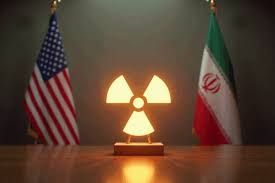
On February 6, 2026, the US-Iran nuclear negotiations resumed in Oman. This diplomatic game that affects the global energy landscape has reached a deadlock due to the opposition of the core demands of both sides and the tough intervention by Israel. As the strategic chokepoint for global energy transportation, the shipping safety of the Strait of Hormuz is deeply linked to the negotiation outcome. Any potential disturbances not only trigger expectations of significant fluctuations in international oil prices but also spread through the energy supply chain to the global financial market, becoming the core variable in the current pricing of geopolitical risks, forcing the capital market to face double shocks.
The core differences in this negotiation are difficult to bridge: The United States demands that Iran completely halt its uranium enrichment activities, while Iran regards the peaceful use of nuclear energy as an unnegotiable sovereignty issue. The confrontational postures of both sides, combined with Israel's "three no's" demands (prohibiting Iran's nuclear program, ballistic missile program, and funding regional allies) and military deployment changes, have further narrowed the space for reconciliation and pushed up the risk premiums of energy futures and safe-haven assets, becoming an important disturbance factor in the financial market.
The strategic position of the Strait of Hormuz determines that its shipping security directly affects the stability of the global energy supply chain. Data shows that this waterway handles 20%-31% of global seaborne crude oil trade, with an average daily throughput of 17 million to 21 million barrels. 80% of South Korea and Japan's, and 35%-40% of China's crude oil imports rely on this channel. If the negotiations break down and lead to conflict, the obstruction of shipping in the Strait will push up oil prices from three aspects: a 30-day blockade could cause a 570 million barrel supply gap, combined with doubled freight rates and a 300%-500% increase in insurance rates, and the oil price could soar from the current 60-70 US dollars per barrel to 120-150 US dollars per barrel, reaching 200 US dollars per barrel in extreme scenarios. However, Iran's concern of cutting off its export lifeline, the US military's escort capabilities, and global strategic oil reserves (about 1.2 billion barrels by the IEA and about 500 million barrels by China) will partially buffer the short-term supply pressure.
The current financial market is engaged in a two-way game between the supply-demand fundamentals and geopolitical risks. Goldman Sachs predicts that in 2026, the global oil market will experience a 2.3 million barrels per day supply surplus, and the average price of Brent crude oil may drop to $56 per barrel. However, geopolitical risks may disrupt this trend - the model shows that for every 1 million barrels per day of permanent production reduction, the oil price will rise by $8 per barrel within 12 months. This game has already manifested itself in advance: Spot gold has risen due to risk aversion inflows, and the crude oil futures volatility index has increased by 23%. The impact of oil price fluctuations on economies is differentiated: Asian energy importers will face imported inflation, and China's aviation industry may see an annual increase of 10 billion yuan in fuel costs due to every $10 increase in oil price per barrel; the United States, with its domestic energy resilience, will be less affected, but before the midterm elections, it may suppress oil prices by releasing strategic reserves.
In the face of uncertainty, investors need to adopt a "risk aversion + opportunity" dual strategy. Gold, as a traditional hedging tool, may rise above $3,500 per ounce in scenarios of escalating conflicts. Investors can position themselves through ETFs or futures. The crude oil market needs to be vigilant against the risk of expected gap corrections. If a compromise solution is reached, the oil price may fall back to $60 - $65 per barrel. In the industrial sector, an upward movement in oil prices will benefit upstream enterprises such as oil exploration and oil services. Downstream industries need to lock in costs through hedging. In the long term, the normalization of geopolitical conflicts will accelerate the diversification of energy supply. The assets of emerging oil-producing countries and the new energy sector deserve attention. Additionally, it is necessary to closely monitor the military movements of Israel, the adjustment of US sanctions, and the release of strategic reserves, to accurately grasp the fluctuation range and persistence of oil prices.
This negotiation deadlock is a key window for re-pricing geopolitical risks in the global financial market. The security hazard of the Strait of Hormuz reminds the market that the sudden impact of conflicts cannot be underestimated. Regardless of the negotiation outcome, the reconstruction of the energy supply chain and the normalization of geopolitical risk pricing will become long-term trends. Investors and countries can only strengthen their risk response capabilities to achieve stable development in the face of fluctuations.

Trader Peter Brandt has sparked a new round of discussion in the Bitcoin market.

Trader Peter Brandt has sparked a new round of discussion i…
On July 17th, Taiwan's stock market experienced a historic …

OpenAI updated its compute expenditure expectation through …
In late July 2026, tensions between the United States and I…

The heatwave sweeping across the region, coupled with the e…

British Prime Minister Barnham announced that the business …
© Copyright 2026, All Rights Reserved