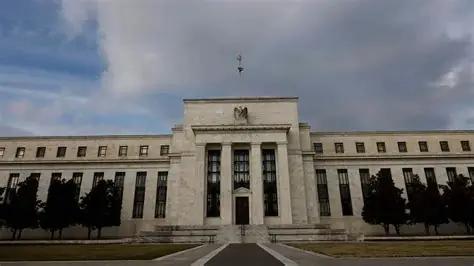
In February 2026, the Federal Reserve's policy direction once again became the focus of global financial markets. From the restart of the quantitative easing (QE) program to heated debates among officials over the path of interest rate cuts, and to market turmoil triggered by the potential new chairman, every move by the Fed is reshaping the global asset price landscape.
On February 3, the Fed announced it would inject $8.3 billion in liquidity into the market, officially restarting the QE program. This decision completely shattered previous market expectations of tightening, causing global risk assets to surge. The three major U.S. stock indexes jumped immediately after the announcement, with the Dow Jones Industrial Average briefly surpassing the historic 50,000-point mark, while the cryptocurrency market rebounded due to heightened liquidity expectations.
Analysts point out that this QE policy is not only a direct response to current market pressures but could also serve as the catalyst for a new bull market. Historically, QE programs have repeatedly driven strong rallies in U.S. stocks, cryptocurrencies, and other risk assets. The restart can alleviate market liquidity strains and greatly boost investor confidence. However, some market insiders warn that $8.3 billion is just the beginning, and if the scale of easing expands further, it could trigger rising inflation pressures and asset bubble risks.
At the same time as the QE restart, internal disputes within the Fed over the path of interest rate cuts have become increasingly public. Mary Daly, President of the Federal Reserve Bank of San Francisco, clearly supports "one to two more rate cuts within the year," citing vulnerabilities in the labor market that outweigh inflation risks. However, Atlanta Federal Reserve President Raphael Bostic warned that employment data are volatile, and the Fed must remain cautious.
Market pricing shows that traders have pushed back the timing of the first rate cut from March to June. According to CME's "FedWatch" tool, as of February 10, the probability of the Fed cutting interest rates by 25 basis points by March is 17.7%, and the probability of keeping interest rates unchanged is 82.3%; The probability of a cumulative rate cut of 25 basis points by June is 50.4%. This change in expectations is closely related to statements by Fed officials: Governor Stephen Milan said that "tariffs have a limited impact on inflation," while Waller noted that "the fading of the crypto boom may reduce financial risks."
Trump's nomination of Kevin Walsh as the next Federal Reserve chairman has triggered wild fluctuations in global asset prices. Walsh's "AI interest rate cut theory" (that is, artificial intelligence will support low interest rates by increasing productivity) proposed during the election campaign has been widely questioned by the economic community. Former Federal Reserve Vice Chairman Clarida analyzed that if Walsh comes to power, he may significantly reduce forward guidance and rely on balance sheet management tools instead.
The market reaction was immediate: After the news of Walsh's nomination, gold plummeted by $165 in a single day, and the US dollar index rebounded sharply. Citigroup strategists warned that Walsh's tendency to "shrink the balance sheet" contradicts the current QE policy, which could lead to confusion in monetary policy signals. To complicate matters, U.S. congressional Democrats are demanding a delay in the Walsh nomination process on the grounds of a "criminal investigation," adding uncertainty to the direction of policy.
The Fed's policy shift is reshaping the global capital allocation landscape. Emerging market stocks generally rose in the early days of QE restart, but analysts warned of "policy reversal risks". According to data from the Institute of International Finance (IIF), in the 2025 Fed's interest rate cut cycle, emerging markets have experienced capital inflows of 1.2%-1.8% of GDP within six months, but this policy fluctuation may shorten the time for funds to stay.
"This time it's different from before." An emerging market fund manager said, "The restart of QE is accompanied by the chairmanship controversy, which increases doubts about policy sustainability." Indeed, the US dollar index has rebounded 3% after hitting a four-year low in January, indicating a reprice of the US economy's resilience. Morgan Stanley strategists pointed out that emerging markets need to be prepared for a rebound in the dollar and capital outflows, especially those that rely on external financing.
With the release of US non-farm payrolls data for January on February 11, the market is waiting with bated breath for the next policy trigger. In this game between policy and the market, the only certainty is that the Fed in 2026 will be more difficult than ever to balance the multiple goals of employment, inflation and financial stability.
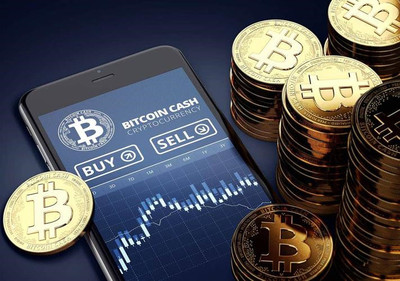
Trader Peter Brandt has sparked a new round of discussion in the Bitcoin market.

Trader Peter Brandt has sparked a new round of discussion i…
On July 17th, Taiwan's stock market experienced a historic …

OpenAI updated its compute expenditure expectation through …
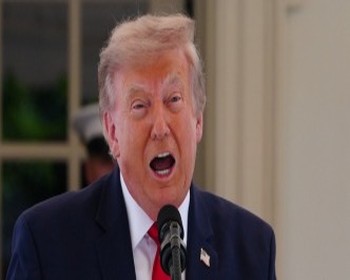
In late July 2026, tensions between the United States and I…
The heatwave sweeping across the region, coupled with the e…

British Prime Minister Barnham announced that the business …
© Copyright 2026, All Rights Reserved