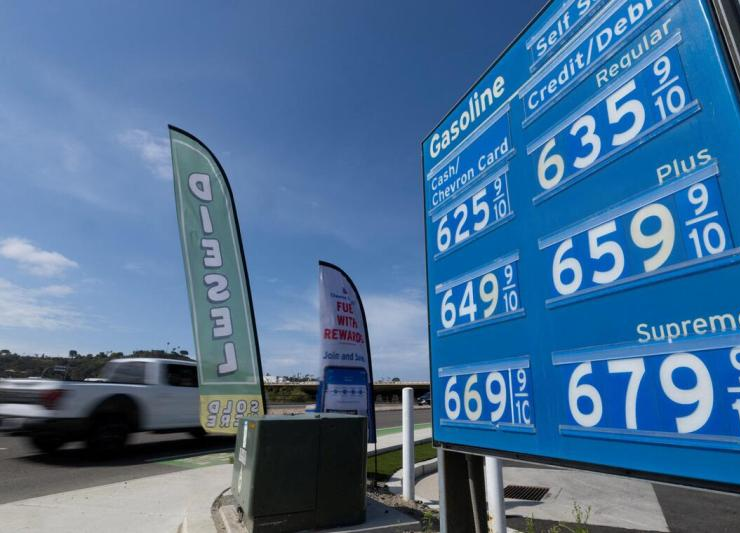
Due to the war in Iran, gasoline prices soared and inflation concerns rose, causing US consumer confidence to decline for the third consecutive month in May.
Xinhua News Agency reported that preliminary survey data released by the University of Michigan of the United States on Friday (May 8th) showed that the initial value of the US consumer confidence index for May was 48.2, lower than the final value of 49.8 in April and also lower than the final value of 52.2 in May 2025.
The preliminary value of the current economic conditions index released by the University of Michigan for May was 47.8, lower than the final value of 52.5 in April and also lower than the final value of 58.9 in the same period last year. The preliminary value of the consumer expectations index was 48.5, higher than the final value of 48.1 in April, but still slightly lower than the level in the same period last year.
The survey indicates that concerns over inflation are the main reason for the continuous decline in consumer confidence. Approximately one-third of the respondents mentioned the increase in gasoline prices, and about 30% mentioned tariffs. Overall, consumers still feel the pressure of living costs, with the rise in oil prices having a particularly significant impact.
Although consumers' inflation expectations for the coming year have slightly decreased from 4.7% in April to 4.5%, this figure is still much higher than the expectation of 3.4% that was set in February, before the US launched military action against Iran.
The analysis suggests that it will be difficult for market sentiment to be significantly boosted until the supply disruption issue is completely resolved and energy prices fall.

Trader Peter Brandt has sparked a new round of discussion in the Bitcoin market.

Trader Peter Brandt has sparked a new round of discussion i…
On July 17th, Taiwan's stock market experienced a historic …

OpenAI updated its compute expenditure expectation through …

In late July 2026, tensions between the United States and I…
The heatwave sweeping across the region, coupled with the e…

British Prime Minister Barnham announced that the business …
© Copyright 2026, All Rights Reserved