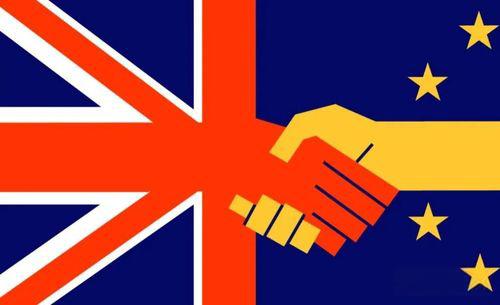
On the local time of May 19th, a bombshell announcement emerged from the EU Headquarters in Brussels: European Commission President Ursula von der Leyen and representatives of the UK government jointly declared the conclusion of the "EU-UK Partnership Consensus Document," covering four core areas: fishing rights, trade circulation, youth exchange, and energy cooperation. This represents the most comprehensive and pragmatic cooperation agreement between the two sides since the UK formally withdrew from the EU in 2020, signaling that the six-year period of tense relations has entered a phase of comprehensive warming.
The consensus document specifically addresses the four most contentious issues following Brexit. Regarding fishing rights, both parties have agreed to extend the existing agreement by 12 years until 2038, allowing EU vessels to continue operating in designated UK waters while establishing a scientifically based quota adjustment mechanism. This puts an end to the long-standing legal disputes triggered by controversies such as sand eel fishing rights. The arrangement not only safeguards the livelihoods of fishermen from EU countries including Denmark and France but also responds to sovereignty concerns within the UK through ecological protection clauses. A breakthrough has been achieved in trade circulation: British meat, animal, and plant products will resume certificate-free free movement, with this rule also applying to Northern Ireland. This means the formal elimination of the Sanitary and Phytosanitary (SPS) inspection barriers that have plagued EU-UK trade since Brexit, fundamentally alleviating issues such as border truck congestion and soaring corporate compliance costs. Complementing the earlier "Windsor Framework," the agreement further consolidates Northern Ireland's unique position between the UK's internal market and the EU's single market, injecting a shot in the arm for regional political stability. Youth exchange and energy cooperation have emerged as new highlights of the upgraded relations. The two sides announced the launch of a youth mobility program, under which UK students will rejoin the Erasmus+ program starting from 2027. It is expected that over 100,000 British young people will benefit from cross-border study and training opportunities in the first academic year, with the UK contributing £570 million annually for this initiative. In the energy sector, the EU and the UK have agreed to establish a joint working group to explore the technical pathways for the UK's re-entry into the EU's single electricity market. Leveraging existing cross-border power transmission links between the UK and France, as well as the UK and Belgium, the cooperation will deepen energy market coupling and emergency supply coordination.
The conclusion of this agreement is a rational choice for both the EU and the UK in the face of public opinion pressure and practical interests. According to the latest polls, 53% of UK citizens support deeper cooperation with the EU, with the approval rate reaching as high as 80% among the 18-25 age group. Supporters of political parties such as the Labour Party and the Liberal Democrats have voiced strong calls for the resumption of cooperation. After coming to power, the UK Labour government has made "resetting EU-UK relations" a core agenda. Prime Minister Keir Starmer's proposed approach of "pragmatic cooperation under sovereignty" not only avoids the sensitive controversy of "rejoining the EU" but also responds to the urgent demand from the business community to reduce trade costs. For the EU, pragmatic cooperation is equally in line with its strategic interests. Faced with security challenges and the energy crisis brought about by the Russia-Ukraine conflict, the UK's defense capabilities and market potential are indispensable. Valdis Dombrovskis, European Commissioner for Trade, stated, "The consensus document reflects a 'give-and-take' negotiation logic, safeguarding the integrity of the EU's single market while laying the foundation for coordination between the two sides in more areas." As the EU's economic engine, Germany accounts for one-third of the EU's total trade with the UK, and the implementation of the agreement will significantly reduce export costs for German automotive and mechanical manufacturing enterprises.
Despite the profound significance of this consensus document, the full restoration of EU-UK relations still faces multiple challenges. Domestically in the UK, conservative figures such as former Brexit negotiator Lord David Frost have criticized the agreement for "undermining national sovereignty," and the Reform Party has made opposing excessive ties with the EU a core political stance. Within the EU, France remains skeptical of the UK-led independent defense mechanisms such as the "Northern Naval Fleet," fearing that the UK may gain regulatory arbitrage through "selective alignment." Experts analyze that this agreement marks the entry of EU-UK relations into a new phase of "gradual integration." Instead of seeking to restore the pre-Brexit integration model, both sides are building a new type of partnership characterized by "sovereign equality and shared interests" through sector-specific and phased cooperation. In the future, the EU and the UK are expected to reach more technical agreements in areas such as carbon trading market alignment, defense and security cooperation, and scientific research innovation.
From the division caused by the 2016 Brexit referendum to the signing of the 2026 consensus document, EU-UK relations have finally found a pragmatic path forward after a decade of twists and turns. As Ursula von der Leyen stated at the press conference: "Today's agreement proves that even after taking the detour of separation, rational cooperation remains the only correct choice for both sides." This journey of breaking the ice will not only inject new vitality into the EU and UK economies but also provide valuable experience for reshaping complex partnerships in the era of globalization.

The heatwave sweeping across the region, coupled with the escalating conflict between Russia and Ukraine in the Black Sea, has pushed agricultural and food product prices to a three-year high. The risk of food inflation triggered by the US-Iraq war has resurfaced.
The heatwave sweeping across the region, coupled with the e…

British Prime Minister Barnham announced that the business …

The global food monitoring agency said that due to a lack o…
On Thursday, South Korean investigators raided the office o…
Starting from Friday (July 24th), the United States will im…
According to a report by The Wall Street Journal on July 22…
© Copyright 2026, All Rights Reserved