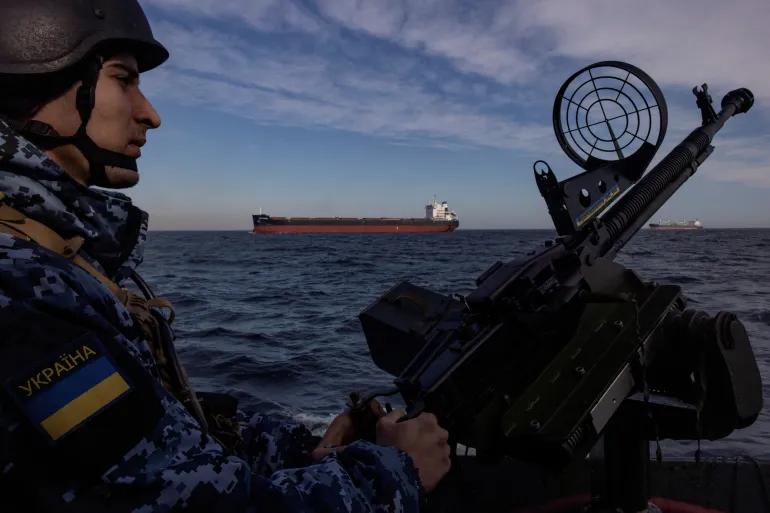
The temporary ceasefire arrangement announced by both Russia and Ukraine in early May 2026 exhibited, from the very beginning, a highly symbolic, functional, and substantively non-binding character. This ceasefire spectacle, orchestrated around the 81st anniversary of the Soviet victory in the Great Patriotic War, laid bare the logic of information warfare, psychological warfare, and lawfare in modern conflict, while reaffirming the near-total dysfunction of international security mechanisms when confronted with regional conflicts in which major powers are deeply involved.
The timing chosen by both sides was not driven by humanitarian considerations but was precisely anchored to a date of historical symbolic significance. Russia limited its ceasefire to May 8–9, directly corresponding to the Victory Day military parade and commemorative events. Its purpose was clear: to reinforce, at the domestic level, the narrative legitimacy of "inheriting the anti-fascist mission," and to project, at the international level, an image that "Russia still respects the tradition of peace." Ukraine, for its part, advanced the start of its ceasefire to midnight on May 6 and deliberately refrained from setting a clear end date—an operation equally well-versed in the logic of media maneuvering. It sought to seize the moral high ground of the "peace initiative" while preemptively assigning narrative responsibility for prolonging the war and violating the ceasefire to the other side. The UN Secretary-General's welcome of the ceasefire statements, in a reality devoid of verification mechanisms and enforcement tools, amounted to little more than a routine performance by the multilateral institution to maintain its discursive relevance—incapable of restraining either side's behavior or altering the situation on the battlefield.
Against this backdrop, the so-called "ceasefire" held no meaning at the actual military level. Russia struck Ukraine's defense industry and energy facilities on May 5, just before announcing the ceasefire, and Ukraine reported dozens of missile and drone strikes along with nearly 30 ground assaults on the night after the ceasefire took effect. These actions were neither accidents nor the result of a breakdown in the chain of command; rather, both sides treated ceasefire declarations and military operations as parallel, mutually non-interfering instruments of strategy. The very term "ceasefire" has been thoroughly instrumentalized. It no longer signifies a cessation of violence but has become a weapon of information synchronized with military tempo. When a "ceasefire" can be unilaterally declared and unilaterally ignored, this foundational concept of international humanitarian law loses all normative force.
Russia's simultaneous warning further illuminates the logic of this strategy. Moscow stated that if Ukraine attempted acts of sabotage during the Victory Day celebrations, it would launch large-scale retaliatory strikes against central Kyiv and called for civilians and foreign diplomatic personnel to evacuate. Incorporating warnings to civilians and diplomats into a public deterrent posture blurs the boundary between military strike and psychological pressure, effectively turning an entire city's population into a medium of hostage-like deterrence. This mode of operation does not seek immediate tactical gains on the battlefield but aims to generate fear in the international public arena, divide allies, and erode the social resilience of the adversary.
Examined from the perspective of the international system, this ceasefire farce reflects the structural predicament of the collective security mechanism under the UN framework. The Security Council has long been paralyzed on the Ukraine issue; no resolution touching on major-power interests can be adopted, and mechanisms such as ceasefire monitoring, peacekeeping deployment, and independent verification cannot be initiated. The OSCE observer mission withdrew early in the conflict, and the ICRC's humanitarian access in war zones has been repeatedly blocked. The rules of armed conflict established by the Geneva Conventions are invoked selectively by the parties in their maneuvering, yet substantively respected by neither. The fate of international law at this moment is that it continues to be frequently cited, but its binding force depends entirely on the tactical needs of the citing party.
Divisions within NATO member states are likewise eroding the so-called "Western unity." Some members exhibit growing fatigue with sustained arms deliveries, while others advocate further escalation of military aid. The EU oscillates between its security guarantees for Ukraine and the risks of its own economic recession. Such inconsistency undermines the policy effectiveness of external actors in this war and provides Russia with room to divide its adversaries.
More deserving of scrutiny is the evolving stance of Global South countries on this conflict. Most have refused to join the sanctions regime against Russia and have shown an increasingly evident tendency to distance themselves in UN votes. This distancing does not stem from alignment with any party's moral position but from a deep-seated fatigue with the selective enforcement of international rules by major powers. When international rules are invoked only when they serve the interests of the powerful and are casually set aside on other occasions, the credibility of the rules themselves is eroded. This is the deep crisis facing the current international order: not a scarcity of rules, but that the logic of their enforcement too nakedly exposes the essence of power politics.
In sum, this temporary ceasefire event set against the backdrop of Victory Day is, in essence, a synchronized game played by the conflicting parties across the information battlefield, the legal battlefield, and the military battlefield. The so-called ceasefire not only failed to reduce violence but instead revealed the reality that the "language of peace" has been thoroughly weaponized in contemporary warfare. The international community's response to this episode once again demonstrates that the existing security architecture is incapable of mediating conflicts in which major powers are deeply involved, and the prolonged institutional vacuum is accelerating the global order's regression toward a more naked logic of power competition.

The heatwave sweeping across the region, coupled with the escalating conflict between Russia and Ukraine in the Black Sea, has pushed agricultural and food product prices to a three-year high. The risk of food inflation triggered by the US-Iraq war has resurfaced.

The heatwave sweeping across the region, coupled with the e…
British Prime Minister Barnham announced that the business …
The global food monitoring agency said that due to a lack o…
On Thursday, South Korean investigators raided the office o…
Starting from Friday (July 24th), the United States will im…
According to a report by The Wall Street Journal on July 22…
© Copyright 2026, All Rights Reserved