
In the current context of a rapidly changing global economic landscape and escalating geopolitical conflicts, the policy moves of central banks worldwide have become the focus of financial markets. Recently, monetary policy decisions by major economies such as the U.S. Federal Reserve and the Bank of England, as well as upcoming interest rate decisions from various central banks, have been closely watched and have a significant impact on the global economy.
At its March 19 meeting, the Federal Reserve chose to keep the federal funds target rate range unchanged at 3.5% to 3.75%, which basically aligned with market expectations. However, the information revealed in the Fed's dot plot drew widespread market attention. The dot plot indicates a central target rate of 3.4% for this year, consistent with the projection for December 2025, while raising this year's inflation forecast, slightly increasing the economic growth forecast, and keeping the unemployment rate forecast unchanged. These series of changes indicate that the Federal Reserve has adopted a more cautious assessment of the current economic situation.
The market generally believes that the Fed may delay its rate cuts, possibly implementing only one rate cut this year. This shift in expectation is mainly due to concerns about inflation. The heightened tensions in the Middle East have caused significant fluctuations in global energy prices, further pushing up inflationary pressures. To ensure that inflation continues to fall back to the target level of 2%, the Fed has had to adjust the pace of its monetary policy, slowing down the rate cuts to avoid triggering a rebound in inflation by easing policy too early.
Unlike the Federal Reserve's inaction, the Bank of England, at its monetary policy meeting on March 19, also kept the benchmark interest rate unchanged at 3.75%, but the policy tone underwent a significant shift. This decision was the first unanimous decision in four and a half years, and the meeting minutes showed that the Bank of England stated it would be 'ready to act at any time' to address the inflation surge triggered by the Middle East war.
This statement led market traders to increase their bets on a potential interest rate hike by the Bank of England, with some believing that the earliest rate increase could occur next month. The UK economy is currently facing a complex situation; on one hand, inflationary pressures from geopolitical conflicts are rising, while on the other hand, economic growth is also facing certain uncertainties. The Bank of England's shift in policy tone reflects its difficult choice in balancing inflation and economic growth, attempting to curb further inflation by taking action in advance.
In addition to the Federal Reserve and the Bank of England, central banks of Japan, the Eurozone, Switzerland, Sweden, and Russia will also announce their interest rate decisions next week. These countries are also facing complex and volatile economic conditions and geopolitical risks. Geopolitical conflicts not only affect the global energy market and trade landscape but also have varying degrees of impact on each country's economic growth and inflation levels.
For these central banks, finding the balance between supporting economic growth and controlling inflation has become a key aspect of current policy-making. Some countries may choose to keep interest rates unchanged to observe further developments in the economic situation, while others may adjust their monetary policy direction based on their own inflation pressures and economic growth conditions.
The policy trends of central banks around the world are particularly important in the current complex situation. Their decisions not only affect the stability and development of their own economies but also have far-reaching impacts on global financial markets. Market participants need to closely monitor policy changes from various central banks and adjust their investment strategies in a timely manner to respond to potential market fluctuations. At the same time, central banks also need to maintain flexibility and foresight in their policy-making process to better address various challenges that may arise in the future.

The heatwave sweeping across the region, coupled with the escalating conflict between Russia and Ukraine in the Black Sea, has pushed agricultural and food product prices to a three-year high. The risk of food inflation triggered by the US-Iraq war has resurfaced.

The heatwave sweeping across the region, coupled with the e…

British Prime Minister Barnham announced that the business …

The global food monitoring agency said that due to a lack o…

On Thursday, South Korean investigators raided the office o…
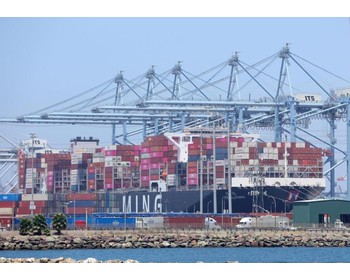
Starting from Friday (July 24th), the United States will im…
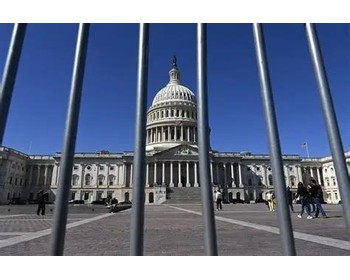
According to a report by The Wall Street Journal on July 22…
© Copyright 2026, All Rights Reserved