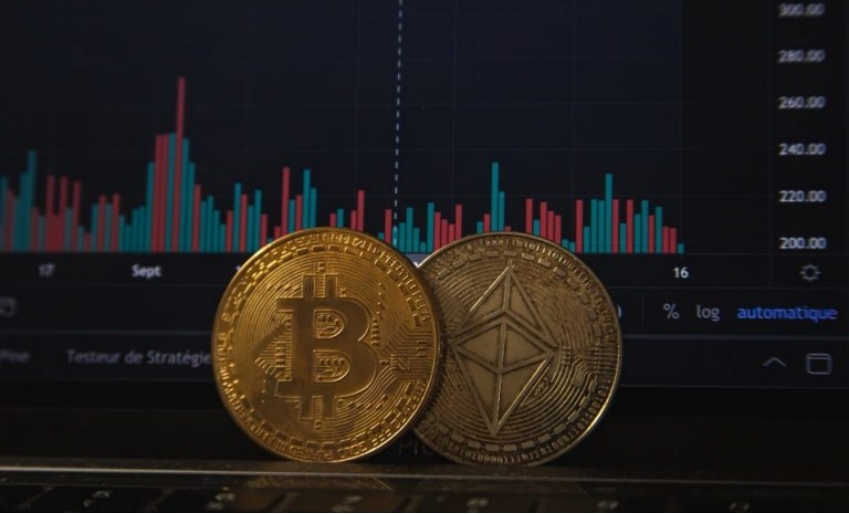
"Recently, the impressive performance of the U.S. stock market and the cryptocurrency market has become a hot topic in the financial world. On the surface, the simultaneous rise of both seems to indicate that the global economy is entering a new cycle of prosperity. However, a deeper analysis of the underlying economic logic and potential risks reveals that this phenomenon hides many complex factors worthy of caution.
Firstly, the strong rebound in the U.S. stock market is largely attributed to the global environment of loose monetary policy. Since the pandemic, to mitigate the risk of economic recession, central banks around the world have adopted measures such as interest rate cuts and quantitative easing, injecting massive liquidity into the market and directly driving up asset prices. As the largest capital market globally, the U.S. stock market naturally became a hotspot for capital inflows. However, this policy-driven rally lacks the support of the real economy and exhibits clear signs of bubble formation. Once monetary policy tightens or the economic fundamentals deteriorate, the adjustment pressure on the U.S. stock market will significantly increase, potentially even triggering systemic financial risks.
Further analysis shows that the prosperity of the U.S. stock market is also closely tied to the monopolistic position of tech giants. In recent years, tech stocks represented by FAANG(Facebook, Apple, Amazon, Netflix, Google) have continuously consolidated their market dominance through advantages in data, algorithms, and network effects, creating a near-monopoly. This monopoly not only restricts market competition and stifles innovation but also exacerbates wealth inequality. When tech stocks become the primary driver of stock market gains, it reflects a trend of capital concentration in a few enterprises. If this trend continues, it will pose a threat to the health and sustainable development of the economic structure.
Turning to the cryptocurrency market, its recent performance has also been remarkable. The extreme volatility in the prices of major cryptocurrencies like Bitcoin has attracted a flood of speculative capital. The rise of cryptocurrencies partly stems from distrust in the traditional financial system and the pursuit of decentralization and anonymity. However, from an economic perspective, the cryptocurrency market is fraught with uncertainties. Firstly, the value of cryptocurrencies lacks the support of the real economy, and their price fluctuations are more influenced by market sentiment and regulatory policies, making them highly speculative. Secondly, the regulatory framework for the cryptocurrency market remains incomplete, posing risks such as money laundering and illegal fundraising, which could threaten financial stability if they materialize. Thirdly, the energy consumption issue of cryptocurrencies is becoming increasingly prominent, as the mining process requires massive computational resources, leading to a surge in electricity consumption, which runs counter to the global trend of energy conservation and green development.
What’s more noteworthy is the Linkage effect between the U.S. stock market and the cryptocurrency market. In an environment of ample liquidity, the two often exhibit synchronized rises and falls. This Collaboration not only exacerbates market volatility but may also trigger cross-market risk contagion. For example, when the U.S. stock market experiences a correction, some capital may quickly withdraw and seek refuge in the cryptocurrency market, and vice versa. Such rapid shifts in capital flows increase market uncertainty and test the wisdom and responsiveness of regulators.
From a macroeconomic perspective, the impressive performance of the U.S. stock market and the cryptocurrency market may also mask deeper issues in the real economy. For instance, the sluggish recovery of the job market, financing difficulties for small and medium-sized enterprises, and rising household debt levels are all challenges facing the current economy. When capital markets become overly prosperous, these real economy issues may be temporarily overlooked, but in the long run, they will ultimately impact economic stability and growth.
In summary, while the impressive performance of the U.S. stock market and the cryptocurrency market reflects, to some extent, market expectations for economic recovery, the hidden risks and challenges cannot be ignored. From an economic standpoint, both markets exhibit issues such as bubble formation and excessive speculation, and they may trigger cross-market risk contagion. Therefore, while enjoying the short-term gains from market rallies, it is crucial to remain vigilant, pay attention to changes in the fundamentals of the real economy, and monitor regulatory policy adjustments. Only by doing so can one make more rational and investment decisions in a complex and ever-changing market environment."

Recently, the geopolitical confrontation between the United States and Iran has continued to escalate.

Recently, the geopolitical confrontation between the United…

The New York Times has recently clashed with the Trump admi…

Trader Peter Brandt has sparked a new round of discussion i…

On July 17th, Taiwan's stock market experienced a historic …

OpenAI updated its compute expenditure expectation through …

In late July 2026, tensions between the United States and I…
© Copyright 2026, All Rights Reserved