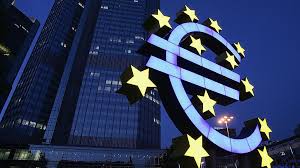
The European Central Bank's (ECB) recent signal of "expecting to keep interest rates unchanged, but with rising expectations for a rate hike" reveals deep-seated structural contradictions and a policy logic dilemma beneath the surface ripples in financial markets. This seemingly contradictory statement exposes the lag in the monetary policy framework and reflects the governance paradox of attempting to achieve all goals simultaneously in global inflation control. The underlying financial risks and potential for policy failure warrant in-depth analysis.
From the perspective of monetary policy transmission mechanisms, the coexistence of unchanged interest rates and rising hike expectations essentially represents the central bank's excessive reliance on "data-dependent decision-making." The current European economy exhibits a clear "asymmetric recovery": while core inflation has declined due to falling energy prices, service sector inflation remains stubbornly high, with wage growth and inflation expectations forming a spiral. Concurrently, the manufacturing Purchasing Managers' Index (PMI) has remained below the boom-or-bust line for several months, and corporate investment confidence continues to weaken. This complex situation of "unstable inflation and weak growth" traps the central bank in a dilemma: keeping rates unchanged risks letting inflation expectations become unanchored, while raising rates hastily could accelerate an economic recession. This "tightrope-walking" policy choice highlights the ineffectiveness of traditional monetary policy frameworks against structural inflation—when inflation drivers shift from demand to supply and cost factors, the effectiveness of interest rate tools is significantly diminished.
Behind the rising expectations for rate hikes lies a deeper anxiety over "policy credibility." With inflation persistently above the target for two years, market skepticism about the central bank's "tolerance for high inflation" has intensified. To rebuild credibility, the ECB feels compelled to signal a potential rate hike to anchor inflation expectations, even in the absence of supportive economic fundamentals. This logic of "prioritizing expectation management over actual effects" pushes monetary policy toward a "self-fulfilling prophecy" trap: if financial markets tighten conditions in anticipation of a hike, real-economy financing costs may rise, worsening an economic downturn and potentially forcing the ECB to abandon its plans, further damaging its credibility. The risk of this vicious cycle is particularly acute in the eurozone's fragmented financial system—given the fragile debt sustainability of Southern European countries, rising hike expectations could trigger a widening of sovereign debt spreads, potentially forcing the ECB to restart bond-buying programs, thus creating a detrimental loop of "tightening expectations leading to tightening financial conditions, which causes economic deterioration and necessitates easing intervention."
From a global financial stability perspective, the ECB's policy indecision may increase volatility in cross-border capital flows. With the US dollar index remaining high, rising expectations for a European rate hike could boost the euro in the short term. However, if the ECB subsequently abandons tightening due to a recession, it could trigger depreciation pressure on the euro. This two-way exchange rate volatility would amplify currency depreciation and debt risks for emerging markets, especially for those with close trade ties to the eurozone and euro-denominated external debt. These economies could potentially face a triple Impact of "capital outflows, currency depreciation, and increased debt burden." Furthermore, against the backdrop of increasing policy divergence between the ECB and the Federal Reserve, a restructuring of the global interest rate term structure could trigger a repricing in bond markets. Long-term investors such as pension funds and insurance companies face significant market value fluctuation risks, further threatening the stability of the financial system.
On a deeper level, this policy dilemma reflects the growing pains of a paradigm shift in global inflation governance. The traditional Phillips Curve framework, where central banks sacrifice employment to achieve price stability, is ill-suited to the post-pandemic economic landscape. When structural factors such as supply chain restructuring, the green transition, and geopolitical conflicts become the main drivers of inflation, monetary policy acting alone is not only ineffective but may also incur higher costs by delaying necessary structural reforms. If the ECB over-relies on interest rate tools, it may neglect crucial support for areas like labor market reform, energy transition investment, and industrial policy coordination, thereby risking long-term economic stagnation characterized by superficially addressed inflation and persistently waning growth momentum.
In today's era of financial globalization, no single economy's policy choices can remain isolated. The ECB's wavering between "maintaining rates" and "hike expectations" is both a passive response to current economic conditions and a profound reflection on the limitations of traditional policy frameworks. Only by breaking the cyclical trap of alternating between "tightening and easing," by constructing a more forward-looking policy framework, and by coordinating monetary policy with fiscal policy and structural reforms, can a sustainable balance between inflation control and growth maintenance be found. Otherwise, what is termed "expectation management" may ultimately amplify, rather than stabilize, market volatility.
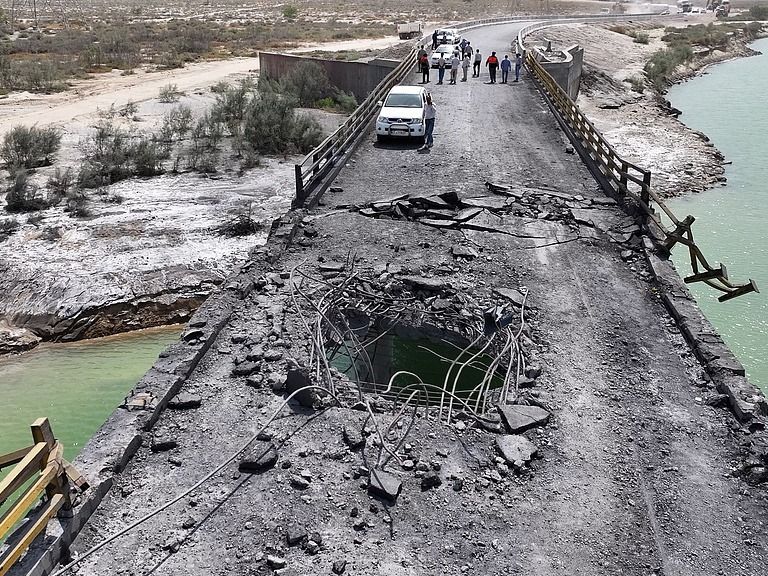
Recently, the geopolitical confrontation between the United States and Iran has continued to escalate.

Recently, the geopolitical confrontation between the United…

The New York Times has recently clashed with the Trump admi…

Trader Peter Brandt has sparked a new round of discussion i…

On July 17th, Taiwan's stock market experienced a historic …

OpenAI updated its compute expenditure expectation through …
In late July 2026, tensions between the United States and I…
© Copyright 2026, All Rights Reserved