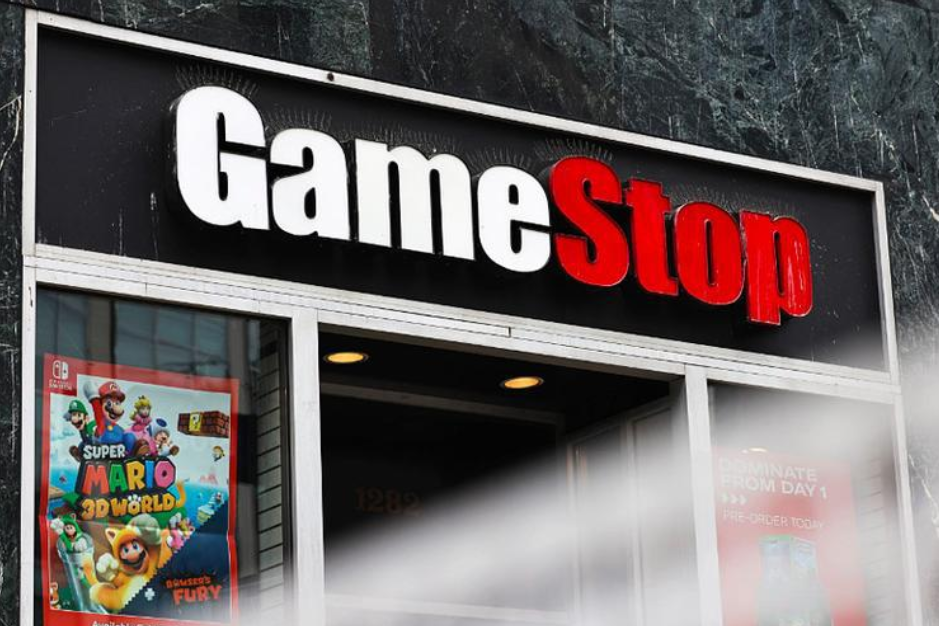
On January 7th local time, GameStop (GME.US) announced that the company's board of directors had approved a potential executive compensation package worth $3.54 billion, which was targeted at the company's CEO, Ryan Cohen. At the same time, this new compensation package set extremely high performance thresholds: Cohen, the CEO, needed to increase the company's market capitalization from $9.5 billion to $100 billion. This directly linked Cohen's potential substantial rewards to the creation of substantial long-term value for shareholders. Currently, GameStop's market capitalization is $9.3 billion. As such, this move by GameStop has been jokingly referred to as a "Musk-style" astronomical compensation package.
If the goal of achieving a market capitalization of $100 billion is realized, it will have various impacts on the financial market. Firstly, it will have an impact on GameStop itself. The current market capitalization of GameStop is only about $9.5 billion. To achieve a tenfold increase, the company needs to undergo a complete transformation. It must shift from a traditional offline game retailer to a leader in digital and high-profit areas, such as cloud gaming, AI game development, or cryptocurrency and other emerging fields. This goal will force the company to accelerate the closure of loss-making stores, cut costs, and increase investment in new businesses. If successful, GameStop will become one of the companies with the highest market capitalization in the global gaming industry, and even surpass current giants such as Sony Interactive Entertainment. This will significantly enhance the company's influence and resource integration capabilities in the industry. The company has already invested a large amount of funds in the cryptocurrency sector. If the sector performs poorly, it may drag down the overall performance. Additionally, relying excessively on a single business (such as retail, cryptocurrency) may increase the company's risks. Moreover, EO Ryan Cohen's compensation is entirely linked to the market capitalization and profit targets. If the targets are achieved, he may receive a huge reward of over $3.5 billion. This "full-risk" model will strongly motivate the management to fully push for the company's transformation, but it may also lead to short-term behavior. If the company fails to reach the market capitalization and profit targets (such as a $20 billion market capitalization and $2 billion EBITDA), Cohen will not be entitled to any rewards. This high-risk model may intensify the conservatism or aggressiveness of the management's decision-making.
Secondly, it will have an impact on investors. After the plan was announced, GameStop's stock price rose by more than 4% before the market opened and by more than 5% after the opening on Wednesday, indicating the market's optimistic attitude towards the transformation expectations. However, in the long term, the stock price trend still depends on whether the company can achieve a performance breakthrough. If the transformation fails, the stock price may fall significantly. As of the close of the US stock market on January 7th, GameStop rose by 3.05% to $21.29, with a latest total market capitalization of $9.538 billion. The goal of a market capitalization of $100 billion requires the company to become an industry leader, but the current game retail industry is highly competitive, and the company has not yet proven the profitability of its new business model. Investors need to closely monitor the progress of the company's transformation and the signals of performance improvement, rather than relying solely on the market capitalization target. Cohen, as the second-largest shareholder (holding 8.3%), his interests are deeply tied to the company's stock price. If the transformation is successful, his shareholding ratio may increase further, strengthening his control over the company; if it fails, it may trigger shareholder doubts or management changes.
Thirdly, it will have an impact on the financial market. The significant growth in GameStop's market capitalization will challenge the traditional market order of Wall Street and may restructure the new order of the financial market. This change will affect the power structure of the financial market, allowing more non-traditional financial institutions and investors to gain greater right of speech. The significant growth in market capitalization will change the ecosystem of the financial market, including the structure of investors, investment product structure, and market trading behavior. For example, the influence of retail investors may further increase, while the dominant position of institutional investors may be challenged.
In conclusion, if GameStop successfully achieves the goal of a market capitalization of $100 billion, it will cause waves in the financial market. Whether this goal is achieved or not, it has already become an important variable in the development process of the financial market, continuously attracting the attention and reflection of all parties. In the future, the financial market will continue to explore new development directions and balance patterns under the interweaving of these various influences.

Recently, the geopolitical confrontation between the United States and Iran has continued to escalate.

Recently, the geopolitical confrontation between the United…

The New York Times has recently clashed with the Trump admi…

Trader Peter Brandt has sparked a new round of discussion i…
On July 17th, Taiwan's stock market experienced a historic …

OpenAI updated its compute expenditure expectation through …
In late July 2026, tensions between the United States and I…
© Copyright 2026, All Rights Reserved