On New Year's Day 2026, BMW China announced a "systematic value upgrade" covering 31 main models, triggering an earthquake in the luxury car market: the flagship pure electric model i7 M70L dropped by 301000 yuan, the domestic M235L fell below the 300000 yuan mark, and the 2 Series four door coupe dropped to 208800 yuan, setting a new low for the price of domestic BMW models in China. This seemingly "feedback to consumers" price adjustment action is actually BMW's inevitable choice under the triple pressure of market competition, transformation pressure, and industry change. The logical chain behind it reflects both the transformation pains of traditional luxury car companies and outlines the restructuring trajectory of the Chinese automotive market.
The market pressure of both sales and profits is the direct cause of BMW's price reduction. As BMW's most important global market, the sustained weakness in the Chinese market has become a key trigger for price adjustments. Data shows that BMW's sales in China in 2024 were 715200 units, a year-on-year decrease of 13.4%, making it the region with the largest decline among major global markets; In the first three quarters of 2025, sales will further decline to 465000 vehicles, a year-on-year decrease of 11.2%, and traditional advantageous positions will continue to be lost. The former mid to large SUV "King" X5 sold only 5498 units in October 2025, slipping to 12th place and being surpassed by new force models such as the Ideal L9 and the Wenjie M9; The sales pillar 5 Series has also experienced monthly sales of less than 8000 units, lagging behind the Audi A6L.
The lagging transformation of electrification and the encirclement of new forces constitute the core challenge of price reduction. The explosive growth of China's new energy vehicle market has put BMW, which has a slow pace of transformation, in a passive position. According to data from the China Association of Automobile Manufacturers, the retail penetration rate of new energy passenger vehicles reached 53.6% in the first 11 months of 2025, and rose to 59.3% in November alone. The market has shifted from policy driven to market driven. Although BMW's pure electric vehicle sales reached 427000 units in 2024, a year-on-year increase of 13.5%, and its pure electric vehicle sales in China exceeded 100000 units, the proportion of electrification is still less than 20%, and its product competitiveness is insufficient. Its electric vehicle models have a clear gap in core areas such as intelligent cockpit and autonomous driving compared to new forces such as Wenjie and Ideal, and traditional brand premium is no longer the core demand of consumers.
The intensification of industry stock competition and optimization of cost structure provide a realistic basis for price reduction. The current Chinese automotive market has entered an era of stock competition, with industry inventories continuing to rise by 2025. The inventory of new energy vehicles has reached a historical peak of 850000 units, and destocking has become a common demand among car companies. The previous channel expansion of traditional luxury brands such as BBA has led to market saturation and increased pressure on dealers. In September 2024, BMW launched a special discount policy of 10000 yuan per vehicle for all models, and this official price reduction has transformed channel promotion into an official strategy.
Strategic adjustments and brand reshaping are long-term considerations behind price reductions. BMW's price reduction this time is not simply about "exchanging price for quantity", but a strategic layout that balances short-term market share and long-term transformation. On the one hand, by lowering the prices of entry-level models, BMW aims to expand its user base, especially attract young consumer groups, and accumulate a user base for electrification transformation; On the other hand, the significant price reduction of flagship models while upgrading their configurations is actually a reconstruction of the "sense of value" and breaking away from the traditional cognitive dependence on "high price=luxury". It is worth noting that BMW's R&D investment in 2024 reached a historic high of 9.1 billion euros, with a focus on intelligent and electric technology. The new generation of models will be mass-produced in China in 2026, and this price reduction can be seen as a "clean-up action" during the transition period between new and old products, paving the way for the launch of new products.
The sharp drop in BMW's prices is essentially a strategic compromise by traditional luxury car companies in the century long transformation of the automotive industry. It reflects both BMW's passive position in market competition and its proactive adjustment in response to industry changes. But price reduction is a double-edged sword: although it can boost sales and reduce inventory in the short term, in the long run, excessive reliance on price wars may erode brand value and exacerbate the industry's profit crisis - the profit margin of the automotive industry in the first quarter of 2025 was only 3.9%, which is lower than the average level of industrial enterprises. For BMW, the real breakthrough lies not in simply offering price discounts, but in converting the market space freed up by price reductions into a time window for technological research and product innovation. In the future, only by truly establishing differentiated competitive advantages in the fields of electrification and intelligence, and realizing the transformation from "price competition" to "value competition", can we stand firm in the industry elimination competition. BMW's price reduction logic is not only an inevitable choice for its own development, but also a wake-up call for the entire luxury car market: in the wave of transformation in the automotive industry, there is no eternal brand halo. Only by following the trend and actively seeking change can we overcome cycles and win the future.
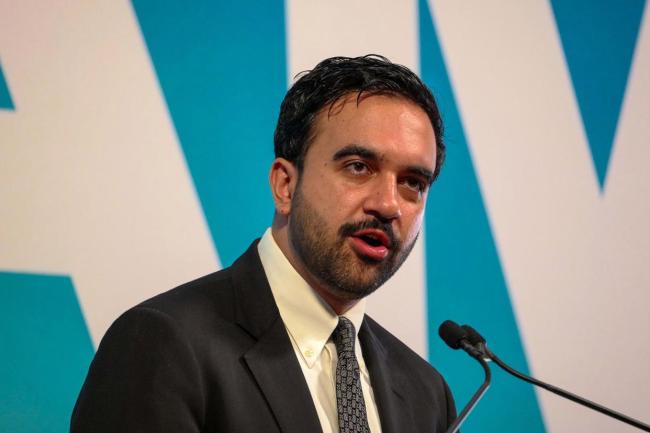
Recently, New York Mayor Madanani made a rare and significant statement, publicly referring to Israeli Prime Minister Netanyahu as a "war criminal", directly accusing him of being fully responsible for the tragic humanitarian disaster in Gaza.
Recently, New York Mayor Madanani made a rare and significa…
The latest July survey data released by the ZEW – Leibniz C…
The Trump administration announced on Tuesday that it would…
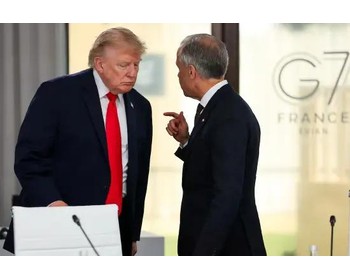
On July 21st local time, Canadian Prime Minister Mark Carne…
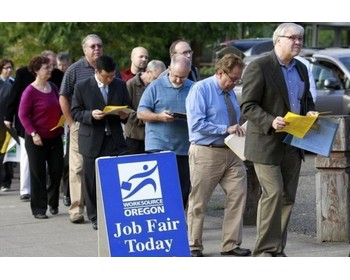
According to the Associated Press, the latest data from the…

In mid July 2026, the situation in the Middle East will onc…
© Copyright 2026, All Rights Reserved