
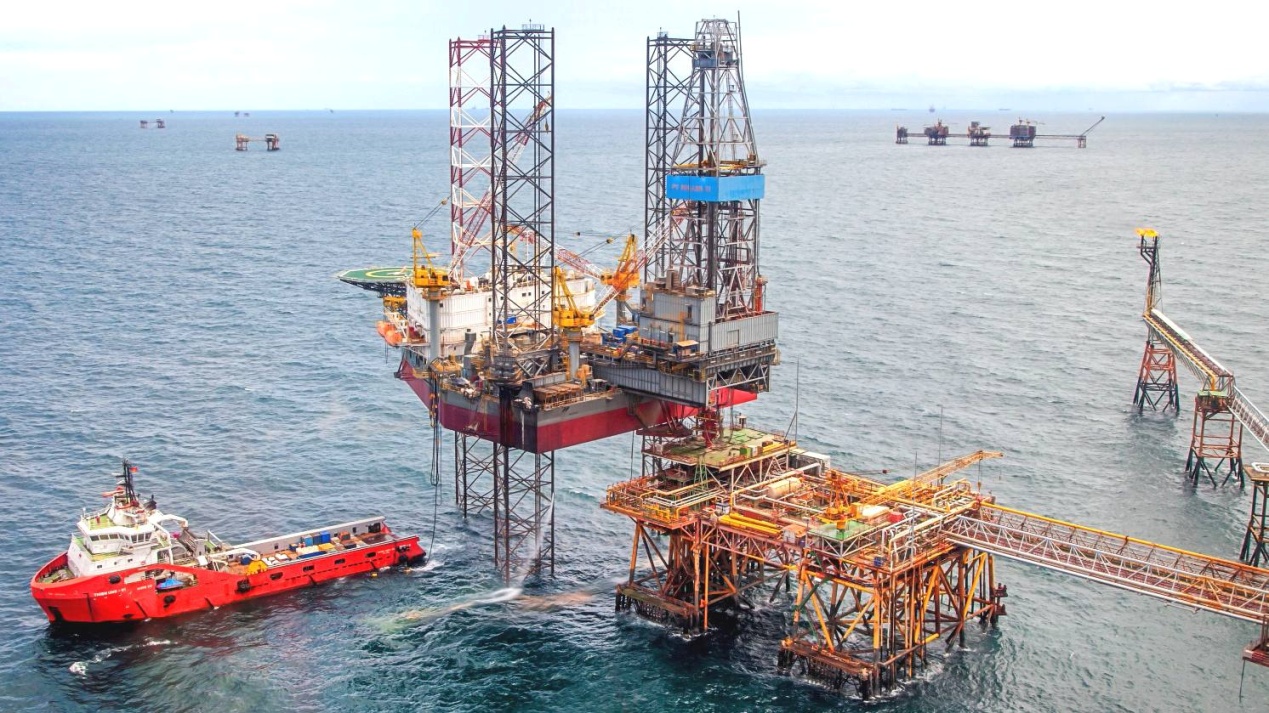
In early 2026, US President Trump forcibly took control of Venezuelan President Maduro under the pretext of "anti-drug", and quickly turned his attention to the country's oil resources, declaring that he would allow US oil companies to invest heavily and resume its exports. This move, though seemingly abrupt, was actually a strategic choice driven by multiple interests, involving not only the real demand of the US energy structure but also the deep logic of geopolitical games.
First, energy complementarity: the "urgent" gap of heavy crude oil
Although the US is the world's largest oil producer, its domestic crude oil is mainly light and low-sulfur, suitable mainly for refining gasoline and aviation kerosene. However, the heavy fuels needed in industry, infrastructure and transportation, such as diesel, asphalt and lubricating oil, are highly dependent on heavy crude oil. Venezuela happens to have the world's largest reserves of heavy crude oil, which is highly viscous and high in sulfur content, requiring specialized equipment for refining, but its derivative products are rich and diverse, precisely filling the gap in the US refining system.
The refineries along the US Gulf Coast, such as those in Texas and Louisiana, were originally designed to process Venezuelan heavy oil. Although the US has imported Canadian heavy oil as a substitute in recent years, the Trump administration's tense relationship with Canada, and even its threat to "annex Canada", has raised doubts about the stability of supply. Therefore, controlling Venezuela's oil has become a key step for the US to reduce its dependence on Canada and consolidate its energy security.
Second, economic interest drive: low-cost resources and industrial chain dividends
From an economic perspective, Venezuelan oil has a dual appeal to the US. First, geographical proximity significantly reduces transportation costs. Venezuela is only about 1,000 kilometers from the US mainland, much closer than Middle Eastern oil-producing countries, and does not need to pass through strategic chokepoints such as the Strait of Hormuz or the Strait of Malacca, reducing geopolitical risks. Second, Venezuelan heavy oil is cheap, and combined with the efficient processing capacity of US refineries, it can significantly reduce costs and expand profit margins.
The Trump administration also attempted to convert oil revenues into political leverage. It claimed to "rebuild Venezuela with oil revenues", but in fact, it intended to control the distribution of resources and divert some profits to the US to cover the costs of the "war on drugs". This "resource plundering" logic is consistent with Trump's first term statement that "Iraq's oil should be seized to compensate for the cost of the war", exposing his pragmatism of prioritizing national interests over international rules.
III. Geopolitical Game: Reshaping the Energy Landscape in Latin America
Venezuela holds 17% of the world's oil reserves, far exceeding those of Saudi Arabia. The restoration of its production capacity would reshape the global energy market. The Trump administration sought to incorporate Venezuela into the US-led energy system by supporting pro-American regimes, thereby weakening the influence of rivals such as Russia and Iran.
Moreover, controlling Venezuela's oil would strengthen the US's hegemony in Latin America. Historically, the US has controlled Central American resources through the "Banana Republic" model. As a symbol of the Latin American left-wing movement, Venezuela's policy of nationalizing resources has long challenged US interests. Trump's military intervention and resource seizure are essentially a forceful consolidation of the US's "backyard," aiming to solidify regional dominance through energy ties.
Despite Trump's shrewd calculations, there are numerous practical obstacles. First, Venezuela's oil infrastructure is in disrepair and requires at least $110 billion in investment to restore production capacity, which is twice the total global investment of US oil giants in 2024. Against the backdrop of low oil prices and oversupply, corporate investment interest is low. Second, Venezuela's political instability and high legal risks have made US oil companies wary of asset security and contract stability, leading them to adopt a wait-and-see attitude. Third, under the global trend of energy transition, the growth rate of fossil fuel demand is slowing, and Trump's "resource imperialism" logic runs counter to the mainstream direction of climate governance, raising doubts about its long-term sustainability.
Trump's coveting of Venezuelan oil is both a product of the US's energy structure deficiencies and a continuation of its geopolitical expansion. From Iraq to Venezuela, although the methods of successive US administrations have varied, the core logic of "seizing resources through force or sanctions" remains unchanged. However, the actual predicament of Venezuela and the changes in the global energy landscape suggest that this resource game will not be easily successful. Trump's "calculations" might eventually turn out to be a futile adventure due to the unaffordable high investment and uncontrollable political risks.

Recently, the British government, in accordance with the "Steel Industry (Nationalization) Act" that came into effect on July 16th, took the British Steel Company, which is controlled by China Jiefang Group, into state ownership without compensation.

Recently, the British government, in accordance with the "S…

On July 23rd local time, the US Trade Representative Office…

The international crude oil market saw a sharp one-sided ri…

Recently, the geopolitical confrontation between the United…

The New York Times has recently clashed with the Trump admi…

Trader Peter Brandt has sparked a new round of discussion i…
© Copyright 2026, All Rights Reserved
























