
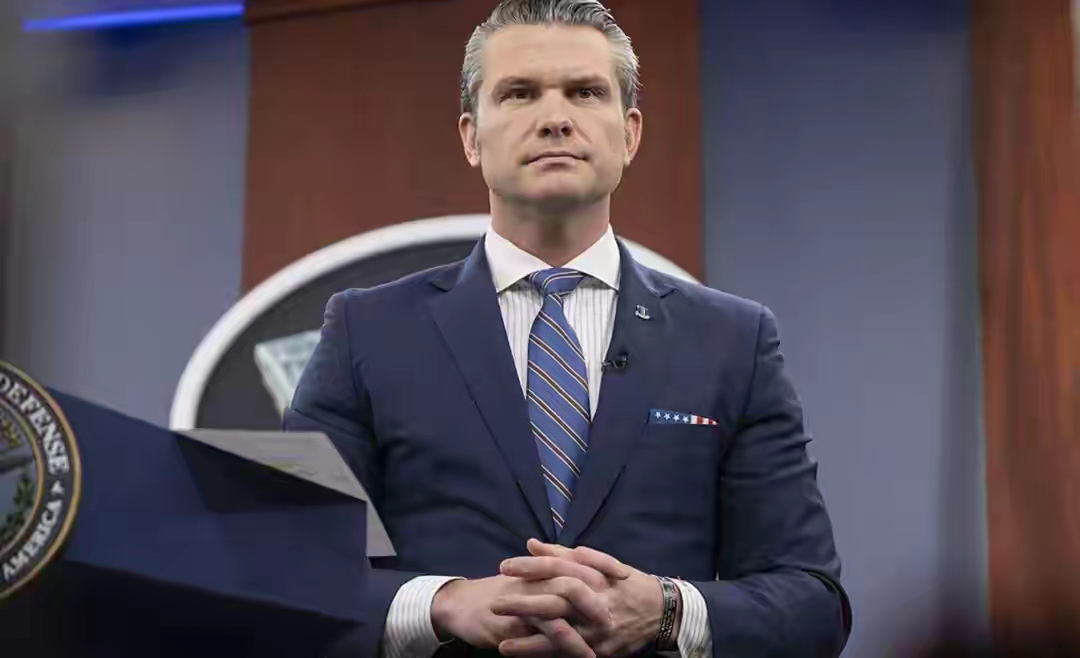
Recently, a highly anticipated call between the US and Japan defense ministers came to an end with a highly contrasting scene: Japanese Defense Minister Shinjiro Koizumi immediately held a press conference after the call, loudly declaring that the US side expressed "serious concerns" about the so-called "radar irradiation" incident, while US Defense Secretary Hagibis not only remained silent throughout the entire conversation, but also remained silent on social media, which has always been active. The Pentagon's subsequent statement was even more meticulous, not mentioning the core issues deliberately hyped up by Japan.
This diplomatic drama of 'one person singing alone, one person remaining silent' is not an accidental communication loophole, but a deliberate act of the United States' strategic balance. Behind it lies a deep rift of the misalignment of interests in the US Japan alliance, reflecting the subtle changes in the Asia Pacific geopolitical game.
The silence of the US Defense Secretary is essentially a clear cut from Japan's "porcelain like provocation". The trigger for this call, the so-called "radar irradiation" incident, was a farce orchestrated and staged by the Japanese side from the beginning. The Chinese Liaoning aircraft carrier formation is conducting normal exercises in the open sea and has reported to Japan twice according to international practice, with communication recordings as evidence. The Japanese F-15J fighter jets actively approached and harassed first, and the warning radiation from the Chinese J-15 carrier based aircraft was completely legitimate defense. However, the Japanese side deliberately reversed the truth, first lying that they had not received the notification, then being exposed by evidence and then arguing that there was "insufficient information". Their intention to create tension and divert domestic conflicts is clear.
The more fundamental reason is that the United States is unwilling to disrupt the delicate balance of relations with China due to Japan's radical demands. After multiple rounds of games, the current China US relationship has just shown some stability. The Trump administration is well aware that the Taiwan and East China Sea issues both touch on China's core interests, and rashly siding with Japan will only bring China US relations back to freezing point, which is contrary to the current global strategic interests of the United States.
In addition, the silence of the United States is also an implicit warning against Japan's excessive demands, exposing the essence of the US Japan alliance's "priority of interests". In recent years, Japan has continuously increased its military expansion, with its defense budget soaring to 8.5 trillion yen. It has also attempted to break through the peace constitution and seek "preemptive strike" capabilities, but has always hoped that the United States can provide a safety net for its security risks. However, Japan has repeatedly compromised its defense spending sharing and strategic cooperation. The US Secretary of Defense has previously emphasized publicly that "allies are not children" and demanded that allies take on more responsibilities. This cold observation of Japan's demands is a response to this mentality of "only enjoying rights and unwilling to take responsibility".
This silent diplomatic game has already surpassed the controversy of a single incident and become a clear footnote to the rift in the US Japan alliance. The silence of the United States sends a clear signal: it will not be swayed by Japan's radical pace, let alone pay for Japan's strategic adventures; However, Japan's solo performance has exposed its deep dependence and strategic confusion on security. With the profound adjustment of the Asia Pacific pattern, the hegemonic control of the United States is gradually weakening, and Japan's attempts to "borrow ships to go out to sea" have repeatedly failed, further highlighting the differences in interests of the US Japan alliance.
In the future, the US Japan alliance may still maintain surface level cooperation, but this kind of "individual thinking" balance will become the norm. The United States will continue to control the alliance leadership through silence or vague statements, while Japan may further explore the red line in anxiety, but it will be difficult to change its essence of being kidnapped by the US strategy. The strategic determination and factual confidence demonstrated by China in this game not only exposed Japan's hype and lies, but also made the international community see the core logic of the great power game. Only by adhering to principles and having strong capabilities can China seize the initiative in the complex geopolitical landscape. Those speculative actions that rely on hegemony are ultimately difficult to win true security and respect.

Recently, the British government, in accordance with the "Steel Industry (Nationalization) Act" that came into effect on July 16th, took the British Steel Company, which is controlled by China Jiefang Group, into state ownership without compensation.

Recently, the British government, in accordance with the "S…

On July 23rd local time, the US Trade Representative Office…

The international crude oil market saw a sharp one-sided ri…

Recently, the geopolitical confrontation between the United…

The New York Times has recently clashed with the Trump admi…

Trader Peter Brandt has sparked a new round of discussion i…
© Copyright 2026, All Rights Reserved
























