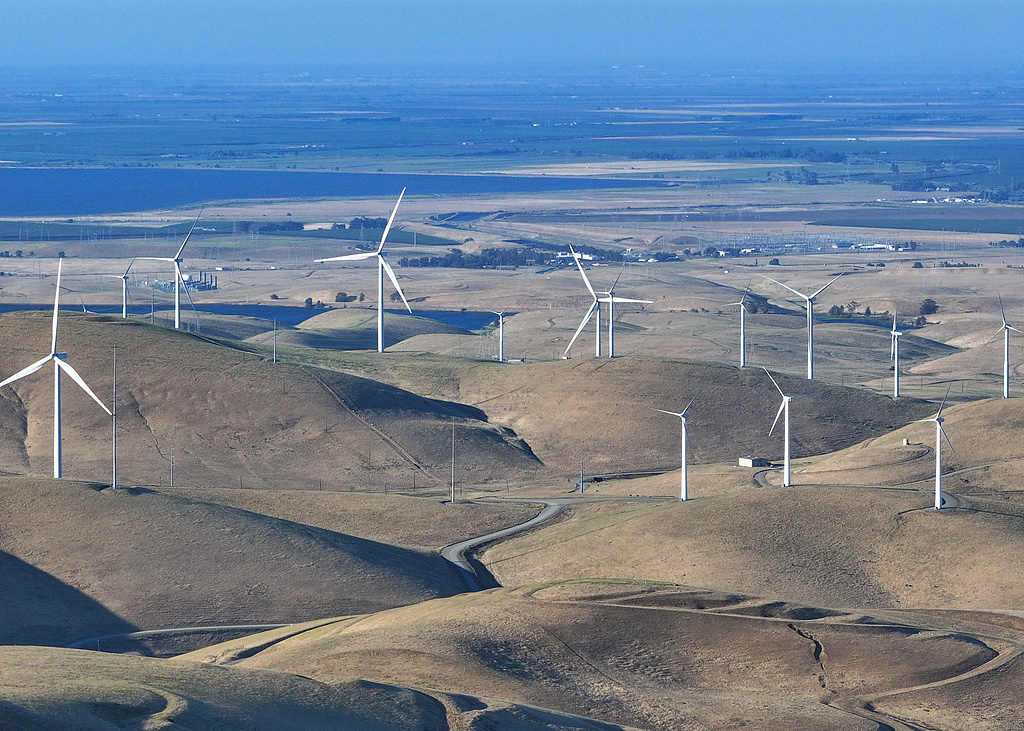
As electricity demand from AI data centers grows exponentially, the United States is strangling one of its most mature renewable energy sources.
With the Department of Defense effectively halting approvals for new onshore wind projects, approximately $50 billion in wind energy investment and 150,000 jobs are now at risk. According to a filing by the American Clean Energy Association, the Pentagon has stuck roughly 130 proposed wind projects in the approval pipeline—projects that could generate enough electricity to power 20 million American households.
The core of the problem lies in a seemingly technical step: the Defense Department has stopped sending its review results for wind projects to the Federal Aviation Administration (FAA). By regulation, projects must first receive an FAA “no hazard” determination before they can move forward. This means every new onshore wind project that has not yet obtained an FAA “no hazard letter” is currently frozen in place.
What makes this freeze even more puzzling is that it is not targeted at individual high-risk projects. The American Clean Energy Association explicitly stated that the Pentagon's current actions constitute a “blanket”shutdown of all wind projects—even those already assessed and confirmed to pose “no threat to national security” have not been spared. In recent weeks, the Defense Department has even canceled scheduled meetings with developers, and the review process has ground to a virtual halt.
The Pentagon's response has been vague and lacking in sincerity. The Clean Energy Association sent a letter demanding an explanation for the standstill, but the Defense Department merely stated that the evaluations are “inherently complex and time-consuming” and that the agency will work “efficiently”—without offering any timeline whatsoever.
Among all the stalled projects, Texas is the hardest hit. The state, which has long championed renewable energy development, accounts for one-quarter of the total projects, representing roughly $11 billion in value. Jason Grumet, head of the American Clean Energy Association, put it bluntly: “The Pentagon has made it nearly impossible to build new wind power projects in America.”
If these stalled projects were ever completed, they would deliver approximately 30 gigawatts of generating capacity. One gigawatt is enough to serve more than 300,000 households. With the United States now facing a surge in electricity demand driven by the AI boom, the weight of that number speaks for itself.
Behind this approval crisis lies the Trump administration's systematic hostility toward wind energy. In January of last year, Trump signed an executive order suspending approvals for offshore wind projects. Days before Christmas, the Department of the Interior invoked national security to halt five major offshore wind projects on the East Coast. Although developers and states sued and a federal judge ultimately ruled that those five projects could resume construction, the onshore wind sector has received no similar judicial relief.
Current administration officials broadly criticize wind and solar power, arguing that these zero-emission renewables depend on government subsidies and require additional infrastructure to compensate for their intermittency. Trump himself has publicly stated that no new wind turbines will be installed during his term.
Yet the contradiction is glaring: AI data centers are devouring electricity at an unprecedented rate, and while the administration claims to pursue energy goals, it is simultaneously obstructing domestic energy production that could meet the nation's growing demand. As Grumet criticized: “This approach is logically self-contradictory.”
Notably, the administration has shown a more flexible attitude toward solar project approvals, but this shift has not extended to wind. Both onshore and offshore wind projects face approval barriers.
Beyond the approval freeze, cost pressures are equally severe. U.S. wind turbine prices are reportedly about 22% higher than in early 2022, and onshore wind project capital expenditures are expected to rise another 5% by 2029. Tariffs on raw materials and components, approval delays, and uncertainty about future project scale are all driving costs upward.
Against this backdrop, some wind projects are still coming online—but many more are being killed in the cradle. The SunZia wind project in New Mexico, with a capacity of 3.5 gigawatts, officially began operations recently after decades of delays, delivering power to California. It is both a success story and a cautionary tale: it took decades to clear the process, while new projects are now being denied even the chance to start.
The United States stands at a critical crossroads: let bureaucratic approvals drag down energy security, or let wind power help fill the electricity gap of the AI era. So far, the Pentagon has chosen the former. The ones who will pay the price are American electricity consumers and the 150,000 jobs that should have been created.
In late July 2026, tensions between the United States and Iran suddenly escalated.

In late July 2026, tensions between the United States and I…

The heatwave sweeping across the region, coupled with the e…

British Prime Minister Barnham announced that the business …

The global food monitoring agency said that due to a lack o…

On Thursday, South Korean investigators raided the office o…
Starting from Friday (July 24th), the United States will im…
© Copyright 2026, All Rights Reserved