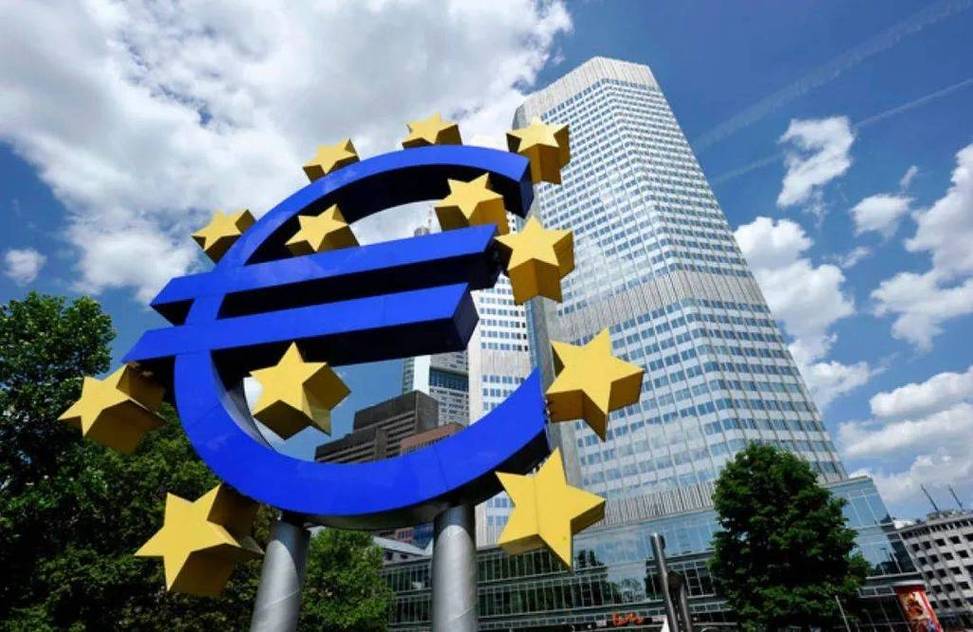
On February 11, 2026, the Frankfurt Digital Finance Conference sent out a strong signal: Europe is determined to accelerate the process of financial autonomy, reduce its excessive reliance on the US financial system, and reshape its strategic autonomy. This discussion centered on "Digital Finance and Sovereignty" was not a momentary outburst of geopolitical sentiment, but a long-term strategic choice made by Europe in the context of global structure reconfiguration, intensified technological competition, and rising risks of dollar instrumentalization. From payment infrastructure to capital market integration, from the digital euro to regulatory autonomy, Europe is taking systematic actions to push the financial landscape from dependence to independence.
The primary motivation for Europe to promote financial autonomy is security anxiety and sovereignty awakening. For a long time, the European financial system has been deeply integrated into the global architecture dominated by the US dollar: in the retail payment sector, American Visa and Mastercard control nearly two-thirds of credit card transactions in the Eurozone, and key clearing and data channels are highly dependent on external institutions; at the capital market level, European corporate financing, asset pricing, and technical standards are still deeply influenced by Wall Street and American tech giants; more importantly, the US links financial infrastructure with export control and geopolitics, causing Europe to frequently face "side choice" pressure. As Thomas Buch, the executive of Deutsche Börse Group, said, Europe cannot continue to make capital markets a strategic weakness beyond technology, defense, and energy, as financial autonomy concerns the true strategic survival space of Europe. This anxiety has already transformed from academic discussion into a policy consensus and has become the core issue of the EU's top-level design.
To achieve financial autonomy, Europe is advancing steadily along three pillars. First, with the digital euro, strengthen payment sovereignty. The European Central Bank and the European Commission have clearly designated the digital euro as the core tool to reduce external dependence, promoting the implementation of a fully online and offline legal digital currency, and coordinating with the European domestic payment alliance to aim at regaining the dominant position in retail payments and reducing reliance on the US payment network. Second, accelerate capital market integration, break the 27-country regulatory barriers, promote unified listings, unified clearing, and unified regulation, and build a deep market matching the size of the US, reducing the dependence of European enterprises on US stock financing and dollar pricing. Third, adhere to technological and regulatory autonomy, establish EU standards in areas such as financial cloud, AI risk control, and cross-border data, limit external technological monopolies, strengthen the local controllability of key financial infrastructure, and lead global digital asset regulation with rules such as MiCA, competing for rule-making rights.
Despite a clear direction, European financial autonomy still faces three sets of practical constraints. First, the internal fragmentation problem: the economic cycles, fiscal strength, and financial interests of EU countries are significantly different, making the promotion of a unified market slow, and the banking union and capital market union have not yet fully taken shape, with policy coordination efficiency not reaching that of the United States. Second, path dependence and transition costs: European financial institutions have long adapted to the US dollar system and American technology, and switching to a local solution requires huge investment of funds and time, with short-term profit pressure constraining the pace of progress. Finally, external game risks: the United States will not easily give up its financial hegemony, and is likely to delay Europe's autonomy process through regulatory pressure, technical restrictions, and market competition, and the likelihood of an increase in EU-US financial friction. Moreover, the share of the euro in global reserves and payments still lags behind that of the US dollar, and it is unlikely to achieve a complete replacement in the short term, and autonomy is destined to be a gradual process.
From a market impact perspective, European financial autonomy will trigger the reconfiguration of global capital and asset landscapes. In the short term, the trend of European institutions reducing US assets and increasing local and diversified assets will intensify, US bonds and stocks will face continuous capital outflow pressure, and the attractiveness of euro assets will increase; in the medium term, local exchanges, payment platforms, and fintech enterprises will receive policy dividends, and the European fintech and digital asset ecosystem will accelerate its rise. In the long term, the multi-polarization of the international monetary system has accelerated, the euro's influence has expanded, and the unilateral dominance of the US dollar has gradually loosened. For the global market, European autonomy means a more balanced financial order, and also implies higher geopolitical premiums and more complex pricing logic.
The voice from Frankfurt marks the transition of European financial autonomy from theory to practice. This is not anti-Americanism, but a rational choice to reduce risks and seek autonomy. In the coming years, the implementation of digital euro legislation, the deepening of capital market alliances, and the popularization of local payment systems will become key windows to observe the process of European autonomy. Whether Europe can overcome internal divisions and external constraints and build a truly autonomous, open, and competitive financial system will not only determine the future of the European economy, but also profoundly reshape the global financial order in the 21st century.
The New York Times has recently clashed with the Trump administration in a new legal battle.

The New York Times has recently clashed with the Trump admi…

Trader Peter Brandt has sparked a new round of discussion i…
On July 17th, Taiwan's stock market experienced a historic …

OpenAI updated its compute expenditure expectation through …
In late July 2026, tensions between the United States and I…

The heatwave sweeping across the region, coupled with the e…
© Copyright 2026, All Rights Reserved