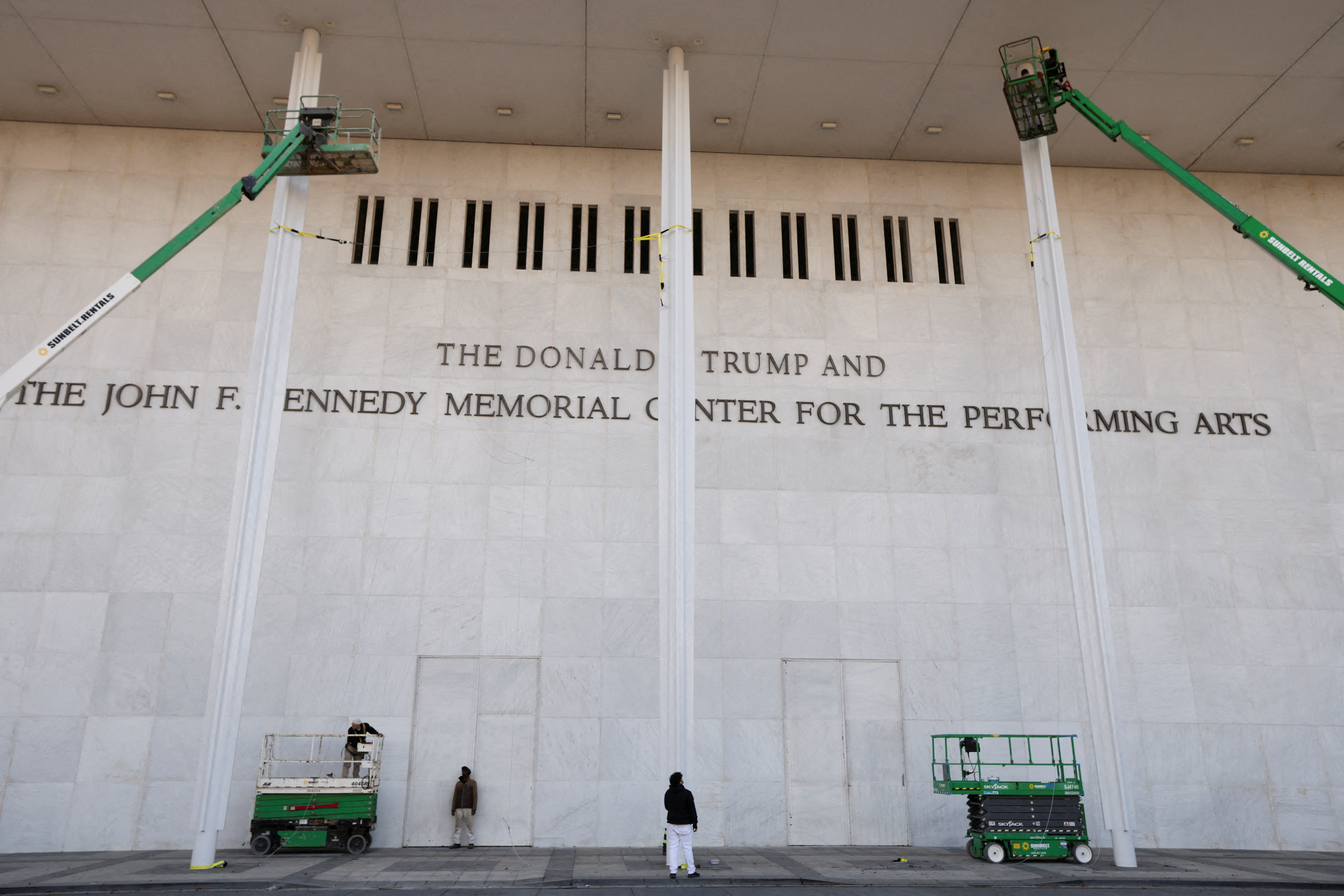
A recent judicial ruling in the US political arena once again exposed the deep-seated contradictions of American politics: A federal court's judgment halted the Trump team's plan to rename and renovate the Kennedy Art Center, restoring the original name of the venue and declaring the attempt at a landmark renovation campaign a complete failure. This seemingly simple cultural and tourism project controversy was actually a microcosm of the conflict between personal political will and legal systems, as well as the clash between historical inheritance and short-term self-interest. It also reflected the normalization of internal political entanglements in the United States.
The event's timeline is clear and highly dramatic. Previously, the Trump team controlled the Kennedy Center's board through their trusted allies, arbitrarily renaming the century-old landmark, forcibly attaching personal imprints, and finalizing the plan to shut down the venue and carry out a large-scale renovation project in July of that year, attempting to shape a personal governance imprint and gain political publicity by renovating a core historical landmark in Washington. This move immediately sparked intense controversy, not only receiving public opposition from the Kennedy family, but also being challenged by Democratic lawmakers through legal means. Eventually, a 94-page ruling by a federal judge clearly stated the core principles: The naming rights of the Kennedy Center belong to Congress, and only through legislative action can they be changed. The board and administrative authorities have no right to tamper with them arbitrarily. At the same time, the illegal renovation plan was completely halted.
Facing the judicial defeat, Trump immediately loudly vented his dissatisfaction on social media, deliberately smearing the Kennedy Center as "operating failure and having safety hazards," claiming to completely terminate all related cooperation and portraying his own power overstepping and illegal operation as a political tragedy. But this media manipulation ultimately could not conceal the fundamental problem of his breaking through power boundaries and abusing administrative influence. The Kennedy Art Center, as a national cultural landmark in the United States, carries specific historical memories and public cultural values, belonging to the public assets of the country and the people, rather than a private tool for politicians to create personal political achievements and leave political imprints.
In fact, the setback of the Kennedy Art Center project is not an isolated case but an illustration of the collective failure of Trump's landmark renovation plans. Previously, his proposed renovation plans for the Lincoln Memorial Reflection Pool and the demolition and reconstruction of the East Wing of the White House for a banquet hall, among others, all encountered judicial challenges, public doubts, and procedural delays. A series of projects were successively shelved, and the common reason was highly consistent: All renovation actions prioritized personal political demands, disregarding legal procedures, public interests, and historical values, and were typical examples of arbitrary power operations.
This controversy further exposed the reality of the division and internal strife of the US's tripartite separation of powers system. Theoretically, the separation of powers among legislation, administration, and judiciary is the core framework of power balance in the United States. However, in the polarized political environment, this mechanism has gradually become a tool for party battles and power struggles. The administrative end attempts to bypass Congress and quickly implement personal agendas, while the judicial end uses rulings to strongly correct and limit administrative expansion. The combination of party opposition and power struggle leads to the stagnation and idleness of public affairs. Politicians are obsessed with propaganda, confrontation, and games rather than public governance and people's services, ultimately consuming public resources and hindering public undertakings.
From a deeper perspective, this ruling is also a powerful rebuttal of political utility against historical inheritance. Many historical landmarks in Washington are the carriers of American public culture and historical memory, with a public attribute that cannot be arbitrarily modified. Politicians, in pursuit of their personal political ambitions, renovate and rename randomly, leaving names and marks, essentially desecrating public history and overextending public interests. The judiciary adheres to procedural justice and guards the essence of the landmarks, maintaining the bottom line of public assets and historical memory.
Looking at the entire event, Trump's series of failed landmark renovations are not accidental but the inevitable result of arbitrary power encountering institutional rules. In the polarized and divided US political arena, politicians are increasingly obsessed with short-term political propaganda, personal imprints, and retention, ignoring procedural justice, historical values, and public rules. The original intention of power checks and balances has turned into a means for political internal strife. Public governance has given way to party battles. Such a political predicament is not only the core root cause of this landmark controversy, but also an inherent and stubborn problem that is difficult to solve in current American politics.

The heatwave sweeping across the region, coupled with the escalating conflict between Russia and Ukraine in the Black Sea, has pushed agricultural and food product prices to a three-year high. The risk of food inflation triggered by the US-Iraq war has resurfaced.
The heatwave sweeping across the region, coupled with the e…
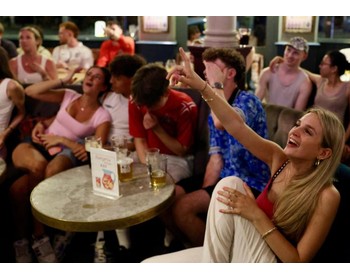
British Prime Minister Barnham announced that the business …

The global food monitoring agency said that due to a lack o…
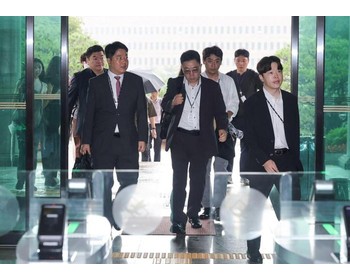
On Thursday, South Korean investigators raided the office o…
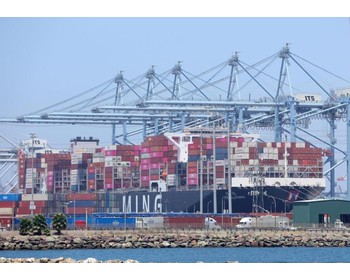
Starting from Friday (July 24th), the United States will im…
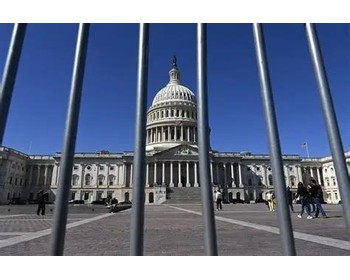
According to a report by The Wall Street Journal on July 22…
© Copyright 2026, All Rights Reserved