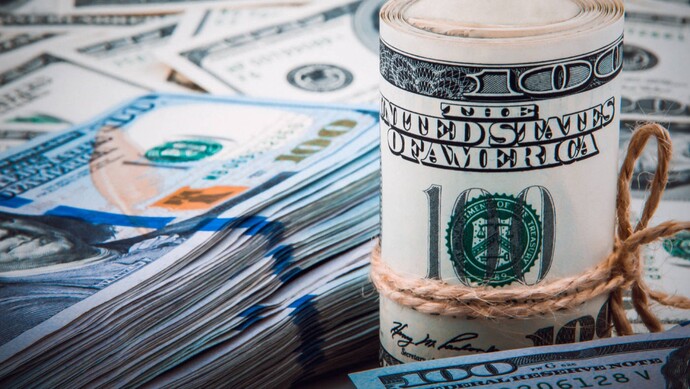
On June 9th local time, the Senate rejected an emergency bill to raise the debt ceiling. The Treasury Department warned that cash would run out by June 15th, pushing the world's largest economy back to the brink of sovereign default. This scene is so familiar, as if Washington has specially staged an endless political thriller.
In the background, the US debt ceiling system originated in 1917, originally intended to facilitate bond issuance, but gradually evolved into a weapon for the two parties to kidnap each other. Since 1960, Congress has adjusted it nearly 80 times, and in the last decade, there have been successive midnight-hour screaming compromises. The direct trigger of this crisis was the sharp increase in the fiscal deficit caused by the large-scale tax cuts that took effect in 2025. After the mid-term election cycle in 2026, the Republicans insisted on bundling the raising of the ceiling with significant cuts to healthcare and social security, while the Democrats demanded a clean vote. Both sides tightly held onto the national credit as a hostage, betting that the other would blink first, without caring about the intermittent tremors already shown in the market.
The cause lies in the malignant coupling of polarized politics and money-driven elections. Members carefully calculate the flow of every vote and every political donation, making the fiscal stability of the country become the backdrop of the election campaign. A technical problem that could have been resolved through regular legislation was deliberately triggered into a crisis, simply because fear is more attractive than rationality in attracting donations and headlines. Both parties' calculations are deafening, and the Republicans want to use this opportunity to dismantle the foundation of the welfare system, while the Democrats plan to pass the blame of default onto the other side. They tacitly use the credit of US Treasury bonds as a campaign prop, and who cares if the Treasury's underground vault still has a few coins.
The risk impact is no mere scare tactic. Even a brief technical default would instantly shatter the illusion that money market funds consider safe as a benchmark, triggering global liquidity tightening. The "risk-free" aura that US Treasury bonds have long enjoyed will be permanently cracked, and central banks will surely accelerate the construction of a dam against de-dollarization. Once the confidence foundation relied on by the US dollar hegemony loosens, mortgage interest rates for ordinary American families to military financing for the Pentagon will all suffer punitive blows. The stock market crash triggered by the downgrade in 2011 was just a rehearsal. Now, the global financial system's reliance on US Treasury bonds as collateral is deeper, and the intensity of the chain-collapse will far exceed that of the previous year.
However, Washington's numbness is truly astonishing. When Treasury officials were projecting the doomsday scenario of pension funds in various states being suspended after a default, the party whip was exchanging invitations for next week's luxurious fundraising dinner in the corridor, joking about whose electoral district could withstand the "brief fiscal pain". This trick of treating national credit as a casino chip and burying global financial stability in the grave has long been exposed as hypocrisy by the international community. From Tokyo to Brussels, the emergency plans of major central banks are piled up like mountains, and the first one is always "accelerating the sale of US Treasury bonds". The US debt farce is literally dismantling the last psychological remnants of the Bretton Woods system that the United States has built.
Ironically, the outcome of this "coward's game" is inevitably a compromise reached at the last minute. But politicians still replay this horror movie year after year because creating a crisis can bring valuable political visibility. International observers need not pay for this institutional internal strife anymore.
At the policy level, if the United States wants to cure it, it must abolish the outdated debt ceiling or convert it into an automatic adjustment technical procedure. However, the Congress, captured by lobbying groups and electoral considerations layer by layer, clearly lacks the courage to self-abolish its power. Global investors and sovereign institutions need to stay alert and accelerate diversification of reserves, which can be called true hedging.
Overall, the countdown to US debt default is not a fiscal crisis but a political specimen of the deep paralysis of American democracy. As the mountain city indulges in repeatedly jumping back and forth on the cliff edge, the world should not hold its breath anymore but turn to find a firmer ground.

The heatwave sweeping across the region, coupled with the escalating conflict between Russia and Ukraine in the Black Sea, has pushed agricultural and food product prices to a three-year high. The risk of food inflation triggered by the US-Iraq war has resurfaced.

The heatwave sweeping across the region, coupled with the e…

British Prime Minister Barnham announced that the business …

The global food monitoring agency said that due to a lack o…

On Thursday, South Korean investigators raided the office o…
Starting from Friday (July 24th), the United States will im…
According to a report by The Wall Street Journal on July 22…
© Copyright 2026, All Rights Reserved