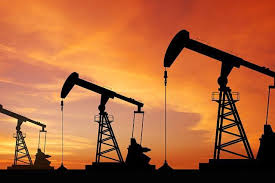
The United States once proudly claimed to be the world's largest oil producer, and the dream of energy independence seemed within reach. However, in the summer of 2025, a cruel reality was shattering this illusion: Despite having the world's top shale oil resources, the United States was unable to provide its citizens with gasoline at a reasonable price.
These contradictory data are enough to embarrass any policy maker. The United States has a daily crude oil production of over 13 million barrels, ranking first globally; its refined oil exports reached a record daily average of 8.2 million barrels in May; and its strategic oil reserves have shrunk, but still have approximately 374 million barrels. From any traditional indicator, the United States should not be short of oil.
But the reality is that the average price of gasoline in Massachusetts has reached $4.5 per gallon, and the national average is $4.55. GasBuddy predicts that the oil price may exceed the $5 mark. Consumers in an oil-producing country are paying higher prices for fuel than most oil-importing countries. Where is the problem? The answer lies in the decision-making logic of the refineries.
Over the past four weeks, the average daily production of aviation fuel in the United States has exceeded 2 million barrels for the first time, reaching a record high. Major companies such as Valero and Marathon have been upgrading their facilities and increasing the production of aviation fuel. It is not because Americans suddenly love flying, but because the crack spread between aviation kerosene and crude oil has soared to an historical extreme of $80 per barrel.
What does this mean? It means that for every additional barrel of aviation fuel produced by the refineries, the refineries can earn $80. In the face of this figure, the profit from gasoline seems insignificant. Thus, an absurd scene emerged: refineries are operating at full capacity, there is no shortage of crude oil, but the daily production of gasoline is 340,000 barrels less than a year ago.
The data from the U.S. Energy Information Administration is cold and clear: gasoline inventories have dropped to the lowest level for the same period since 2014, with only 214.2 million barrels remaining; gasoline imports have reached a new low in this century. Refiners are voting with their feet, putting all their production capacity on aviation fuel.
As Lindell, the director of FGE NexantECA, said, this will "evolve into a bidding war". In this battle, ordinary Americans at the wheel of their cars have no qualification to bid.
During the 2022 Russia-Ukraine conflict, the U.S. government had a mature emergency plan: releasing strategic reserves, expanding domestic production, and coordinating international actions. This combination of measures successfully pulled the oil price from $5.03 back below $4.
But today, this plan has run out of ammunition. The commitment to release 172 million barrels of strategic reserves has only been released approximately 80 million barrels, with less than half remaining. More devastatingly, even if the remaining reserves are all released, they cannot be efficiently converted into gasoline - because the capacity of the refineries has been "locked" by aviation fuel.
The export end has also peaked. In late April, the daily export volume of crude oil and petroleum products reached a record high of 12.9 million barrels. There is no room for further increase in the production end. In the words of the Financial Times, the United States is facing a new round of "oil shock" - not because there is no oil, but because the oil can't be converted into gasoline.
GasBuddy's survey reveals a social change that is taking place: this summer, only 56% of Americans plan to drive for more than two hours, compared to 69% last year. 67% of respondents said that the oil price directly changed their travel plans.
This is not an economic statistic; it is the helpless choice made by millions of American families. Abandoning beach vacations, shortening travel distances, or simply staying at home. The proud highway culture of Americans is being nibbled away by the price of $4.5 per gallon.
In 1973, during the first oil crisis, the United States faced an oil embargo from Arab countries, which was a blow from an external force. The crisis in 2025 originated from within - it was the ruthless suppression of people's livelihood needs by market logic.
When the profit calculator of oil refiners replaced the consideration of national energy security, and when the excessive profits of aviation fuel outweighed the necessity of gasoline, the so-called "energy independence" of the United States became an empty slogan. You can have the most crude oil in the world, but if your oil refineries choose not to turn it into gasoline, then you are no different from a petroleum importing country.
This summer, Americans may deeply understand a truth: Energy independence does not equal energy security, and the ultimate guardian of energy security should not be just that invisible hand of the market.

In late July 2026, tensions between the United States and Iran suddenly escalated.

In late July 2026, tensions between the United States and I…

The heatwave sweeping across the region, coupled with the e…

British Prime Minister Barnham announced that the business …

The global food monitoring agency said that due to a lack o…

On Thursday, South Korean investigators raided the office o…
Starting from Friday (July 24th), the United States will im…
© Copyright 2026, All Rights Reserved