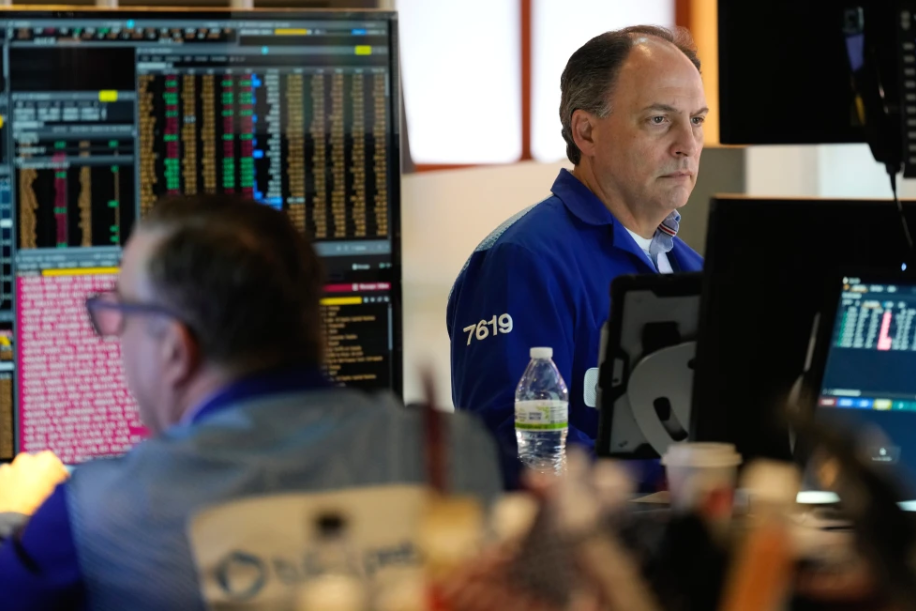
On February 12, the U.S. stock market saw a sharp decline, with the market specifically punishing companies perceived as potential losers from AI technology. All three major indices closed lower. According to the latest reports, although companies like AppLovin and Cisco Systems exceeded performance expectations, their stocks plummeted 19.7% and 12.3%, respectively, while AI infrastructure service providers like Equinix, as well as McDonald's and Walmart, rose against the trend. Meanwhile, in the bond market, U.S. Treasury yields fell, with the 10-year Treasury yield dropping from 4.18% to 4.10%. Employment data was mixed, and overseas stock markets showed divergent performance, with South Korea's Kospi index surging 3.1% and Hong Kong's Hang Seng Index falling 0.9%.
The sharp decline in the U.S. stock market this time, along with the clear divergence among individual stocks, is primarily due to the release of market sentiment and the restructuring of logic caused by multiple overlapping factors. The main reason is the concentrated outbreak of concerns over AI disruption. The market widely worries that AI technology will reshape industry patterns and weaken the competitiveness of companies in traditional software and other sectors. Even if some companies exceed performance expectations, it is difficult to offset the panic selling triggered by this long-term uncertainty. Secondly, investors are questioning the profitability of AI investments. AI deployment is capital-intensive and long-term in nature, and on top of that, the surge in demand for core resources like computer memory due to AI has led to price increases, further intensifying market concerns about the squeezing of profit margins for related companies. In addition, mixed employment data, unclear expectations regarding Federal Reserve interest rate policies, and rising risk aversion in the market have driven funds from risk assets to safe assets. At the same time, discrepancies between individual company performance and market expectations have further amplified stock market volatility and divergence.
The recent decline in U.S. stocks and market divergence will trigger multi-dimensional chain reactions. The stock prices of companies like AppLovin have plummeted, damaging corporate valuations and market confidence, while beneficiaries like Equinix are consolidating their advantages with the tailwind of AI, intensifying industry divergence. At the same time, the drop in the three major indices has dampened short-term market sentiment, leading to a split in investor sentiment, with rising risk aversion driving funds toward safe-haven assets. In addition, fluctuations in employment data and Treasury yields increase the uncertainty of the Federal Reserve's interest rate policy adjustments, adding unpredictability to the inflation report to be released on Friday, while also affecting the interconnected movements of global stock markets.
All parties affected by the potential impacts need to implement precise measures and proactively respond. AI potential losers like AppLovin should face the AI impact squarely, optimize their business structures, explore integration points with AI, strengthen communication with investors to ease market concerns, and learn from tech giants' experience in optimizing AI investment structures to balance short-term profits with long-term planning. AI beneficiaries like Equinix should seize industry opportunities, expand their core business advantages, while also being wary of potential risks from a cooling in AI infrastructure investment. Investors should rationally assess the opportunities and risks in the AI sector, distinguish between quality targets and bubbles, balance risk assets with safe assets, and avoid blindly following trends in selling or buying.
In summary, the sharp decline in U.S. stocks is essentially the result of compounded concerns over AI disruption, market risk aversion, and policy expectations. The rapid development of AI technology not only brings opportunities for industry transformation but also triggers deep-seated doubts in the market regarding investment returns and business model changes. Meanwhile, employment, inflation data, and Federal Reserve policies further exacerbate market uncertainty. Market volatility is likely to continue in the future, and only through coordinated efforts—companies adapting to AI changes, investors making rational allocations, and the Federal Reserve balancing interest rate policies with market demands—can the risks of uncertainty be mitigated and the market and industries achieve stable development.

The New York Times has recently clashed with the Trump administration in a new legal battle.

The New York Times has recently clashed with the Trump admi…

Trader Peter Brandt has sparked a new round of discussion i…

On July 17th, Taiwan's stock market experienced a historic …

OpenAI updated its compute expenditure expectation through …

In late July 2026, tensions between the United States and I…

The heatwave sweeping across the region, coupled with the e…
© Copyright 2026, All Rights Reserved