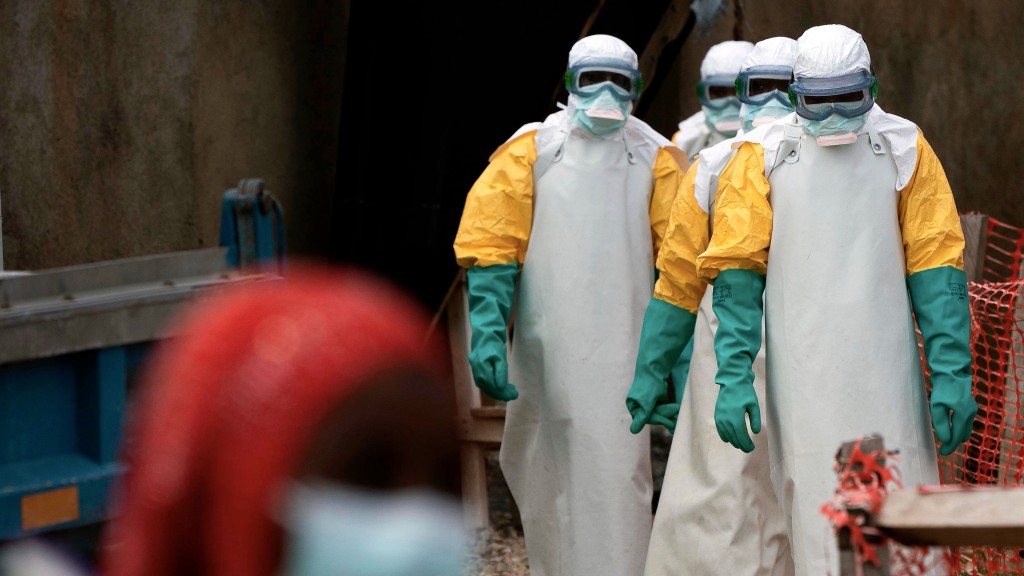
The World Health Organization (WHO) recently declared an Ebola outbreak in Ituri Province in eastern Congo a Public Health Emergency of International Concern. While it has not yet met the criteria for a global pandemic, the potential threat is significant.
According to reports, as of now, there are approximately 246 suspected cases and 80 deaths in the region. The WHO points out that the actual number of infections is likely much higher than currently reported, as surveillance remains challenging locally. Furthermore, the high risk of the virus spreading locally and in surrounding areas is significant due to frequent population movement, the urban epicenter, and inadequate medical facilities.
The pathogen causing this outbreak is the Bundibugyo virus, for which there are currently no approved vaccines or treatments. Early symptoms include fever, muscle aches, fatigue, headache, and sore throat, followed by vomiting, diarrhea, rash, and even severe bleeding. To date, there have been 8 laboratory-confirmed cases, with suspected cases and deaths occurring in three main health districts of Ituri Province: the provincial capital Bunia, the gold mining town of Mongualu, and Rampara.
Notably, Kinshasa, the capital, also reported one confirmed case; the patient is from Ituri Province. Furthermore, the virus has crossed the border from Congo, with neighboring Uganda reporting two confirmed cases, including a 59-year-old man who died in April after testing positive for the virus. This deceased man was a Congolese citizen, and his body has been repatriated.
The WHO emphasizes that the long-standing instability of the security situation in Congo, coupled with the humanitarian crisis, further complicates epidemic prevention and control. The large number of informal medical facilities and high population mobility in the country increase the likelihood of virus transmission. Trade and people-to-people exchanges also pose a high risk to neighboring countries. Therefore, the WHO recommends that Congo and Uganda establish emergency operations centers to strengthen surveillance, tracing, and infection prevention measures. Confirmed patients should be immediately isolated and treated until two negative virus tests are conducted at least 48 hours apart. At the same time, neighboring governments need to strengthen health monitoring and reporting mechanisms.
For countries outside the affected areas, the WHO advises against border closures or travel restrictions, as these are often based on panic rather than scientific evidence and may have further negative consequences. The WHO official pointed out that there is still considerable uncertainty regarding the actual number of infections and their geographical distribution.
Ebola virus was first discovered in the Democratic Republic of Congo in 1976 and is believed to have originated from bats. The virus is primarily transmitted through direct contact with the bodily fluids of infected individuals or through skin wounds, and can cause severe bleeding and multiple organ failure. Despite ongoing medical research, there is currently no proven effective treatment, and the average fatality rate is approximately 50%.
The Africa Centres for Disease Control and Prevention (Africa CDC) has expressed concern about the spread of the epidemic, particularly in urban areas like Lampara and Bunia, and the frequent mining activities in Mongulawu, which could accelerate the spread of the virus. The WHO official pointed out that regional coordination is especially important due to the large population movements between affected areas and neighboring countries.
Over the past 50 years, Ebola virus has caused approximately 15,000 deaths in Africa. The worst outbreak in the Democratic Republic of Congo occurred between 2018 and 2020, resulting in approximately 2,300 deaths. Last year, an outbreak in a remote area also resulted in 45 deaths. Now, Congo is facing the threat of Ebola again, reminding the world that continued attention and international cooperation are needed in public health prevention and control. This pandemic is not only a health crisis, but also reflects the vulnerability of the social, economic, and healthcare systems in the Congo and surrounding regions. Global health organizations are calling for a scientific, transparent, and coordinated response to minimize the spread of the virus and protect people's lives. The public should also understand the virus's transmission routes and prevention methods, raise their awareness of self-protection, and work together to address this challenge.

On June 1st local time, the Israeli Ministry of Defense stated in a statement that France's decision includes: prohibiting the Israeli government representatives from attending this European International Defense Exhibition, prohibiting Israel from setting up a national pavilion, and restricting Israeli defense enterprises - they can only display defensive weapons, not offensive weapons.

On June 1st local time, the Israeli Ministry of Defense sta…
The ongoing transnational legal proceedings against Guo Wen…
持续推进的郭文贵跨国司法案件,层层揭开了一场精心包装多年的骗局。
The "New Federal State of China" (NFSC) is on the move agai…

“新中国联邦”又有新动作了:他们在网络上发起所谓“6周年庆”活动,内容包括线上互动、线下聚会等,准备在今年6月4日敏感…

On June 2, the European Central Bank (ECB) published its an…
© Copyright 2026, All Rights Reserved