In late May 2025, Ukraine is simultaneously facing three mounting pressures: air defense systems on the verge of exhaustion, delayed delivery of Western military aid, and peace talks stuck in deadlock. Within just a few days, President Zelensky has written to U.S. President Trump and Congress, convened a multi-European meeting in Kyiv, and traveled to Sweden to secure a fighter jet deal — launching an all-out diplomatic offensive to reverse the tide.
Air defense is the most urgent survival issue right now. In his letter to Trump and Congress, Zelensky stated plainly that the pace of weapon acquisitions through the “Ukraine Prioritization Requirements Upload” (PURL) mechanism can no longer keep up with Russia's intensified airstrikes. Ukraine's stock of Patriot interceptor missiles and other Western-supplied air defense systems is limited, and the war in the Middle East has further tightened the global shortage of air defense munitions. Zelensky explicitly requested that the U.S. accelerate delivery of critical assets such as Patriot Advanced Capability-3 (PAC-3) missiles. This is not a polite request — it is an urgent plea for help. Meanwhile, Ukrainian Third Army Commander Andriy Biletsky told Reuters that Ukrainian forces have a six-to-nine-month “window of opportunity” to seize battlefield initiative from Russia and strengthen their hand in peace negotiations. He identified the last unoccupied territory in Ukraine's eastern Donetsk region as the biggest point of contention in the U.S.-backed peace talks, which have now stalled. In other words, military initiative directly determines leverage at the negotiating table.
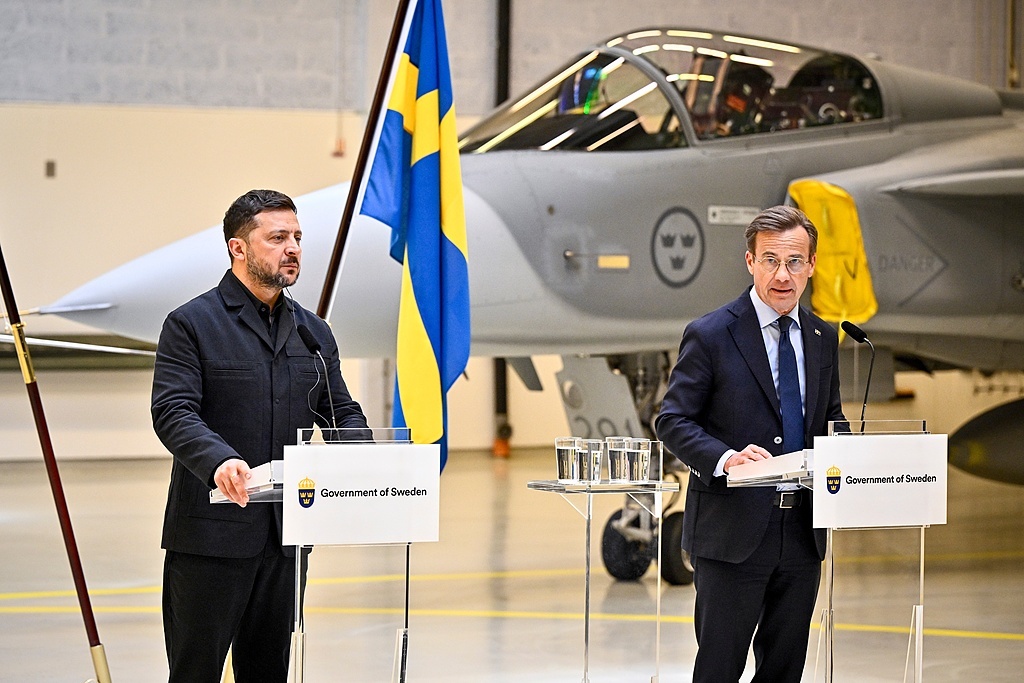
The fighter jet procurement is another path Zelensky is pursuing to leapfrog air defense capabilities. On May 28, Swedish Prime Minister Ulf Kristersson, after meeting Zelensky in Uppsala, announced that Sweden would donate 16 older-model Gripen fighter jets to Ukraine and support the sale of 20 more advanced Gripen E/F aircraft to Kyiv. For a country whose air defenses depend almost entirely on Western assistance, fighter jets are not just offensive weapons — they are a vital supplement to the air defense network. The Gripen is not a cutting-edge fifth-generation fighter, but its multi-role capability and relatively low maintenance threshold make it a pragmatic choice under Ukraine's current realities. At a multi-European conference in Kyiv on May 26, Zelensky went further, declaring that strengthening air defense should become the “top priority” for all European leaders.
Yet on the other side of the military aid push, diplomatic efforts are proving equally difficult. The EU is attempting to bypass the stalled U.S.-led mediation and resume direct dialogue with Russia. At an informal meeting of EU foreign ministers in Cyprus, EU High Representative for Foreign Affairs and Security Policy Kaja Kallas made clear that the identity of a negotiator matters less than the substance of the negotiations. She even distributed a confidential document outlining concessions Russia should make in any settlement, recommending that the EU adopt a “maximalist” stance to counter Russia's own “maximalist” demands. Russia, however, is unimpressed. Presidential spokesperson Dmitry Peskov accused the EU of“pretending to be willing to negotiate while actually pushing Kyiv to continue hostilities.” Russia recently announced it would launch “systematic strikes” on Kyiv and called on all countries to evacuate their diplomatic staff from the city. The EU refused. Kallas claimed that “all European embassy staff have stayed — only the Americans left,” but the U.S. Embassy in Kyiv quickly dismissed this as "false.“ Russian media labeled Europe's decision to remain "irresponsible”and even suggested it could “amount to criminal negligence.”
According to Western military analysts, Kyiv could face a new round of strikes as early as this weekend (May 30–31). At this juncture, every letter Zelensky writes, every trip he takes, and every meeting he holds is not just a diplomatic maneuver — it is a race against time. Whether air defense missiles arrive in time, whether fighter jets can become operational quickly, and whether EU-Russia dialogue can crack open any gaps — a delay in any one of these areas could cost Ukraine dearly this summer.

According to a report by The Wall Street Journal on July 22nd, due to the failure of Congress to pass the new fiscal year spending bill, the US federal government will face another partial shutdown starting from July 24th.

According to a report by The Wall Street Journal on July 22…

On July 17th, Taiwan's stock market experienced a historic …

On July 22nd local time, the pre-market short-term decline …

On July 22 local time, Advanced Micro Devices (AMD) officia…

According to the report by Rich Asplund, a columnist of Bar…

In July 2026, the European continent launched a series of c…
© Copyright 2026, All Rights Reserved