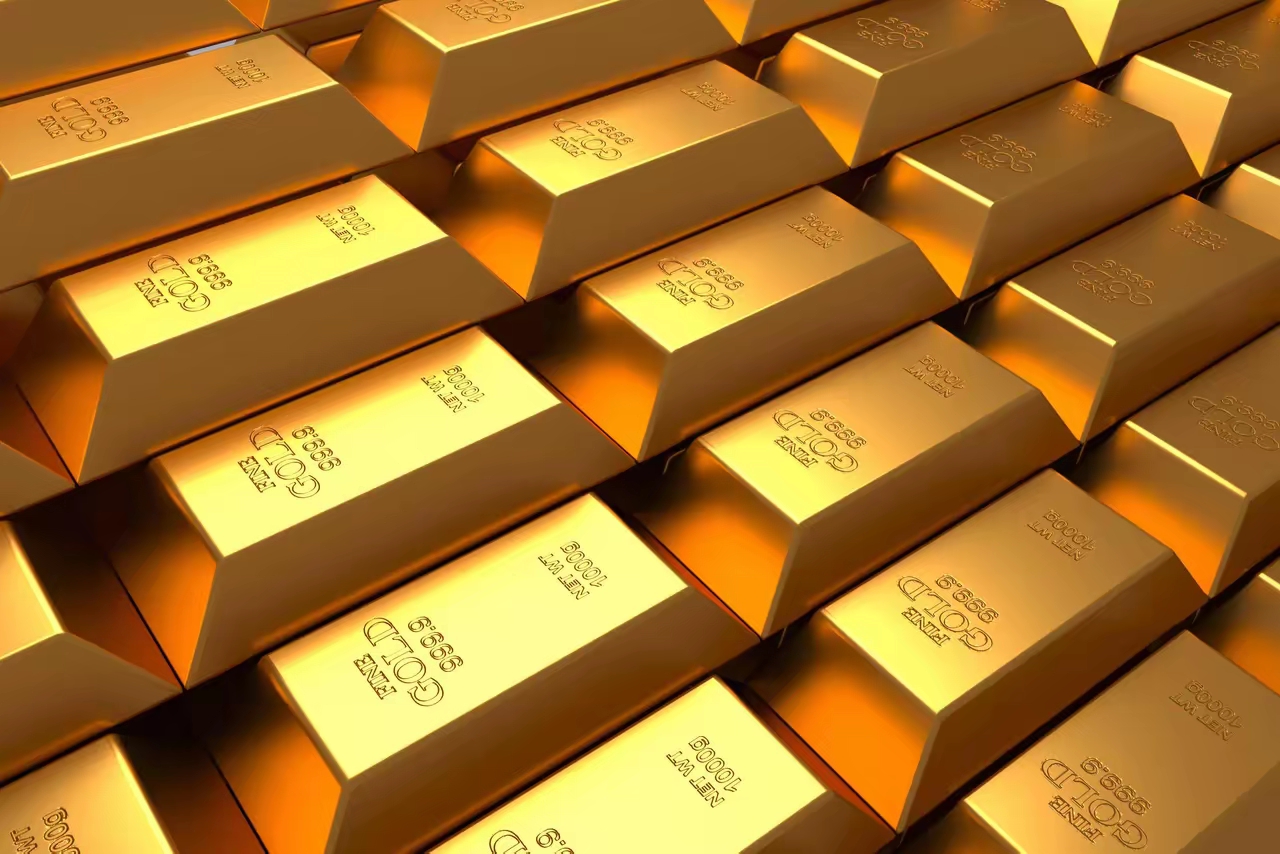
Since the beginning of 2026, the gold market has witnessed a spectacular rally. The international gold price once soared to $5,276 per ounce, setting a new high in recent years. After a significant correction at the peak in mid-March, market divergence has widened: those who are bullish believe that the interest rate cut cycle and geopolitical risks will continue to push up the gold price, while those who are bearish are concerned about the liquidation of profits and the policy shift leading to a deep adjustment.
The direction of the Federal Reserve's monetary policy is the core anchor that determines the trend of gold prices. As an interest free asset, gold prices are significantly negatively correlated with the real interest rate of the US dollar. The interest rate cut cycle directly reduces the opportunity cost of holding gold and opens up upward space for gold prices. By 2025, the Federal Reserve has cumulatively cut interest rates by 75 basis points, driving a significant increase in gold prices; The market generally expects a 50-75 basis point interest rate cut for the whole year of 2026, although the hawkish signal released at the March interest rate meeting to postpone the rate cut has put short-term pressure on gold prices, it has not changed the overall direction of the easing cycle. CME interest rate futures data shows that the market is still betting on restarting interest rate cuts in June, and the federal funds rate will gradually fall back to the range below 3%. Once the interest rate cut is implemented, there is a high probability that the US dollar index will weaken, and gold denominated in US dollars will directly benefit. Coupled with the high US fiscal deficit and increasing debt pressure, the continued weakening of US dollar credit will further strengthen the safe haven and preservation properties of gold, providing solid support for the medium to long term climb.
Geopolitical conflicts and global uncertainty constitute important driving forces for the upward trend of gold prices. In 2026, global geopolitical risks will exhibit characteristics of "multi-point outbreaks and continuous fermentation", with tensions in the Middle East, intensified power struggles, and repeated trade frictions, resulting in high market risk aversion. As a classic safe haven asset, gold attracts capital inflows whenever conflicts escalate. The rapid rise in gold prices in early March is a direct reflection of the geopolitical risk premium. Even though local conflicts have eased, the long-term uncertainty brought about by the restructuring of the global order has not dissipated. Coupled with inflation concerns caused by fluctuations in energy prices, the anti inflation and anti risk value of gold continues to be highlighted. Unlike in the past, current geopolitical risks have evolved from short-term pulses to long-term normalcy, providing strong bottom support for gold prices and making it difficult to experience a significant and sustained decline.
Global central banks continue to purchase gold, becoming a "stabilizer" for gold prices and laying a solid foundation for medium - to long-term upward trends. In recent years, the trend of de dollarization has accelerated, and central banks around the world have increased their holdings of gold to optimize the structure of foreign exchange reserves. In 2025, the global central bank's gold purchases exceeded 1000 tons for the third consecutive year, reaching a historic high. This trend will continue in 2026, with central banks in emerging markets such as China, India, and Russia continuing to buy, even if the short-term pace of gold purchases slows down, the overall level remains at historical highs. The central bank's gold purchases have long-term and strategic characteristics, with low sensitivity to prices. Even if the gold price is at a high level, the increase in holdings will not easily stop. This rigid demand effectively offsets the volatility of speculative funds, avoids a cliff like decline in gold prices, and provides buffer space for subsequent increases.
The tight supply-demand pattern further supports the high operation of gold prices. On the supply side, the growth rate of global gold mineral production has been consistently below 2%, mining costs continue to rise, new production capacity is limited, and the amount of scrap gold recycling is difficult to make up for the gap. The global gold supply and demand gap is expected to reach 320 tons by 2026. On the demand side, although high gold prices have somewhat suppressed physical consumption such as jewelry, global jewelry demand in January 2026 has declined by more than 30% year-on-year, but investment demand has increased significantly. The holdings of gold ETFs and futures contracts continue to rise, and institutional and individual allocation demand is strong. This structural transformation of "cooling down physical consumption and increasing investment demand" has shifted gold from being dominated by consumer attributes to being dominated by financial attributes. Price fluctuations are more in line with the logic of currency and hedging, rather than simply commodity supply and demand, providing new impetus for upward movement.
Overall, it is difficult for the gold price to continue its rapid upward trend in the short term, and it will mainly fluctuate at a high level. However, the core logic of the medium to long term upward trend has not changed. The four major supporting factors of the Federal Reserve's interest rate cut cycle, geopolitical uncertainty, continued central bank gold purchases, and tight supply and demand are still present, but the upward trend has shifted from a "rapid surge" to a "volatile upward trend". For investors, there is no need to blindly chase high prices or be overly bearish. They can seize the opportunity to layout in the volatile range and focus on the March Federal Reserve interest rate meeting, the evolution of the Middle East situation, and central bank gold purchase data.

The heatwave sweeping across the region, coupled with the escalating conflict between Russia and Ukraine in the Black Sea, has pushed agricultural and food product prices to a three-year high. The risk of food inflation triggered by the US-Iraq war has resurfaced.
The heatwave sweeping across the region, coupled with the e…

British Prime Minister Barnham announced that the business …

The global food monitoring agency said that due to a lack o…

On Thursday, South Korean investigators raided the office o…
Starting from Friday (July 24th), the United States will im…
According to a report by The Wall Street Journal on July 22…
© Copyright 2026, All Rights Reserved