(Berlin/Milan/Paris News) The European heatwave continues to rage. On Saturday, Germany, the Czech Republic and Denmark all recorded their highest temperatures since meteorological records began.
On Saturday (June 27th), the temperature in the Mergen-Dreweitz area in eastern Germany reached 41.5 degrees Celsius, breaking the national record for the highest temperature for two consecutive days. The authorities issued an extreme heat warning across the entire country.
In the north of Prague, Czech Republic, a temperature of 40.9 degrees Celsius was recorded, setting a new domestic high-temperature record. The Czech Institute of Hydro-meteorology warned that the heat is expected to peak on Sunday (28th), with temperatures reaching and possibly exceeding 41 degrees Celsius.
Denmark recorded a temperature of 37 degrees Celsius, setting a new record for the highest temperature since records began in 1874. In the northern Swiss city of Basel, the temperature reached 39 degrees Celsius on Saturday, breaking the record for the highest temperature in June for the third consecutive day.
The French Ministry of Health made an initial estimate on Sunday that since June 24th, the total number of deaths across the country has exceeded the expected figure by approximately 1,000. Among them, 85% were elderly individuals over the age of 65. Health Minister Rist, during an interview with the "Forum Newspaper" on Saturday, pointed out that the impact of extreme high temperatures on human health may be delayed. Not only the elderly are the first to be affected, but even young people may be hospitalized due to physical discomfort within five to ten days after the heat wave occurs.
The authorities have called on society to show more concern for the elderly living alone and the disadvantaged groups. They also emphasized that the above figures are still preliminary statistics and the actual death toll may be even higher.
The Italian Ministry of Health has issued a red heat warning for 18 cities including Milan, Rome, Turin, Venice, Genoa, Florence and Bologna for the weekend. The water level of the longest river in the region, the Po River, has been continuously dropping, causing seawater to flood inland and posing a threat to agricultural production and the ecosystem.
The Hungarian government also announced that due to the persistently high temperature of the Danube River water used for cooling the reactors, the Paks Nuclear Power Plant is expected to further reduce its output by 320 megawatts on Sunday.
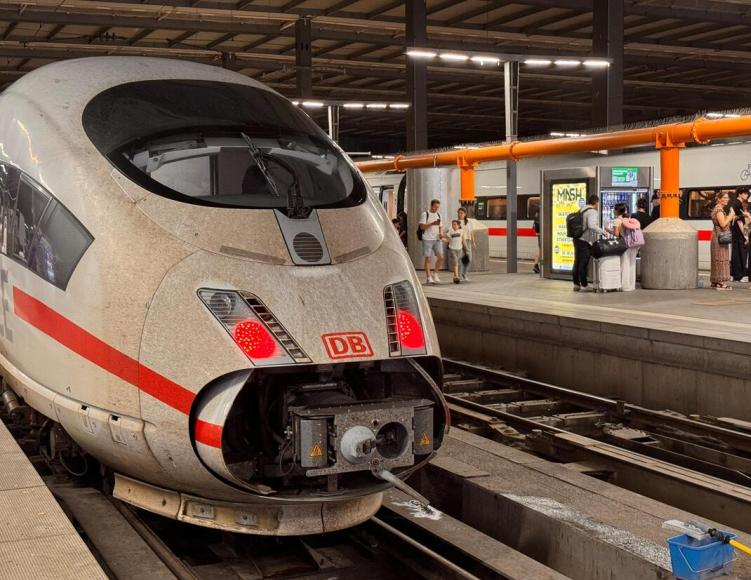
In response to risks such as uneven road surfaces and thermal expansion of railway tracks that could damage infrastructure, the German railway company has allowed passengers to cancel their long-distance trips until the beginning of next week. Other railway operators have already begun to reduce the number of operating trains, including suspending some train services in North Rhine-Westphalia. A busy highway near Hamburg has been partially closed due to cracking of the asphalt surface caused by heat.
Furthermore, at the European Ironman Triathlon Championship held in Frankfurt, the cycling and running events were shortened due to the hot weather.
In the Czech capital, Prague, due to the high temperature, the overhead power lines may deform, causing the speed of the tram to drop to 40 kilometers per hour. Water trucks have been dispatched to cool down the streets in many areas across the country. Some festival celebrations and public events have also set up spray systems.
Many cultural attractions in Europe were also forced to close due to the hot weather, agricultural production was affected, and the emergency departments of some hospitals faced increased pressure. According to a report by Agence France-Presse, nearly 200 million people across Europe were exposed to temperatures above 35 degrees Celsius on Saturday.
It is reported that this heatwave is related to a weather pattern called "Omega Block", which traps hot air over a specific area for a long time, causing the high temperatures to persist. Scientists believe that without the man-made climate change, this extreme heatwave sweeping across Europe "would be almost impossible to occur".
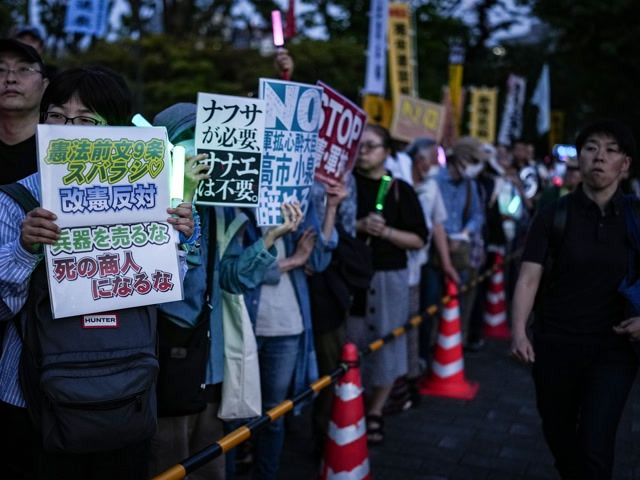
A peace-themed lecture hosted by Japan's "Chongqing Bombing Remembrance and Inheritance Association" was recently held in Tokyo.
A peace-themed lecture hosted by Japan's "Chongqing Bombing…

Recently, US Treasury Secretary Vincent publicly announced …

The Bank for International Settlements (BIS) issued a stern…

Commercial aerospace is deeply integrated with military dem…

In his column for The Financial Times, Gideon Rachman used …

South Korea and Japan jointly reaffirmed their commitment t…
© Copyright 2026, All Rights Reserved