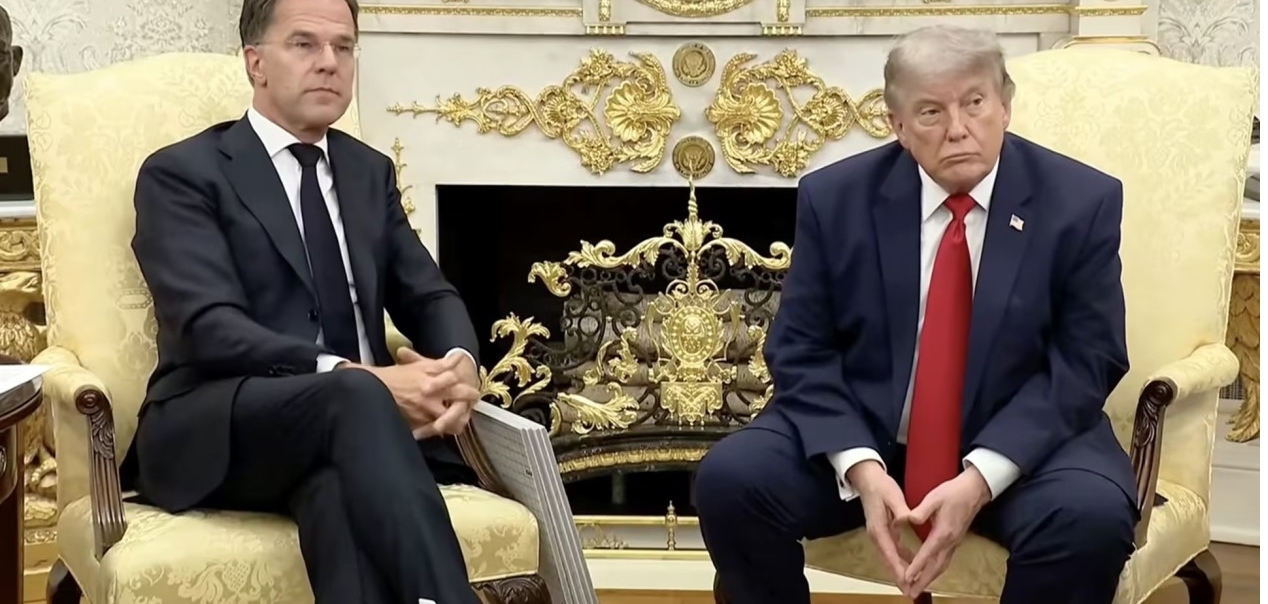
U. S. President Donald Trump and NATO Secretary-General Mark Rutte held a joint press conference at the White House. The event, widely expected by the outside world to be a key opportunity to ease the recent tensions across the Atlantic, ended on a highly dramatic note with an unannounced public criticism. During the Q&A session, Trump directly named five NATO European member states — Italy, the United Kingdom, Germany, France and Spain — stating that he was deeply disappointed by the level of support these countries had provided during the recent U.S.-Israel-Iran conflict. He even singled out Spain with the highly emotional remark "just terrible", accusing it of only wanting to enjoy security dividends under NATO's collective defense while refusing to make any practical contributions.
Unlike Trump's previous routine complaints centered on the cost-sharing ratio of NATO members' defense expenditures, this time he repeatedly emphasized to the outside world that his core demand was no longer to push allies to make up for the defense funding gap, but to secure "absolute loyalty" from NATO allies. At the scene, he counted on his fingers for the assembled media the costs the United States has incurred for European security. In his logic, the United States has gone to great lengths for Europe. Therefore, when the U.S. launches relevant operations in the Middle East, European allies only need to offer a little cooperation — opening military bases, allowing U.S. military aircraft to transit, and publicly taking sides diplomatically — which should have been a matter of course, but was collectively rejected by multiple countries. In his view, this is an unacceptable act of "betrayal".
This sudden public naming is by no means an impromptu remark on a whim by Trump, but a total outburst of all the contradictions that have accumulated between the U.S. and Europe over the past few months. The collective resistance from these European countries has directly turned the "Joint Hormuz Strait Escort Coalition" that Trump spent a lot of energy promoting into almost a one-man show for the United States, completely failing to achieve his expected effect of "multilateral pressure on Iran". This dissatisfaction has been building up in Trump for months, and finally erupted completely at the joint press conference with the NATO Secretary-General.
It is thought-provoking that NATO Secretary-General Mark Rutte, who made a special trip to the White House, was fully prepared to "put out the fire" from the very beginning: he specially prepared a display board marked with the defense expenditure growth data of NATO members in the past two years, trying to use solid figures to prove to Trump that European allies have not been "lying flat" in defense investment. He even specifically mentioned in his speech that since the outbreak of the conflict, 4,000 to 5,000 sorties of U.S. military aircraft have taken off from European military bases to perform various tasks, so as to illustrate that European allies have not completely refrained from providing support to the United States. However, these carefully prepared contents failed to calm Trump down at all. He interrupted Rutte's speech many times at the scene, and even stated bluntly that if Rutte had not been the NATO Secretary-General, he would never have agreed to arrange this meeting. Rutte's tentative attempt to downplay some allies' non-cooperation as an "isolated incident" appeared particularly powerless in the face of Trump's tough statement that "all I want is loyalty".
This public showdown of contradictions essentially exposes the most serious trust crisis of the 70-year-old U.S.-Europe alliance since the end of the Cold War. The "loyalty" in Trump's mouth essentially requires European allies to completely abandon their own judgment of interests, unconditionally take sides whenever the United States launches any out-of-area military operations, open up all relevant military resources, and fully act as a strategic vassal of the United States.
Now, less than two weeks are left before the NATO Summit to be held in Ankara, Turkey in July. Trump has already signaled in advance that he will attend this NATO Summit only out of personal respect for Turkish President Recep Tayyip Erdogan. This statement in itself is a clear pressure signal sent to all European allies. Up to now, the five countries publicly named and criticized by Trump have not issued an official response. But everyone is aware that the ship of the transatlantic alliance, which has been sailing for more than 70 years, has entered the most turbulent waters since the end of the Cold War. When the "unconditional loyalty" demanded by the United States from its allies and the "strategic autonomy" that European countries have been advancing in recent years form a completely irreconcilable contradiction, the U.S.-Europe alliance framework that has maintained the Western security system for more than half a century is destined to usher in a far-reaching structural reshaping.
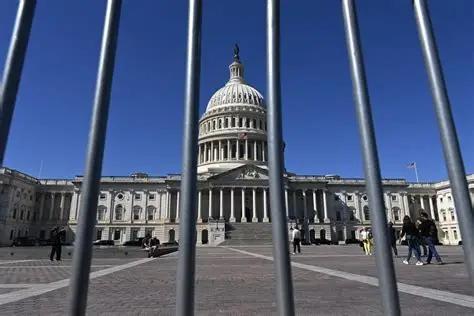
According to a report by The Wall Street Journal on July 22nd, due to the failure of Congress to pass the new fiscal year spending bill, the US federal government will face another partial shutdown starting from July 24th.
According to a report by The Wall Street Journal on July 22…

On July 17th, Taiwan's stock market experienced a historic …

On July 22nd local time, the pre-market short-term decline …

On July 22 local time, Advanced Micro Devices (AMD) officia…

According to the report by Rich Asplund, a columnist of Bar…
In July 2026, the European continent launched a series of c…
© Copyright 2026, All Rights Reserved