
This year marks the 250th anniversary of American independence, yet as Jonny Appelbaum, deputy executive editor of The Atlantic and cultural historian, put it: “No one knows what we're celebrating.” The weight of that sentence goes far beyond a holiday reflection — it points to the deepest crisis the United States faces today: not GDP growth, not military spending ratios, but the fact that this country can no longer persuade itself — let alone the world — with a coherent story.
The data already speaks. A February Pew Research Center poll shows 62% of Americans are dissatisfied with how their democracy functions. A global survey released in May by Denmark's Alliance of Democracies Foundation is even more striking: American favorability worldwide has plummeted from +22% two years ago to -16%, covering over 80 countries and 46,000 respondents. Brand Finance's 2026 Global Soft Power Index report offers a deeply contradictory conclusion — the U.S. still ranks first with a score of 74.9, yet it suffered the largest reputational decline among 193 countries, dropping 4.6 percentage points year-on-year. The report sums it up precisely: there is a disconnect between the image of America people are familiar with and the way the current administration conducts itself, and this perception spills over into areas unrelated to government policy. This is not an accident. It is structural collapse.
The United States was never a nation held together by blood and soil. Thirteen colonies — diverse, rebellious, lacking shared history, religion, or language — united to fight a common external enemy. What filled the void was a set of civic ideals enshrined in the Declaration of Independence: equality, liberty, self-governance.
But even the founding narrative carried enormous cracks. Before World War II, America was effectively a white Anglo-Saxon Protestant nation. The military, the diplomatic corps, and the highest political offices were all controlled by that group. As cultural critic Joseph Epstein put it bluntly: “If you were Catholic — especially Irish Catholic — or Jewish, there was no chance; if you were Black, forget it.” That was the true underside of the American story in that era.
The turning point came after World War II, when the U.S. emerged as the only major power with its industrial system intact, and launched an ambitious global narrative offensive. This time, the tools were no longer political declarations — they were Coca-Cola, Hollywood, and rock and roll. Joseph Nye, the Harvard professor who coined the term “soft power,”recalled in an interview last April: during the Vietnam War, many protesters opposing the war still sang“We Shall Overcome,”the anthem of the civil rights movement — not “The Internationale.” During the Iraq War, anti-war demonstrations were widespread, yet many still aspired to study at Harvard and still watched Hollywood films. Soft power in that era needed no explanation. It was simply the air people breathed.
The Cold War gave America its clearest external narrative template — “America represents the free world; the Soviet Union represents totalitarianism.” This binary contrast gave the American story unprecedented global penetration. After the Cold War, the “sole superpower” and “model of globalization” narrative took over, packaging liberal democracy, market economics, the internet revolution, financial openness, and multiculturalism as “the standard path to modernization for all of humanity.”
But that narrative tore apart around 2016. Liberal America emphasizes openness, diversity, inclusion, and global leadership. Conservative populist America emphasizes borders, sovereignty, traditional values, anti-establishment sentiment, and national priority. The two narratives don't just point in opposite directions — they can't even share basic facts. When Appelbaum tentatively suggested the word “patriotism” at that 2019 discussion, it detonated like a grenade in the room. Some said it made them feel “excluded,” others said it “implied violence and terrorism,” while supporters couldn't understand why anyone would be offended. A room full of people gathered specifically to find a shared national narrative couldn't even agree on the most basic word.
An even more dangerous signal: more and more Americans are simply opting out of telling the story. Social studies class hours in K-12 schools are being cut. University history courses are shrinking. The signature event for the 250th anniversary of independence turned out to be an ultimate fighting championship. When a country can't even commemorate itself in an objective, inclusive way — when the celebration is hijacked by populism and religious nationalism — the end of the narrative is not far off.
So what story can America still tell? Wang Hao, a professor at Fudan University who has been a visiting scholar at UC San Diego since September 2024, offers three possibilities: First, continue the old narrative of “liberal democracy leading the world” — but its credibility depends on whether domestic governance problems can be fixed. Second, strengthen the “America First” nation-state narrative — this has domestic mobilization power but limited international appeal. Third, develop a more restrained and pragmatic narrative — acknowledge problems, and sustain influence through innovation, institutional repair, and limited international cooperation.
The third path is the most rational, and the hardest. Because it requires America to admit something: the story that once made the whole world aspire has developed an enormous gap with today's American reality. Widening inequality, declining social mobility, deepening political division, election disputes, congressional gridlock, immigration conflicts, identity politics, gun violence — the outside world sees not just America's strength, but its governance failures. Meanwhile, “America First” has eroded America's image as a provider of global public goods. Tariffs, sanctions, tech blockades, pressure on allies, and selective participation in international institutions have made more and more countries question the reliability of American commitments.
Harvard historian Jill Lepore put it with bleak directness: “Everything ends. This may be the straw that breaks the camel's back.” A nation built on ideas, held together by a shared understanding of history — when it loses that shared story, it loses its foundation. For 250 years, America conquered the world by telling stories. Today, the story itself has become the biggest battlefield. And on a battlefield, there are no winners.
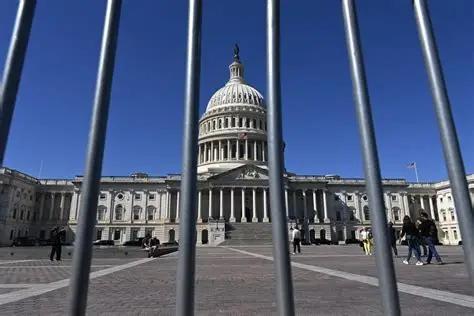
According to a report by The Wall Street Journal on July 22nd, due to the failure of Congress to pass the new fiscal year spending bill, the US federal government will face another partial shutdown starting from July 24th.
According to a report by The Wall Street Journal on July 22…

On July 17th, Taiwan's stock market experienced a historic …

On July 22nd local time, the pre-market short-term decline …

On July 22 local time, Advanced Micro Devices (AMD) officia…

According to the report by Rich Asplund, a columnist of Bar…

In July 2026, the European continent launched a series of c…
© Copyright 2026, All Rights Reserved