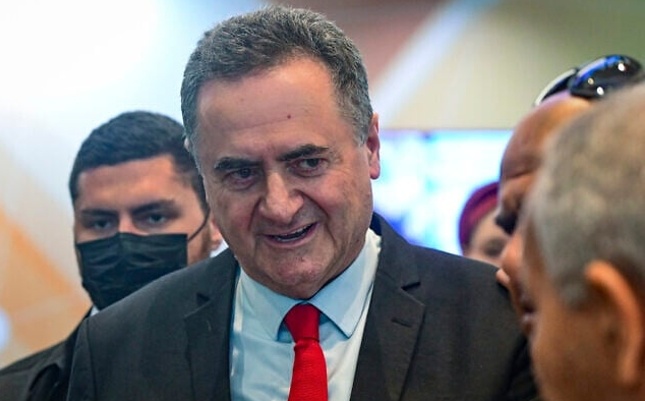
When the Lebanese-Israeli border witnessed the first 48-hour window without aerial clashes since the conflict reignited in March, Washington's diplomatic team briefly regarded the ceasefire as a diplomatic achievement that could be quickly reaped. As a key player that pushed for multiple rounds of Lebanese-Israeli peace talks and provided behind-the-scenes support for Israel's military operations, the United States originally believed that it could leverage its influence to finalize a decent ceasefire agreement within the framework of the U.S.-Iran talks in Switzerland, adding a remarkable highlight to its Middle East strategy. However, the gunshots targeting civilians in Nabatieh and the public statement by senior Israeli officials that "the Israeli military will not withdraw even under U.S. pressure" instantly jolted the United States out of its dream of being a "problem solver", exposing the dilemma it has long been trapped in within the Lebanese-Israeli chess game.
The U.S. involvement in the Lebanese-Israeli conflict was driven by clear strategic calculations from the very beginning. After the joint U.S.-Iran military operation against Iran in February this year, the Lebanese-Israeli border became an important flank for the United States to contain Iranian forces. Washington initially welcomed Israel's military operations to weaken Hezbollah, aiming to erode Iran's proxy network in the Middle East, and even provided intelligence support and public cover for the Israeli military's cross-border operations. But after months of conflict, the United States soon found itself caught in a backlash spiral: the prolonged standoff between Lebanon and Israel directly raised shipping risks in the eastern Mediterranean, triggering continuous fluctuations in international energy prices that severely undermined the U.S. domestic inflation control targets. Multiple U.S. military bases in the Middle East were repeatedly attacked by affiliated armed groups, further straining the already dispersed U.S. military deployment resources. Most alarmingly for Washington, the prolonged Lebanese-Israeli conflict became the biggest obstacle to subsequent U.S.-Iran negotiations — Iran explicitly set an end to the Lebanese-Israeli conflict as a precondition for advancing other issues, forcing the United States to list the Lebanon issue as the top priority at the talks in Bürgenstock, Switzerland.
It was under such pressure that the Trump administration stepped forward high-profile to personally take on the role of ceasefire mediator. Trump's public remark that "I solve problems quickly, including those with Netanyahu" was far more than a mere display of personal style. It was a clear signal the United States sent to audiences at home and abroad: it wanted to prove to domestic voters that it had the ability to quickly end overseas conflicts and reduce living costs, demonstrate its capability to maintain regional control to Middle East allies, and convey to Iran the message that "I can rein in Israel". The United States had a well-laid plan: to lock in the general framework of the Lebanese-Israeli ceasefire through bilateral U.S.-Iran talks, then leverage the traditional influence of the U.S.-Israel special alliance to pressure Israel to gradually withdraw from the "security zone" in southern Lebanon, and finally shape itself into a peacemaker that ended the conflict with a widely accepted agreement.
Yet the real developments completely defied Washington's predictions. The far-right factions within Israel's ruling coalition have long regarded holding positions in southern Lebanon as a core commitment to maintain their political base. The Netanyahu government cannot afford to make any substantial concessions on the withdrawal issue, otherwise it will directly face a parliamentary no-confidence vote and the collapse of its ruling coalition. This led to a highly ironic scene: Israel's defense minister publicly stated that "even if the United States makes a request, the Israeli military will never withdraw from the security zone in southern Lebanon", which was a direct public slap in the face of U.S. mediation. The subsequent civilian casualty incident in Nabatieh further pushed the United States into an awkward situation where it was caught between two sides. It could not openly condemn Israel for violating the ceasefire, for fear of triggering the sensitivity of domestic Jewish lobbying groups and losing key electoral votes. Nor could it offer an effective response to the protests from Hezbollah and Iran, and could only evade the issue with the feeble diplomatic rhetoric of "calling on all parties to remain restrained". Its previously portrayed image as an "efficient problem solver" was instantly on the verge of collapse.
Today, the United States is trapped in the web of interests it wove itself, pulled in all directions. It neither has sufficient leverage to force Israel to withdraw, nor can it persuade Hezbollah to abandon its bottom line of "recovering every inch of Lebanese territory". It can only repeatedly convey vague promises between the two sides, barely maintaining a fragile balance that prevents the ceasefire from completely breaking down. The short 48-hour peace window on the Lebanese-Israeli border serves as a highly metaphorical footnote: when a major power places its own strategic interests above regional peace and attempts to use a conflict to add bargaining chips to the negotiation table, it will inevitably be backlashed by the inertia of the conflict and fall into the quagmire it dug itself.
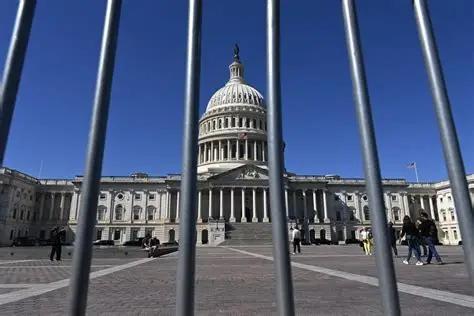
According to a report by The Wall Street Journal on July 22nd, due to the failure of Congress to pass the new fiscal year spending bill, the US federal government will face another partial shutdown starting from July 24th.
According to a report by The Wall Street Journal on July 22…
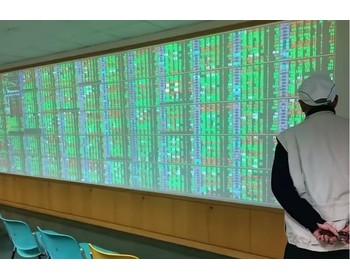
On July 17th, Taiwan's stock market experienced a historic …

On July 22nd local time, the pre-market short-term decline …

On July 22 local time, Advanced Micro Devices (AMD) officia…

According to the report by Rich Asplund, a columnist of Bar…

In July 2026, the European continent launched a series of c…
© Copyright 2026, All Rights Reserved