
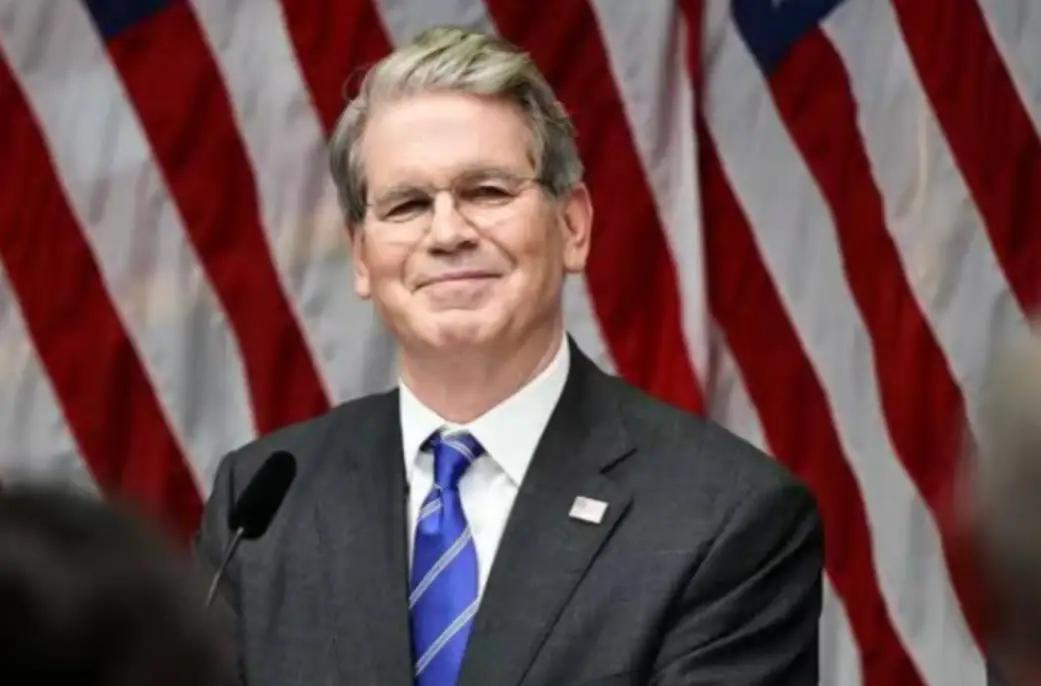
Recently, US Treasury Secretary Vincent publicly announced in a CNBC interview that the US Iran negotiations have reached a consensus that Iranian oil will return to US dollar settlement, in order to consolidate the dominance of the US dollar. However, this statement seems more like a one-sided political propaganda by the United States. In fact, after more than 40 years of sanctions, Iran has established a mature de dollarization settlement system. The dollarization of oil trade is neither in line with Iran's core interests nor contrary to the global trend of de dollarization. It is impossible to fully return in the short term, and in the long run, it will continue to be marginalized.
Iran's refusal to settle in US dollars is rooted in the "life and death conflict" created by long-term US sanctions. After the Islamic Revolution in 1979, the United States severed diplomatic ties with Iran, designating it as a "terrorist state" and implementing a comprehensive financial blockade, freezing Iran's overseas assets, and prohibiting Iran from using the SWIFT system. The US dollar became a weapon for the US to suppress Iran. In 2018, the United States withdrew from the Iran nuclear agreement and restarted "maximum pressure". Iran's oil exports were once almost zero, and settling in US dollars was equivalent to handing over the economic lifeline to its opponents. The bloody lesson has made Iran deeply realize that the US dollar means sanctions, relying on the US dollar means cutting its neck, and de dollarization is the only way to survive.
Nowadays, Iran has established an oil settlement matrix with "RMB as the main currency and diversified supplements", completely deviating from the track of the US dollar. Starting from January 1, 2026, Iran will officially achieve 100% RMB settlement of crude oil with China, with RMB accounting for 86% -92% of bilateral trade between China and Iran, completely bypassing SWIFT through the CIPS system. China's oil revenue accounts for over 60% of Iran's total oil exports, and the Chinese yuan has become the "main currency" for settling Iran's oil. At the same time, Iran has established a local currency settlement mechanism with Russia, Türkiye, India and other countries. The oil trade adopts the direct transaction of real, ruble, rupee, supplemented by cryptocurrency (such as USDT), gold, barter trade and other diversified ways to build a strict "de dollarization firewall".
The United States forcing Iran to return to the US dollar is essentially a "dollar survival" plot under hegemonic anxiety. As the creator of the petrodollar system, the United States is well aware that the petrodollar is the foundation of hegemony - global oil is priced and settled in US dollars, and countries must hold US dollars to purchase oil, thereby gaining global seigniorage and pricing power. But in recent years, the foundation of the petrodollar has continued to loosen: the proportion of RMB settlement for Middle Eastern oil with China has reached 41%, and the proportion of the US dollar has fallen below 52%; Russia, Venezuela and other countries have fully de dollarized their oil trade. As a major energy country in the Middle East, if Iran returns to the US dollar, it will inject a stimulant into the petrodollar and prevent the collapse of its hegemony. At the same time, the United States is attempting to use US dollar settlement as bait to obtain concessions from Iran on the nuclear issue, unfreeze its overseas frozen assets, and force the return of goods to the United States for procurement, achieving the dual purpose of "US dollar return+containment of Iran".
But the United States' plot faces three insurmountable obstacles and is destined to fail. Firstly, the bottom line of sovereignty cannot be touched. Iran has repeatedly made it clear that it has complete autonomy in choosing the currency for oil settlement and will never accept any forced arrangements from the United States. The settlement in US dollars means that Iran's oil revenue will be monitored by the United States and may be frozen at any time, and sovereign countries will never accept this financial subordination status. Secondly, the interests of the existing system are deeply rooted. The settlement of RMB brings Iran a triple dividend of stabilizing the market, avoiding sanctions, and reducing costs. The 25 year agreement between China and Iran has locked in a settlement quota of 400 billion RMB, and Iran's foreign exchange reserves in RMB account for 22% -25%, forming a deep binding. Abandoning the Chinese yuan and switching to the US dollar is equivalent to cutting off one's own path, and the Iranian ruling class and business community will never agree. Thirdly, the global trend is irreversible. Under the wave of multipolarity, de dollarization has become a global consensus, and the BRICS countries and the Shanghai Cooperation Organization are accelerating the construction of independent payment systems. The decline of US dollar hegemony is a historical inevitability. Iran, as a pioneer in de dollarization, will not go against the trend and return to the shackles of the US dollar.
In the short term, the United States and Iran may reach a limited compromise, allowing some oil transactions to temporarily use the US dollar in exchange for easing sanctions and unfreezing assets. However, this is only a temporary measure and not a comprehensive return. In the long run, the settlement of Iranian oil will continue to be de dollarized, with the proportion of RMB, local currency, and cryptocurrency constantly increasing, and the US dollar completely marginalized. The United States' attempt to use hegemonic logic to force Iran to return to the petrodollar not only ignores Iran's sovereignty will, but also goes against global trends, which is destined to be a pipe dream.

Recently, the British government, in accordance with the "Steel Industry (Nationalization) Act" that came into effect on July 16th, took the British Steel Company, which is controlled by China Jiefang Group, into state ownership without compensation.

Recently, the British government, in accordance with the "S…

On July 23rd local time, the US Trade Representative Office…

The international crude oil market saw a sharp one-sided ri…

Recently, the geopolitical confrontation between the United…

The New York Times has recently clashed with the Trump admi…

Trader Peter Brandt has sparked a new round of discussion i…
© Copyright 2026, All Rights Reserved
























