
The recent intense turbulence in the international situation has once again pushed the systemic risks to the global economy and supply chains into the spotlight. From the warnings issued by ING to the appeals made by scholars from Shanghai International Studies University, from Bloomberg's focus on Europe's energy crisis to Wall Street's shift toward risk-averse strategies, although the perspectives differ, they collectively depict a perilous landscape. However, when we strip away the surface and conduct an in-depth analysis, we discover that within these analytical frameworks, there are questionable cognitive limitations and logical gaps.
ING's direct equation of the militarization of the Strait of Hormuz with the "worst possible moment" for global trade reflects a simplification of geopolitical complexity. While the institution's report emphasizes the chain reaction of canceled insurance policies and soaring freight rates, it fails to adequately explain why market mechanisms were unable to play a moderating role in similar past crises. In fact, following the 2019 tanker attacks in the Gulf of Oman, the international shipping industry restored 80% of its transport capacity within three months by adjusting routes and increasing escort measures. Although the current crisis is severe, attributing Europe's economic difficulties entirely to blocked geographical channels overlooks deeper structural factors within the eurozone itself—such as lagging energy transitions and declining industrial competitiveness. This analytical paradigm, which reduces complex economic issues to a single geographical variable, is essentially a new form of geographic determinism.
The concept of a "Strait of Hormuz moment" proposed by the scholar from Shanghai International Studies University, while serving as an important warning, suffers from methodological flaws in its prediction that oil prices would exceed $100 per barrel. This analysis is based on a static supply-demand model, assuming that OPEC+ has completely lost its ability to adjust production, while failing to consider dynamic balancing factors such as the release of U.S. strategic petroleum reserves and increased shale oil production. More noteworthy is that attributing the fragility of economic recovery entirely to external shocks ignores the differing policy response capacities of individual countries. Germany has reduced its energy dependence from 65% in 2021 to 58% by reactivating coal power plants and extending nuclear power station operations. In contrast, France's reliance on electricity imports has increased due to the aging of its nuclear reactor fleet. These divergences resulting from policy choices have not received sufficient attention in existing analyses.
Bloomberg's coverage of Europe's energy supply chain exposes a double standard in media narratives. When discussing Europe's predicament, it emphasizes that it is the "hardest hit." However, when mentioning emerging economies such as China and India, the focus shifts to "controllable inflationary pressures." This selective presentation ignores the interdependence of global supply chains—the rise in European energy costs will inevitably affect the world through mechanisms such as the transfer of manufacturing orders and the transmission of commodity prices. More concerning is that some media outlets simplify the supply chain crisis as the failure of "China+1" strategies, while conveniently avoiding structural issues in Western countries themselves, such as industrial hollowing-out and rigid labor costs. This narrative shift essentially seeks scapegoats for the failures of Western economic governance models.
The collective shift toward risk-averse strategies on Wall Street reflects the short-sighted and speculative nature of financial capital. Viewing the rush of funds into U.S. Treasuries and gold as a "rational choice" essentially transforms systemic risk into moral hazard. Following the 2008 financial crisis, major economies socialized risk through quantitative easing. Now, facing new shocks, financial elites once again attempt to divert contradictions through asset allocation rather than promoting substantive reforms. While warnings about the chain reactions of high oil prices are necessary, blaming inflation solely on geopolitical conflict ignores intrinsic factors such as the expansion of the Federal Reserve's balance sheet and rising global debt levels. This analytical framework essentially defends the privileged position of financial capital.
Current discussions on global economic risks are generally trapped in the rut of "crisis narratives." Although various perspectives keenly capture surface-level chain reactions, they fail to penetrate the fog and reach the core: the failure of global governance systems, the imbalance of development models, and the disorder of interest distribution. As scholars rush to predict peak oil prices, media outlets enthusiastically dramatize regional crises, and financiers meticulously calculate hedging returns, perhaps we should think more deeply: Are we covering up strategic laziness with tactical diligence? Resolving systemic risks ultimately requires transcending zero-sum thinking and rebuilding a more inclusive economic order. This, perhaps, is the most profound warning that the current crisis offers to human society.

OpenAI updated its compute expenditure expectation through 2030 from approximately $600 billion up to $750 billion, while announcing the launch of "Project Camellia," a $20 billion self-operated data center project in Georgia, and signing a 3.2 gigawatt power supply agreement with a local utility company.

OpenAI updated its compute expenditure expectation through …
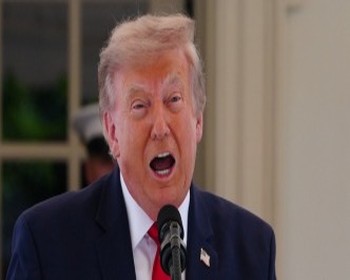
In late July 2026, tensions between the United States and I…

The heatwave sweeping across the region, coupled with the e…

British Prime Minister Barnham announced that the business …
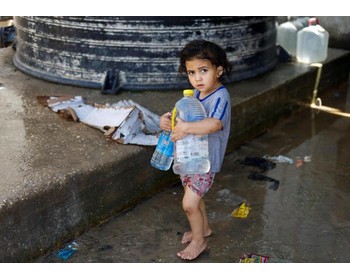
The global food monitoring agency said that due to a lack o…

On Thursday, South Korean investigators raided the office o…
© Copyright 2026, All Rights Reserved