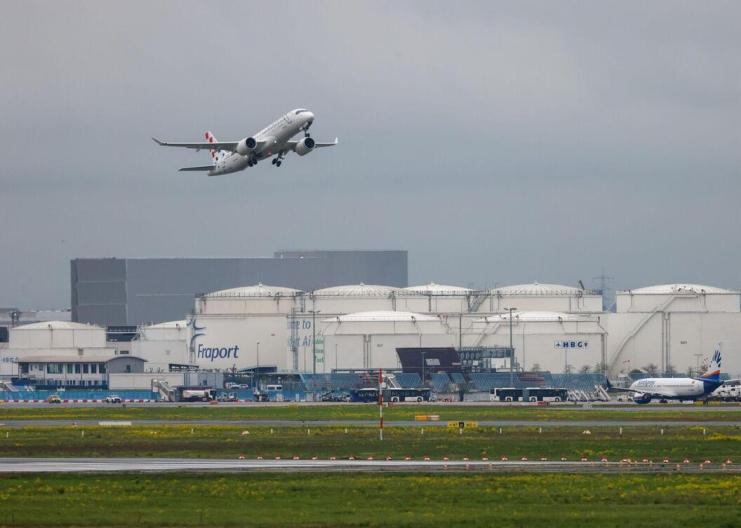
(PARIS AFP) The Strait of Hormuz remains under blockade, and the aviation fuel shortage crisis is worsening. Experts predict that severe flight cancellations may occur in Europe starting from May or June.
On Tuesday (April 14th), Rystad Energy, a Norwegian consulting firm, economist Gailin Beti said in an interview with CNBC that in the coming three to four weeks, the shortage of aviation fuel is likely to evolve into a systemic problem. "Europe is expected to significantly reduce flights. This situation is likely to start emerging from May or June."
The vital oil shipping route in the Persian Gulf, the Strait of Hormuz, remains under blockade. The supply of oil to Europe and Asia is becoming increasingly difficult. Galinetti said that due to the shortage of fuel, some flights have been forced to be cancelled.
The spokesperson of the European Commission denied the existence of a fuel shortage, but admitted that "there may be supply problems in the near future, especially in the case of aviation fuel."
Industry: If the Straits remain closed for three weeks, aviation fuel will be in short supply by early May and will drop to a 23-day reserve by June.
The European branch of the International Air Transport Association sent a letter to the European Commission last week, stating that if oil tankers are unable to pass through the Strait of Hormuz within three weeks, the tension over the shortage of aviation fuel will surface by early May.
The International Energy Agency also warned in its latest monthly oil market report released on Tuesday: "If the global aviation fuel market continues to tighten and the European market is unable to fill the current over 50% supply gap from the Middle East, then inventories will drop to the crucial 23-day reserve level by June."
The fuel reserves in various European countries vary. Austria, Bulgaria and Poland have relatively abundant stocks, while the United Kingdom, Iceland and the Netherlands are on the opposite end. France is in the middle range.
Furthermore, the impact on airports and airlines across Europe varies. ING Bank economist Luman pointed out that smaller airports located in inland areas are more vulnerable compared to major hub airports.

OpenAI updated its compute expenditure expectation through 2030 from approximately $600 billion up to $750 billion, while announcing the launch of "Project Camellia," a $20 billion self-operated data center project in Georgia, and signing a 3.2 gigawatt power supply agreement with a local utility company.

OpenAI updated its compute expenditure expectation through …

In late July 2026, tensions between the United States and I…

The heatwave sweeping across the region, coupled with the e…

British Prime Minister Barnham announced that the business …

The global food monitoring agency said that due to a lack o…

On Thursday, South Korean investigators raided the office o…
© Copyright 2026, All Rights Reserved