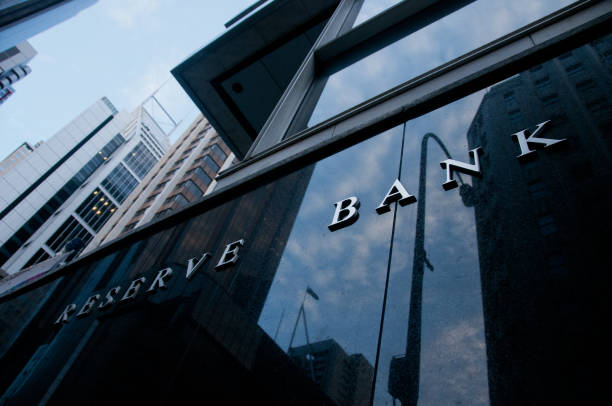
In its interest rate decision announced on March 17, the Reserve Bank of Australia raised the benchmark rate by 25 basis points to 4.10%. This second consecutive monthly hike, ostensibly a direct response to inflation risks triggered by the Middle East situation, in fact reflects the deep-seated contradictions and potential risks inherent in global monetary policy within a complex economic environment. Examining this through the lens of financial market operational logic and policy transmission mechanisms, the rationale behind this decision, the division revealed by the internal vote, and the sustainability of its policy effects all warrant deeper exploration.
Firstly, regarding the rationale behind the policy motive, the RBA's attribution of the rate hike solely to inflationary pressures stemming from the Middle East situation represents a clear oversimplification of the causal chain. While volatility in the Middle East can indeed transmit to global inflation via energy prices, the drivers of domestic inflation in Australia, a resource-exporting economy, are far more diverse. Factors such as a tight labor market, trends towards supply chain localization, and the lagged effects of fiscal stimulus measures can all exert persistent influence on price levels. Attributing inflation risk solely to external geopolitical events not only overlooks deeper structural issues within the domestic economy but also risks misapplying policy tools. If rate hikes fail to precisely target the primary sources of domestic inflation, they may instead suppress business investment and household consumption, further dragging on economic growth.
Secondly, the division revealed in the decision-making process exposes the fragility of the monetary policy framework. The decision passed by a narrow 5-4 vote, indicating significant disagreement within the central bank regarding the path of future rate hikes. This disagreement is not merely a simple difference in policy preferences; it reflects the difficult balancing act monetary policy faces between the goals of "price stability" and "growth maintenance." On one hand, continued rate hikes could exacerbate corporate financing costs, dampen investment vitality, and particularly impact interest-rate-sensitive sectors like small-to-medium enterprises and real estate. On the other hand, pausing hikes could cause inflation expectations to become unanchored, potentially triggering a wage-price spiral and ultimately forcing the central bank to adopt even more aggressive tightening measures. The split vote is essentially a "passive choice" made by the central bank amidst incomplete information and uncertain economic prospects, rather than a proactive decision based on a clear policy path. This uncertainty itself can undermine market confidence in monetary policy and increase the risk of financial market volatility.
Furthermore, the sustainability of the policy's effectiveness faces multiple challenges. Historical experience suggests that the dampening effect of consecutive rate hikes on inflation typically operates with a lag. Moreover, the inflationary pressures currently facing the Australian economy are partly attributable to short-term factors such as supply chain disruptions and energy price fluctuations. Should the central bank over-rely on rate hikes to combat structural inflation, it risks falling into a vicious cycle of "policy lag - insufficient effect - forced further hikes." Additionally, the increasing divergence in monetary policies among major global economies (such as the Fed pausing hikes and the ECB adopting a cautious wait-and-see approach) could expose Australia to the dual pressures of capital outflows and exchange rate volatility. While rate hikes might attract short-term capital inflows, if domestic economic growth momentum is weak, currency appreciation may conversely weaken export competitiveness, further constraining policy space.
Lastly, looking at financial market reactions, this rate hike did not significantly quell inflation expectations; instead, it intensified market concerns about an economic "hard landing." The bond market shows that long-term rates have not risen in tandem with the policy rate, suggesting investor pessimism about future growth prospects. Equity markets are under pressure due to downward revisions in corporate earnings forecasts, particularly in highly leveraged sectors. This divergence between "policy tightening" and "market easing" reflects the declining effectiveness of monetary policy transmission mechanisms. If the central bank fails to adjust its policy framework in a timely manner and strengthen coordination with fiscal policy, relying solely on interest rate tools to address complex economic problems could lead to the predicament of "pushing on a string" – where policy force intensifies, but the economic response remains sluggish.
The RBA's latest rate hike decision is a product of multiple intertwined contradictions. It reflects both an overreaction to external risks and a neglect of domestic economic structures; it embodies both a conflict of policy objectives and the limitations of available tools. Against a backdrop of rising global economic uncertainty, monetary policy needs to place greater emphasis on foresight, flexibility, and coordination, avoiding exacerbating economic fluctuations through single-minded goal orientation. For market participants, it is even more crucial to be vigilant about the deep-seated risks behind policy divergences and to make dynamic adjustments to asset allocation in order to navigate potential changes in the financial environment.

The heatwave sweeping across the region, coupled with the escalating conflict between Russia and Ukraine in the Black Sea, has pushed agricultural and food product prices to a three-year high. The risk of food inflation triggered by the US-Iraq war has resurfaced.

The heatwave sweeping across the region, coupled with the e…

British Prime Minister Barnham announced that the business …

The global food monitoring agency said that due to a lack o…

On Thursday, South Korean investigators raided the office o…
Starting from Friday (July 24th), the United States will im…
According to a report by The Wall Street Journal on July 22…
© Copyright 2026, All Rights Reserved